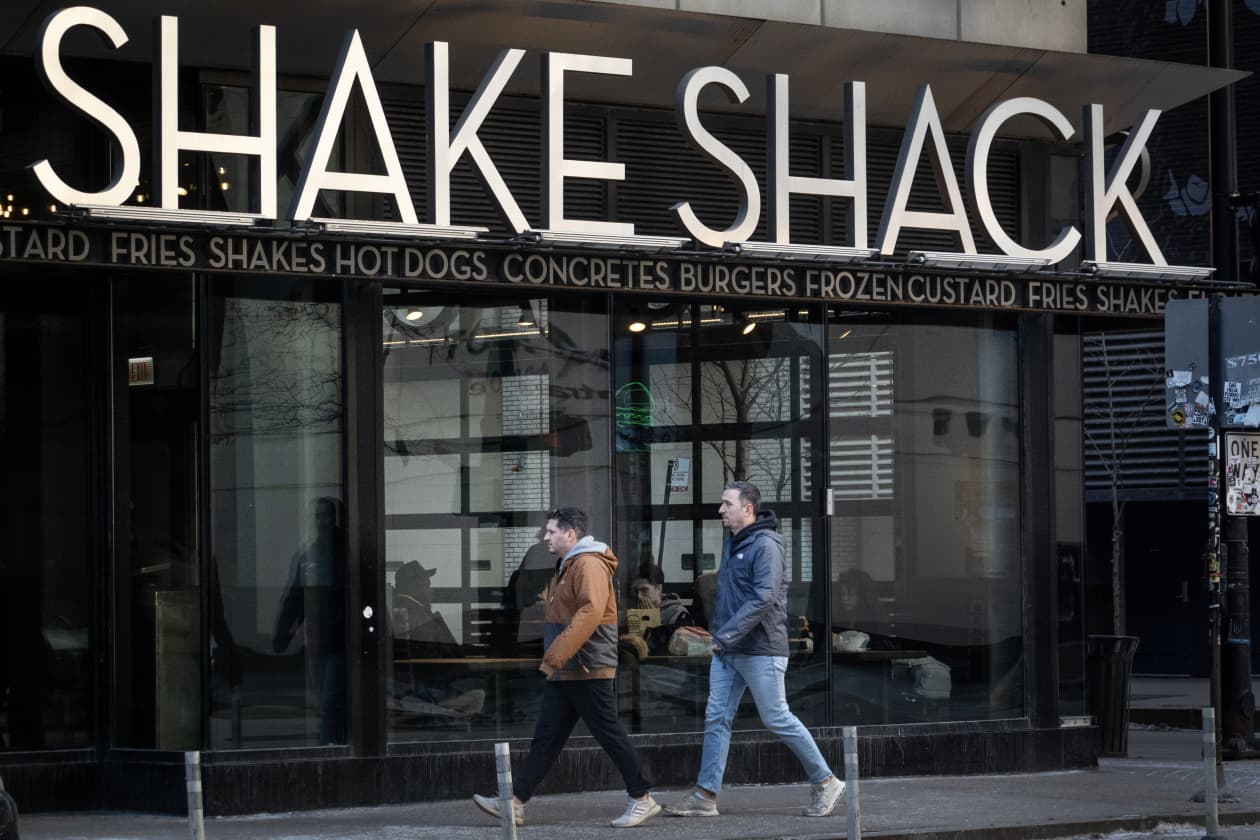
Shake Shack reported a $300,000 GAAP net loss for the latest quarter, its first quarterly loss in three years, versus analyst expectations for $0.12 in EPS. Shares were down nearly 30% as investors reacted to high beef costs, cost inflation, and softer consumer sentiment. The result points to pressure on margins and demand despite the company’s expansion and new menu initiatives.
The key issue is not a single quarter miss; it is that Shake Shack’s unit economics are getting squeezed from both sides at once. When input inflation hits a concept with premium pricing, the market tests whether traffic is elastic enough to absorb further menu price actions — and in casual dining, that test usually resolves slowly over several quarters, not one print. The first-order damage is margin compression, but the second-order risk is that expansion plans become self-defeating if new units open into a weaker same-store-sales backdrop and take longer to mature.
The move also signals a broader read-through for other elevated-price restaurant concepts: investors will punish any name where valuation depends on sustained throughput gains rather than current free cash flow. If consumers are trading down, premium burger chains face a double whammy versus both QSR and at-home alternatives, while suppliers with pricing power in beef and logistics may remain relatively insulated. That creates a near-term winner/loser split inside the restaurant complex: value/QSR operators with lower ticket sizes and stronger traffic resilience should hold up better than premium casual brands.
The catalyst path is asymmetric over the next 1-3 months. A single quarter of weak profitability can trigger multiple de-rating as sell-side models reset, but the reversal case requires either a meaningful pullback in beef costs or clear evidence that traffic is stable despite price increases. If neither shows up into the next earnings cycle, the market will likely start modeling a slower expansion cadence and lower terminal margins, which is the real bear case.
The contrarian angle is that part of the decline may be positioning-driven: if the stock was owned for growth scarcity and premium multiple support, a miss can create forced selling beyond fundamentals. That said, the market is probably not overreacting to the margin problem itself; it is re-rating the durability of the growth algorithm. For a long-only investor, the setup improves only after estimates are cut and the stock finds a base on evidence that traffic is not collapsing under higher menu prices.
AI-powered research, real-time alerts, and portfolio analytics for institutional investors.
Request DemoOverall Sentiment
strongly negative
Sentiment Score
-0.62
Ticker Sentiment
