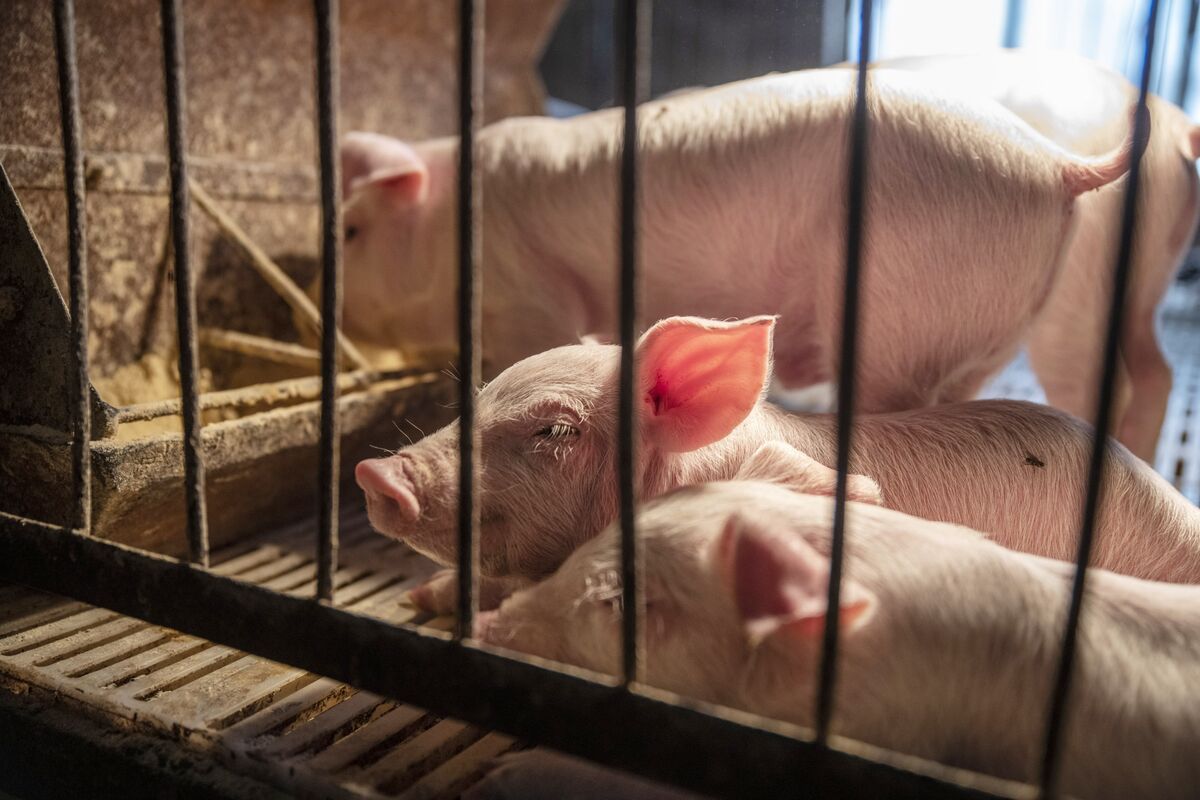
China is intervening in the pork market by urging pig farmers to limit sow herd expansion and cease secondary fattening practices, aiming to bolster hog prices and alleviate deflationary pressures. Authorities are concerned about the recent slump in pork prices, a staple meat in the country, and its impact on the broader economy. These measures signal a proactive approach to managing supply and demand dynamics within the agricultural sector.
Chinese authorities are intervening in the domestic hog market by issuing guidance to pig farmers aimed at restraining supply and supporting pork prices, which have recently slumped. The measures include requests to exercise prudence in expanding sow herds and to discontinue the practice of secondary fattening, where pigs are fed beyond normal slaughter-weights to increase meat output. This intervention is strategically designed not only to stabilize prices for the nation's most consumed meat but also to address wider deflationary pressures impacting the Chinese economy. The government's approach, characterized by advisory requests rather than strict mandates, suggests a cautious attempt to influence market dynamics from the supply side. The success of these measures in curbing production and bolstering prices will be a key indicator of the government's ability to manage agricultural market volatility and its macroeconomic consequences.
AI-powered research, real-time alerts, and portfolio analytics for institutional investors.
Request DemoOverall Sentiment
mixed
Sentiment Score
0.10
