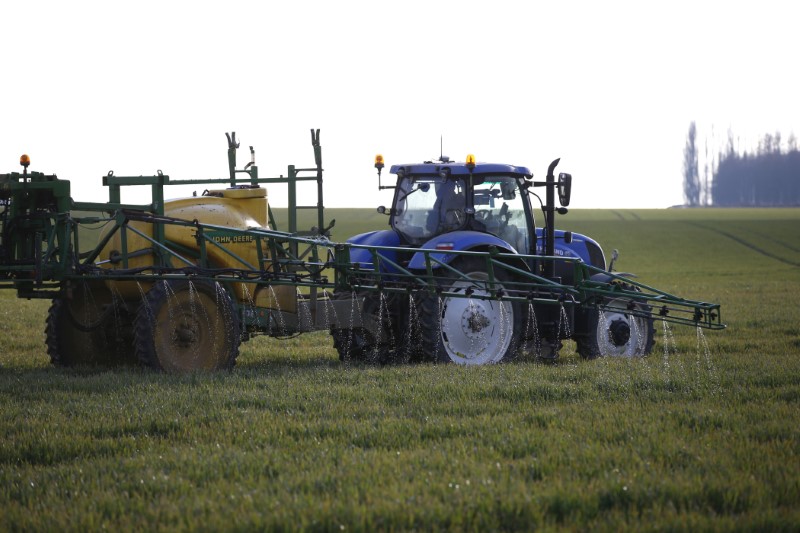
China's Vice Agriculture Minister Zhang Zhili urged U.S. firms to deepen investment in China's 'rural revitalization' under the 15th Five-Year Plan, targeting advanced seed technology, food processing and agribusiness integration. U.S. agricultural exports to China hit record levels in 2025 driven by soybeans, corn and beef, underpinning the sector's resilience despite reciprocal tariffs and export controls in semiconductors and EVs. Continued investment momentum will depend on the stability of Phase One trade deal legacies and the broader 'risk-off' sentiment in global trade.
Beijing’s push to fold foreign know-how into its rural modernization will create two distinct pools of winners: firms that accept localization, JV structures and licensing (persistent, mid-term cashflows) and firms that insist on cross-border IP protection (short-term export revenue). Expect negotiating leverage to shift toward Chinese state-backed partners over 6–24 months as subsidy and procurement financing is deployed; that structure compresses gross margins for pure-exporters but increases recurring services revenues for on‑the‑ground integrators.
Agricultural modernization is quietly a demand engine for compute, sensors and edge AI — not just seeds and storage. That creates a stealth linkage between ag demand and compute supply chains: server density, low-latency inference hardware and ruggedized edge gear. However, export controls on advanced semiconductors mean the same upgrade cycle can be bifurcated — commodity compute and rugged servers flow, cutting‑edge GPUs do not — producing a winners/losers split among hardware vendors within months of policy clarifications.
Near-term catalysts that will move markets are concrete procurement lists, provincial pilot programs and Chinese subsidy rollouts (weeks→months), while major regime shifts (sanctions escalation, US farm policy swings, or a new export-control tranche) would reverse the trend in quarters to a year. The consensus underestimates the probability that Beijing will demand IP localization as the price of scale, which favors companies that can manufacture locally or accept tech transfer over pure-play exporters and pure-cloud providers.
AI-powered research, real-time alerts, and portfolio analytics for institutional investors.
Overall Sentiment
mildly positive
Sentiment Score
0.20
Ticker Sentiment
