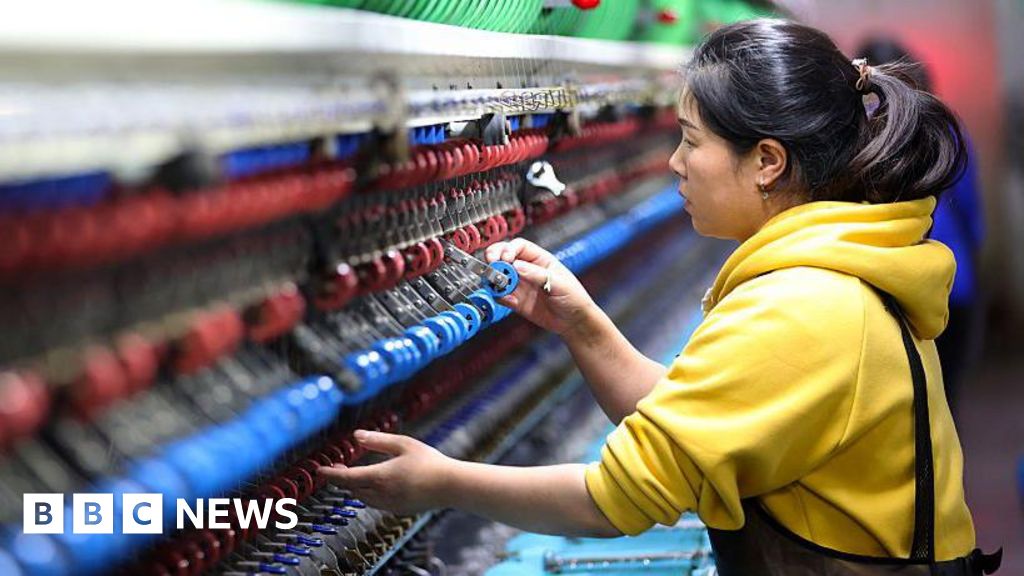
The US Supreme Court invalidated the emergency-powers basis for President Trump's tariff regime, prompting an immediate executive order imposing a 10% global tariff (with a threatened rise to 15%) and leaving billions in previously collected levies in legal limbo. Asian exporters, manufacturers and logistics firms report heightened uncertainty—delayed market entries, renegotiated orders and higher input or passed-on prices—while DHL and FedEx are preparing for operational and refund implications (FedEx has filed for full refunds). The ruling entrenches China’s manufacturing dominance due to country-of-origin rules and scale advantages, forcing firms to re-route supply chains and diversify markets, a dynamic that could materially affect regional revenues, trade-exposed corporates and logistics margins. Investors should watch tariff implementation details, targeted carve-outs, refund processes and any sector-specific measures that could crystallize winners and losers across supply chains.
Market structure: The immediate winners are scale Chinese manufacturers and any firm that can absorb or hedge a 10–15% global tariff (China-origin still faces up to 25% per anecdote), while small-to-mid Asian exporters, apparel and discretionary consumer brands, and freight-forwarders face compressed margins and lost orders. Expect pricing power to shift toward large OEMs/Chinese suppliers; regional producers will struggle to regain share without >10–15% cost or service advantages. Cross-asset: tariff-driven uncertainty raises near-term inflation breakevens (benefit TIPs), increases FX volatility in Asian FX vs USD, and should widen IG credit spreads by 10–30bps in the next 1–3 months as trade disruption risk premia rise.
Risk assessment: Tail risks include a targeted escalation to 15%+ selective sector tariffs (high-impact) or a March US-China deal that removes levies (reversal); both move P&L materially. Immediate (days): customs/refund processes and legal filings (FedEx suit) will create idiosyncratic volatility; short-term (weeks–months): tariff lists and execution details; long-term (quarters–years): durable supply-chain re-routing, capex into nearshoring and automation. Hidden dependencies: country-of-origin rules, packaging and component sourcing from China, and inventory destocking that can delay demand effects 3–6 months.
Trade implications: Favor liquidity-preserving hedges and directional pairs rather than naked directional exposure. Tactical trades include asymmetric option protection on FDX, overweight TIPS (TIP) and consumer staples (XLP) vs discretionary (XLY) for 3–6 month horizons, and a relative long UPS / short FDX pair to capture operational share shifts. Time catalysts: act before USTR country list updates (expected within days–weeks) but trim into any clarity after Trump’s late-March China visit.
Contrarian angles: The market underestimates the legal upside — successful refunds (FedEx precedent) could create one-off cash tailwinds and cap downside for large importers; conversely, consensus underprices the medium-term capex beat for automation/semi-equipment from supply-chain diversification. Historical parallels: 2018–19 tariff episodes show volumes fall slowly (3–8% lags) and winners emerge after 6–18 months once realignment and capex commitments are visible. So avoid permanent shorts on logistics; prefer time-boxed, catalyst-driven positions with explicit option hedges.
AI-powered research, real-time alerts, and portfolio analytics for institutional investors.
Request DemoOverall Sentiment
strongly negative
Sentiment Score
-0.60
Ticker Sentiment
