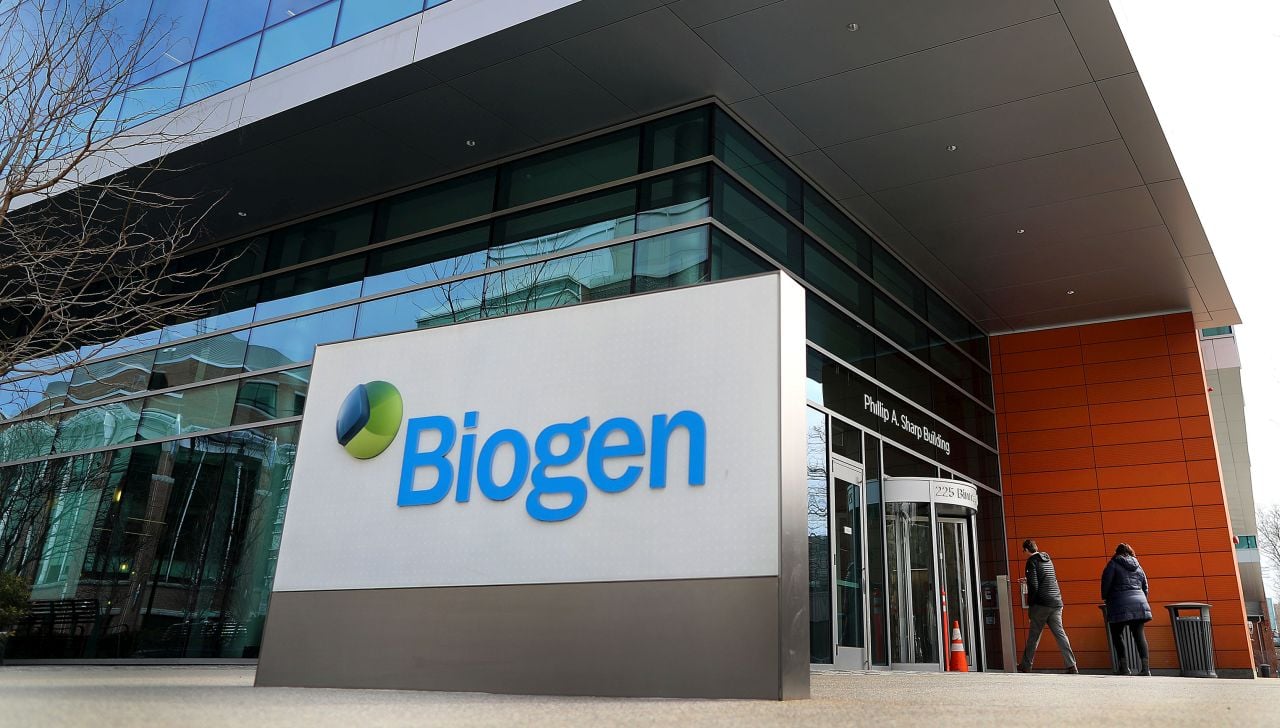
Biogen will acquire Apellis for $41/share (~$5.6B) to add marketed drugs Syfovre and Empaveli (Apellis' two products generated $689M in sales in 2025; Syfovre alone had $587M in GA sales). The deal includes a contingent value right (CVR) worth up to $4/share, is expected to close in Q2, and Biogen forecasts mid- to high-teens annual growth for the combined products for at least two years. Market reaction was volatile: Apellis shares more than doubled while Biogen shares fell ~4% intraday.
This transaction is a classic “buy commercial capability, buy time” move: management purchased revenue-generating products to shorten the runway to cash-flow accretion while it continues to de-risk a later-stage pipeline. The real optionality is operational — converting a modest launch base into a scalable nephrology/immunology commercial engine that can materially shorten time-to-peak for an acquired late-stage asset. Expect 12–30 months to be the decisive window where field execution, payer contracting, and specialty pharmacy relationships determine whether this is a durable capability or a short-lived revenue bump.
Payer dynamics and indemnity economics are the biggest non-obvious constraints. Complement inhibitors and rare-kidney launches disproportionately run into narrow network negotiations, utilization management, and step-therapy pushback that can cap uptake even with best-in-class efficacy. That means early prescription trends and leading PBM/formulary wins (or losses) over the next two quarters will carry more informational value than headline revenue growth.
Integration and partner governance are second-order risks. Retaining the commercial talent and aligning incentives with ex‑US partners will decide international scale; failure here converts an otherwise tidy tuck‑in into a fragmented franchise with lost synergies. Finally, investor reaction will bifurcate: event-driven players will focus on CVR modeling and near-term guidance revisions, while longer-horizon biotech holders should track upcoming clinical readouts as the ultimate value drivers.
AI-powered research, real-time alerts, and portfolio analytics for institutional investors.
Overall Sentiment
strongly positive
Sentiment Score
0.55
Ticker Sentiment
