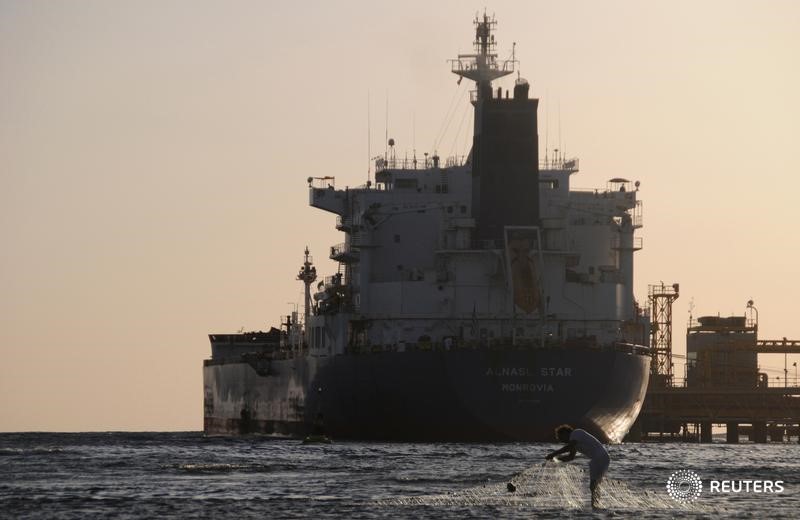
Oil prices rose as a 25-day conflict continues and President Trump said Iran delivered a significant energy-related concession tied to the Strait of Hormuz, though details were not disclosed. Ongoing fighting, U.S. troop deployments and opaque negotiations (including senior envoys) increase upside risk to energy prices and sustained volatility for energy and commodity-linked assets.
The market is pricing a binary where a credible, oil-related concession materially reduces short-term maritime tail risk, but the opacity of the move amplifies volatility rather than eliminates it. Practically, that means shorter-dated implied vol will stay elevated while forward curves can oscillate 8-20% across weeks as shipping, insurance repricing and compliance mechanics (re-flagging, tanker routing) work through global logistics chains.
Second-order winners are firms that monetize volatility and route complexity: re/insurers, specialized shipping brokers and midstream operators that can flex storage and blending—because temporary geographic dislocations create margin opportunities independent of headline price direction. Conversely, small-cap, high-absolute-cost producers and oil-service firms with single-field exposure are disproportionately exposed to episodic upside in freight and input inflation and will reprice faster on renewed skirmishes.
Key catalysts to watch on asymmetric timing: (1) any observable uptick in sanctioned barrels flowing back to market (weeks–months) which can shave 5–12% off marginal crude values; (2) a failed negotiation or localized strike that can spike spot into double digits within days; (3) public shifts in marine insurance premiums and Lloyd’s underwriting notes that will change trade economics over 1–3 months. These create clear windows to buy optionality on both tails rather than directional outright exposure.
Structurally, portfolios should treat this as a volatility and convexity trade, not a pure commodity call. Position sizing should assume a >15% one-week move is within the realm of possibility and liquidity must be prioritized to execute rapid pair adjustments (e.g., switching from long producers to long integrated/higher downstream coverage) when the narrative crystallizes.
AI-powered research, real-time alerts, and portfolio analytics for institutional investors.
Overall Sentiment
mildly negative
Sentiment Score
-0.25
