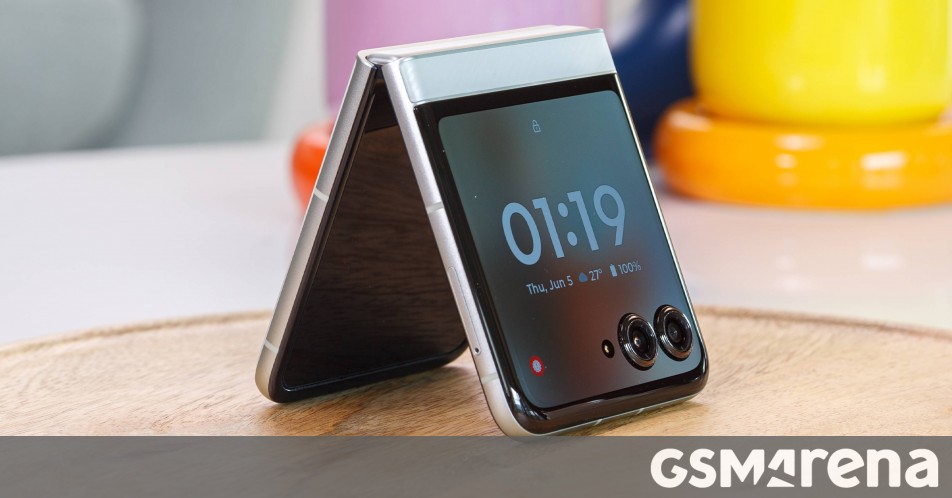
Motorola's Razr 60/2025 series materially boosted the company's position in foldables, with Counterpoint Research reporting a doubling of Motorola's share in the global foldable market in Q2 and the Razr 2025 being the first flip foldable to reach a $700 US price point. The Razr 60 Ultra upgraded to a flagship Snapdragon 8 Elite and a 4,700mAh battery, while the Edge 60 Pro moved to a Dimensity 8350 Extreme, UFS 4.0 and a 6,000mAh pack delivering 0–100% in ~44 minutes—demonstrating measurable product-level improvements. Offsetting risks include mixed reception for the Edge 70's pricing, camera and chipset weaknesses in the Edge 60 Neo, and the G Power (2025)'s underpowered Dimensity 6300 versus its initial $300 MSRP, which could limit upside if product-market fit falters.
Market structure: Motorola’s Razr success (global foldable share roughly +100% YoY in Q2; a $700 entry point) reallocates premium-phone share at the low‑$700–$1,000 band away from incumbents. Direct beneficiaries include Motorola (Lenovo/Mobility exposure), Snapdragon flagship suppliers (Qualcomm) and lower-cost panel/battery vendors; losers are incumbents competing on slim premium form factors (Apple AAPL — negative pressure on iPhone ASPs) and niche mid‑rangers with weak cameras.
Risk assessment: Tail risks include hinge reliability recalls, component shortages (3–9 months) or aggressive pricing from Samsung/Apple that compresses margins; regulatory antitrust moves against app/OS bundling are low probability but high impact. Near-term (days–weeks) volatility will track product-cycle news; medium (3–9 months) is driven by holiday sell-in and carrier subsidy decisions; long-term (1–3 years) depends on foldable adoption curves and component roadmap (3nm/4nm demand).
Trade implications: Tactical plays: long suppliers to Motorola’s foldable stack (QCOM, LNVGY exposure) and selective short/underweight in AAPL to express iPhone ASP risk; size positions to 1–3% portfolio each and use 3–9 month horizons. Options: buy 3–6 month 25‑delta calls on QCOM (buy-write or spreads to cap cost) and consider put spreads on AAPL sized conservatively; enter before Samsung/Apple model launches in next 4–8 weeks.
Contrarian angles: Consensus underestimates hinge/repair economics and carrier subsidy leverage — successful $700 foldables could force a price war that benefits component volumes but compresses OEM margins. Historical parallel: early foldable cycles (2019–2021) showed hype then durability‑led corrections; if Motorola’s quality holds, supply chain winners (display, hinge, battery) are underpriced; if not, downside cascades to component demand and cyclical semis.
AI-powered research, real-time alerts, and portfolio analytics for institutional investors.
Request DemoOverall Sentiment
mildly positive
Sentiment Score
0.25
Ticker Sentiment
