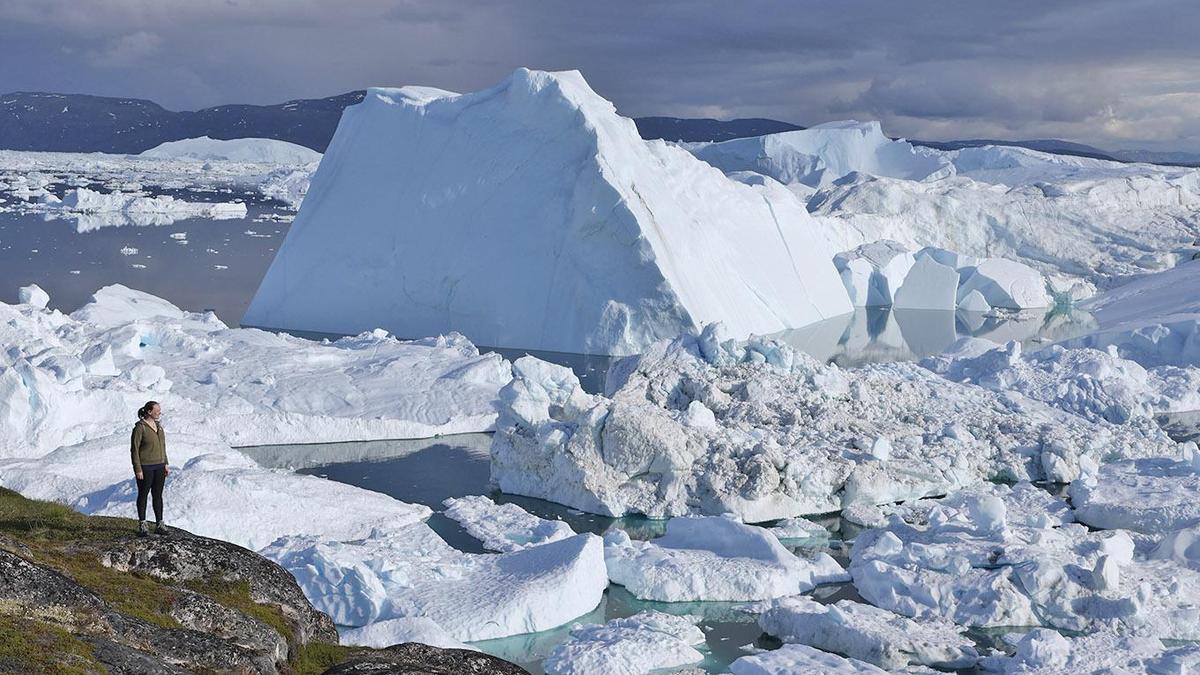
A new scientific assessment, "The State of the Cryosphere 2025," warns of accelerating global ice loss, with current temperatures already exceeding long-term stability thresholds and national pledges indicating warming beyond 2°C. This trajectory portends significant sea-level rise, disruption of major ocean currents, permafrost becoming a net carbon source, and intensified water stress in critical regions like the Himalayas. The report underscores the urgent need for deep, rapid emissions reductions to mitigate severe economic and environmental consequences for coastal infrastructure, water security, and global ecosystems, highlighting critical long-term risks for investors.
The "State of the Cryosphere 2025" report highlights an alarming acceleration in global ice loss, with current temperatures already exceeding the long-term stability thresholds for major ice sheets and glaciers, notably Greenland and Antarctica at ~1°C. National pledges, indicating warming beyond 2°C, are incompatible with retaining significant ice mass and maintaining future sea-level rise within adaptive limits, underscoring a critical divergence from the 1.5°C by 2100 target.
This cryosphere degradation precipitates severe cascading global impacts, including centuries of locked-in sea-level rise challenging major coastal cities. Melting ice is slowing major ocean currents, potentially chilling Northern Europe and disrupting marine ecosystems, while polar oceans are acidifying faster, pushing some shelled organisms towards "non-survivable" conditions. Permafrost is also confirmed as a net carbon emitter, increasing future mitigation costs and exacerbating climate feedback loops.
Regionally, the report quantifies significant glacier mass loss, with the Western Himalaya retaining only ~30% at 3°C versus ~85% at 1.5°C, intensifying hydrological stress across critical river basins. While the outlook is pessimistic, black carbon reduction, particularly in regions like India, is identified as a near-term lever to slow melt and provide co-benefits. Policymakers at COP30 are urged to enact "deep, rapid, and sustained emissions reductions" to mitigate these escalating global security risks.
AI-powered research, real-time alerts, and portfolio analytics for institutional investors.
Request DemoOverall Sentiment
strongly negative
Sentiment Score
-0.75
