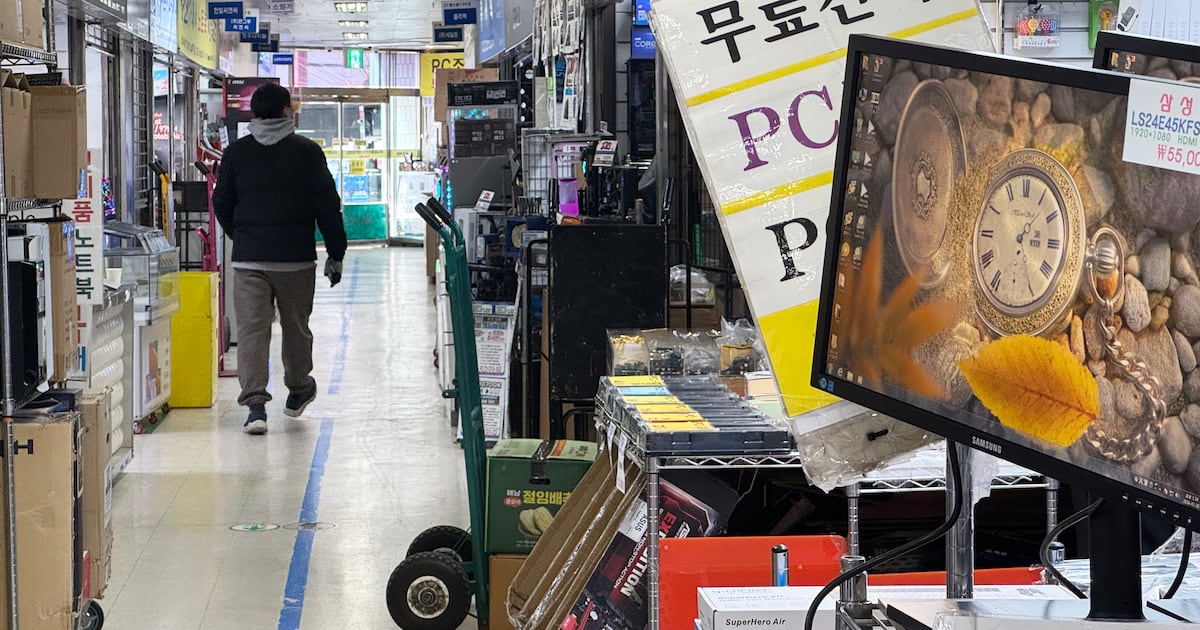
Rising semiconductor costs — dubbed “chipflation” — are pushing up PC prices, with higher DRAM/RAM pricing identified as a notable 'ramtech' trend. The dynamic should benefit memory and chip suppliers through higher realizations while creating margin pressure and potential demand softness for PC OEMs and end customers, introducing inventory and allocation risks across the PC supply chain.
Chipflation reallocates profit toward semiconductor and memory suppliers — clear winners include MU, LRCX, ASML and select fabless designers (AMD, NVDA) while low‑margin PC OEMs/retailers (HPQ, DELL, BBY) face volume risk if price elasticity bites. Constrained DRAM/NAND supply and fab capacity support 10–30% ASP upside over 6–12 months, boosting supplier pricing power and raising implied volatility in chip names; expect modest upward pressure on real yields (roughly +10–30bps) and FX stress in KRW/TWD vs USD.
Key tail risks: renewed US/China export controls or a rapid demand collapse from a shortened PC refresh cycle (both could knock 20–40% off cyclical names). Time horizons matter — immediate (days) for IV and guidance shocks, weeks–months for DRAM contract updates and OEM earnings, and quarters–years for capex-driven capacity additions that can end the cycle. Hidden dependencies include channel inventory levels, server/cloud demand correlation, and foundry lead times; catalysts are monthly memory contract prints, trade policy announcements, and CPI goods prints.
Trade implications: overweight semiconductor suppliers and capital equipment while underweight PC OEMs/retailers; expected alpha concentrated in memory suppliers. Implement size-limited exposures (2–3% per idea), use pair trades to isolate memory vs OEM risk, and employ 3–9 month option structures to capture asymmetric payoff while capping premium outlay. Exit or trim into clear signals — three consecutive months of >5–10% negative DRAM contract moves, or supplier capex guidance that increases capacity growth >15% YoY.
Contrarian view: consensus may underappreciate demand elasticity — higher PC ASPs could accelerate secondhand/refurbished markets and shift compute to cloud, shortening the memory supercycle as in 2017–18 reversals. The market might also underprice speed of capacity additions; if equipment orderbooks (ASML/LRCX) expand >15% YoY, peak pricing risk rises. Unintended consequences include OEMs’ aggressive inventory draws creating a subsequent overhang; watch OEM channel destocking as a leading indicator.
AI-powered research, real-time alerts, and portfolio analytics for institutional investors.
Request DemoOverall Sentiment
neutral
Sentiment Score
0.00
