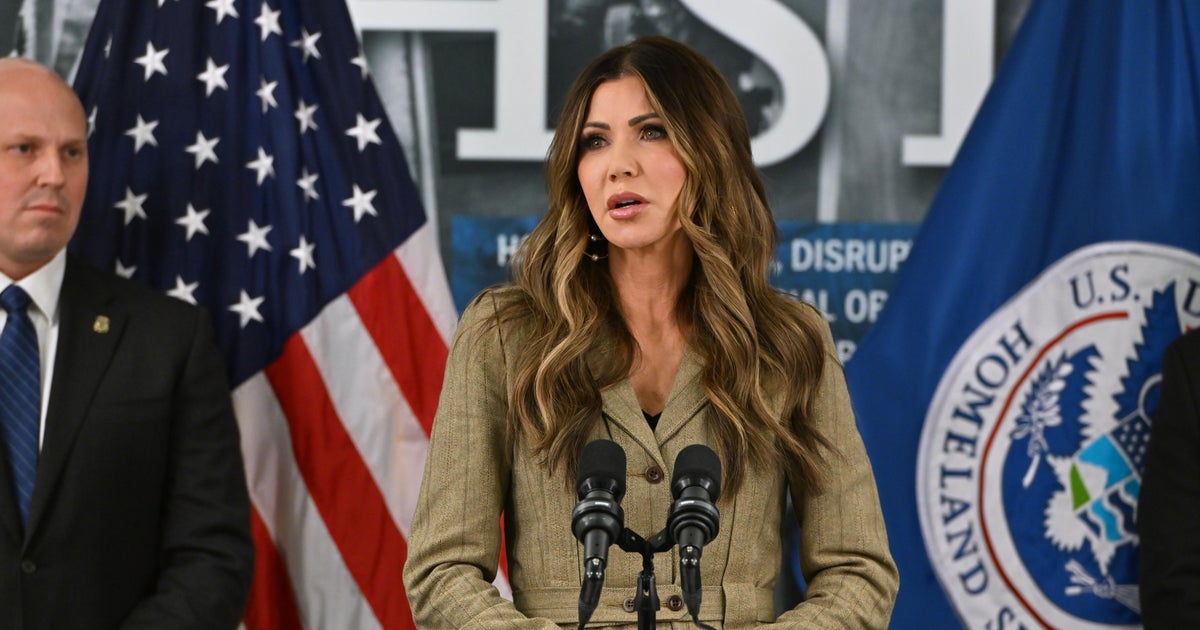
The administration has launched a roughly 30-day surge sending about 2,000 DHS personnel to the Twin Cities—potentially up to 600 HSI agents and 1,500 ICE ERO officers—to ramp up immigration enforcement and fraud investigations in Minneapolis. The operation builds on Operation Metro Surge (nearly 700 arrests as of Dec. 19) amid an expanded federal probe into pandemic-era and other fraud schemes that have produced more than 90 indictments and 60 convictions since 2021 with alleged losses in the billions; the Department of Health and Human Services has also frozen $185 million in federal child-care payments, heightening political and economic risk for local businesses and assistance recipients.
Market structure: The 2,000-agent DHS surge is a concentrated demand shock for homeland-security services, surveillance/software and detention operators; expect near-term procurement and overtime-driven vendor revenues to edge up 1–3% for gov-tech contractors over 1–2 quarters. Losers are localized consumer-facing businesses and municipal credits in immigrant-heavy Minneapolis ZIP codes (foot-traffic risk +5–15% over days/weeks) and regional banks with concentrated deposits/loans in Hennepin County (underwriting and reputational risk). Cross-asset: expect modest safe-haven flows into Treasuries and USD, a 5–30bp widening in stressed MN muni spreads, and elevated IV in regional-bank/options (KRE) and gov-tech names (PLTR) for 30–90 days.
Risk assessment: Tail risks include violent civil unrest or restrictive federal litigation that forces long-term budget reallocation (low-probability, high-impact) and federal de-funding that further pressures state cashflows (HHS freeze $185m is a hard trigger). Time horizons: immediate (days) = localized economic shock and vol spikes; short-term (weeks–months) = legal/contract awards or further freezes; long-term (quarters–years) = potential sustained DHS budget lift or political backlash cutting future contractor revenue. Hidden deps: contractor upside depends on appropriations and firm-level G2G pipeline timing; municipal stress depends on whether HHS funds are restored within 90 days. Catalysts: DOJ/HHS rulings, contract award announcements, and election-related policy shifts.
Trade implications: Tilt portfolios to government-facing defense/gov-tech exposure and hedge regional-bank/local retail sensitivity. Preferred instruments: LHX and PLTR (gov-tech) for a 3–12 month asymmetric play; GEO/CXW as short-duration event plays if enforcement rhetoric intensifies. Use options to buy upside convexity in gov-tech (3–6m call spreads) and protective puts on KRE/USB for bank tail-risk. Entry window: act within 1–4 weeks while IV remains elevated; exit on contract confirmations (sell into +20–30% moves) or reversal of enforcement within 60–90 days.
Contrarian angles: Consensus overstates permanent economic damage — national retailers (TGT) and large-cap banks will likely absorb local disruption without earnings damage, so avoid broad short positions. Historical parallels (past ICE surges) show limited durable revenue impacts for prime defense contractors; gains often priced in only after multi-month, multi-agency contract awards. Unintended consequence: heavy-handed enforcement can trigger federal oversight or funding re-allocation away from contracted vendors; size positions small (1–2% of portfolio) and hedge event risk.
AI-powered research, real-time alerts, and portfolio analytics for institutional investors.
Request DemoOverall Sentiment
moderately negative
Sentiment Score
-0.35
