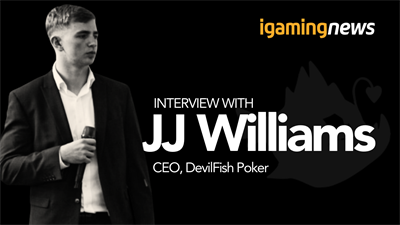
DevilFish Poker operates a free-to-play, community-first poker platform monetized primarily through sales of blockchain-based digital identities and skins that function as tradable assets; the company reports an active community (around 9,000 Discord members) and anecdotal high-value buyers in the U.S. The CEO said the product strategy focuses on fast, social gameplay (sub-10 minute formats), continued product launches including non-blockchain items, and scaling via partnerships and marketing while engaging compliance and SEO partners as they expand in 2026.
Market structure: Free-to-play poker with blockchain avatars shifts monetization from wagering to digital goods, benefiting social-gaming platforms, NFT marketplaces, and wallet/market infrastructure while pressuring CAC economics of real-money operators. Expect incumbents who control identity/secondary markets to gain pricing power — a 3–5% annual share shift among 18–30 year-olds is plausible over 2–3 years as engagement replaces betting spend. On cross-assets, incremental NFT turnover should modestly lift crypto-exchange volumes (positive for COIN-style flows) and leave sovereign bonds/FX largely unaffected except in small EM markets with concentrated gaming cohorts.
Risk assessment: Main tail risks are regulatory reclassification of NFT avatars as gambling or securities (10–25% probability in 12–18 months), and smart-contract/marketplace hacks that could incur >$5m operational losses and rapid reputational damage. Short-term (days–weeks) risk is minimal; watch near-term user-growth KPIs over 30–90 days; medium-term (3–12 months) risk centers on monetization conversion and secondary-market liquidity; long-term (1–3 years) regulatory regimes and platform network effects decide winner-takes-most outcomes. Catalysts: large distribution partnerships, secondary-market volume crossing $0.5–1.0m/month, or formal regulatory guidance in next 60–180 days.
Trade implications: Direct play — establish a 2–3% long position in RBLX to capture avatar/identity tailwinds (target +20–30% in 6–12 months, stop-loss -12%) and consider a parallel 6-month call-spread (buy ATM, sell 2× OTM) to limit premium if IV rises. Pair trade — long RBLX (social gaming exposure) vs 1:1 short DKNG/PENN (sports-betting/user-acquisition risk) sized to 1–2% net exposure for 6–12 months. Rotate 3–6% portfolio weight out of legacy wagering operators into social gaming/marketplace infra names if monthly secondary sales exceed $500k or MoM DAU growth >5% for 3 consecutive months.
Contrarian angles: Consensus underweights the value of on-chain secondary markets — if community-held Genesis avatars produce repeat resale revenue and social signaling, multiples could re-rate by 15–30% for platforms that enable resale. Conversely, the market may be overreacting to NFT hype without demanding concrete GMV; if secondary-market monthly volume stays <$250k after 6 months, expect multiple compression and diminished conversion. Historical parallel: early Zynga monetization of social graphs shows rapid upside once marketplace friction is removed, but unlike Zynga, on-chain assets invite regulatory and custody complexity that can reverse gains quickly.
AI-powered research, real-time alerts, and portfolio analytics for institutional investors.
Request DemoOverall Sentiment
mildly positive
Sentiment Score
0.30
Ticker Sentiment
