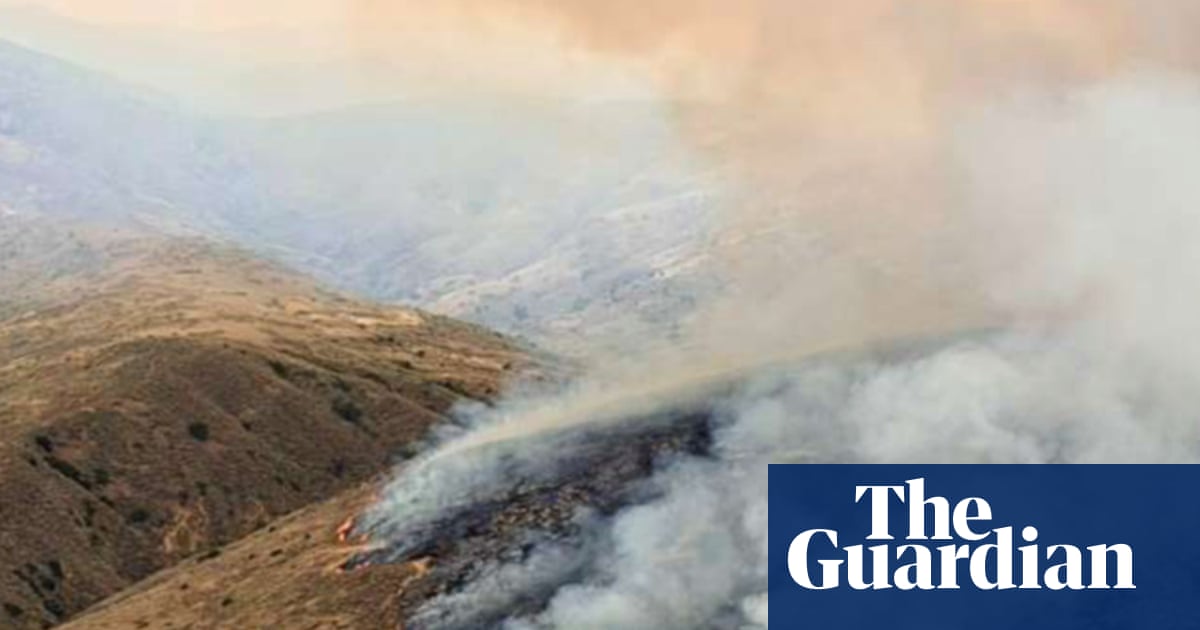
California’s largest wildfire of the year has burned more than 10,000 acres on Santa Rosa Island, with 0% containment and about six dozen firefighters deployed amid strong winds. The blaze has destroyed two historic structures and is threatening rare native plant communities and a Torrey pines area on the island. The fire prompted the evacuation of staff and closure of Santa Rosa Island to visitors while investigators examine whether flares used by a stranded sailor may have sparked it.
This is a reminder that the real market impact of a wildfire on a remote island is not in headline acres burned but in the optionality embedded in recovery spend, regulatory response, and insurance loss creep. The immediate economic damage is mostly local, but the second-order effect is a sharper pull-forward of federal and state dollars toward fire hardening, access infrastructure, and ecological restoration across public lands. That supports a broader thematic bid for names exposed to mitigation capex rather than suppression alone: vegetation management, utility hardening, communications, and disaster logistics.
The bigger medium-term risk is policy repricing. A fire tied to human activity on a park island increases scrutiny on emergency communications, flare restrictions, marina access controls, and visitor management; that tends to translate into more compliance costs and slower reopening, which drags on regional travel and park-adjacent operators for weeks to months. In parallel, if the fire materially damages rare habitat, it strengthens the ESG narrative around climate adaptation and biodiversity preservation, which can unlock incremental funding but also tighten permitting for tourism and coastal development in conservation zones.
Consensus will likely treat this as a contained local event, but that understates the tail risk of serial incidents in high-wind, low-access environments. The market should care more about repeatability than size: if this becomes part of a pattern, insurers will widen exclusions and public agencies will shift to higher-retained-risk self-insurance, which is a slow-burn negative for municipal finance and infrastructure contractors with wildfire exposure. The contrarian view is that suppression spending and restoration budgets can become a revenue tailwind for select beneficiaries even as the incident looks negative on the surface.
AI-powered research, real-time alerts, and portfolio analytics for institutional investors.
Request DemoOverall Sentiment
moderately negative
Sentiment Score
-0.45
