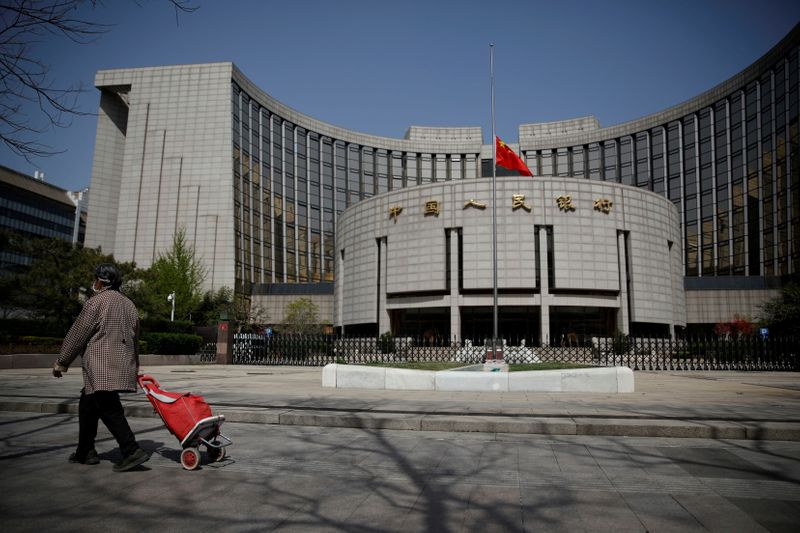
China left its one-year Loan Prime Rate unchanged at 3.00% and its five-year LPR at 3.50% for an 11th straight month, matching expectations. The decision suggests policymakers are favoring stability as first-quarter growth held near 5%, reducing near-term pressure for broad rate cuts. Analysts expect targeted liquidity tools or reserve requirement adjustments instead of headline easing.
China’s decision to hold policy steady is less about “no stimulus” and more about preserving optionality. The market implication is that the next marginal support to the economy is likely to come through quantity tools and administrative credit guidance, which tends to favor state-linked lenders, infrastructure supply chains, and high-beta domestic cyclicals more than duration-sensitive growth proxies. It also keeps pressure on rates markets to fade any aggressive easing narrative, limiting the upside for long-duration equities if global yields reprice higher. The second-order effect is that a steadier China policy backdrop can suppress volatility in industrial metals and EM beta without creating a clean reflation trade. That is constructive for firms exposed to Chinese demand dispersion rather than outright commodity upside, while keeping a lid on the kind of broad risk-on rally that benefits speculative multiples. In that environment, the “AI winners” in the data are more vulnerable to valuation compression than to fundamental deterioration, because their multiple support depends on falling discount rates and abundant liquidity. The contrarian read is that the absence of a rate cut is not bearish for China if growth is already tracking near target; it may actually be bullish for banks’ net interest margins and for asset quality if policymakers avoid another credit binge. The bigger risk is that external shocks force a pivot toward liquidity support later in the quarter, which would help cyclical domestics but likely coincide with weaker global risk appetite. For US investors, the key is to separate rates-sensitive momentum names from companies with real earnings durability and cash generation.
AI-powered research, real-time alerts, and portfolio analytics for institutional investors.
Request DemoOverall Sentiment
neutral
Sentiment Score
0.05
Ticker Sentiment
