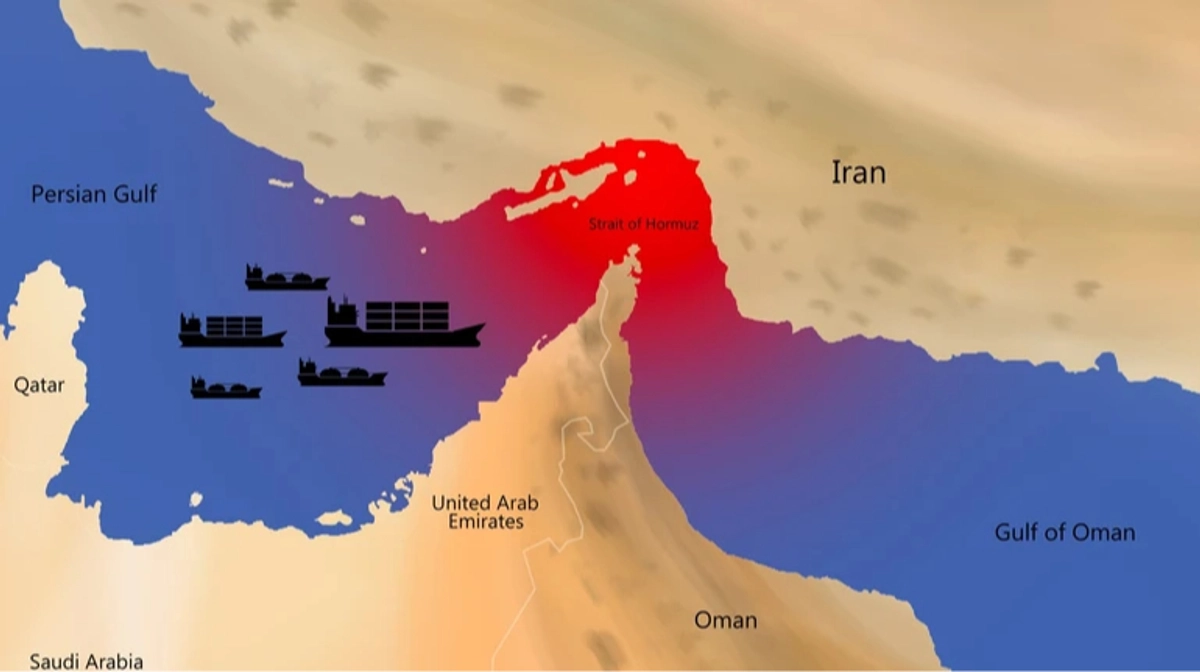
Iran's Islamic Revolutionary Guard Corps said the Strait of Hormuz "will not be reopened," rejecting US President Trump's comments and asserting firm control of the waterway. The remarks came after Trump said Iran asked for a ceasefire and that Washington would only consider it if the strait were reopened first, raising short-term geopolitical risk for energy and shipping routes.
Market reaction should focus less on headlines and more on the mechanics that re-price maritime energy logistics: a sustained perception of risk in the narrow Gulf corridor increases voyage distance and bunker consumption by routes via the Cape of Good Hope or Suez/Red Sea detours, which mechanically raises delivered crude/gasoline costs by low-single-digit percent per bbl and pushes tanker charter rates and forward freight agreements materially higher in 2–8 weeks. Insurance and war-risk premiums typically spike 200–800% in the first fortnight of elevated tension, prompting beneficial selection effects for owners with modern, lower-consumption VLCCs and for trading houses that can arbitrage time spreads using storage and floating storage units (FSUs).
Second-order winners include high-quality floating storage providers, ports servicing alternative transshipment (UAE/OMAN hubs), and defense contractors providing escort capabilities; losers are midstream players with marginal barrel economics who cannot pass through increased shipping costs and refiners running tight refinery margins. Over a 3–9 month horizon, persistent friction will accelerate capital reallocation to pipeline projects and alternative LNG/LPG routing investments, raising structural capex needs in logistics and naval systems and shortening time-to-payback for certain E&P names above a $10–15/bbl realized price uplift.
The key catalysts that will reverse volatility are predictable: rapid de-escalation via third-party mediation, a decisive increase in naval escort operations, or a market-driven demand destruction signal (refined product cracks falling 10–20%). Tail risk is asymmetric but low-probability: kinetic interdictions or an accident that blocks alternative passages would create a >30% instantaneous oil price shock and a multi-week spike in shipping rates, forcing strategic inventory releases and diplomatic escalation within 7–21 days.
AI-powered research, real-time alerts, and portfolio analytics for institutional investors.
Request DemoOverall Sentiment
mildly negative
Sentiment Score
-0.35
Ticker Sentiment
