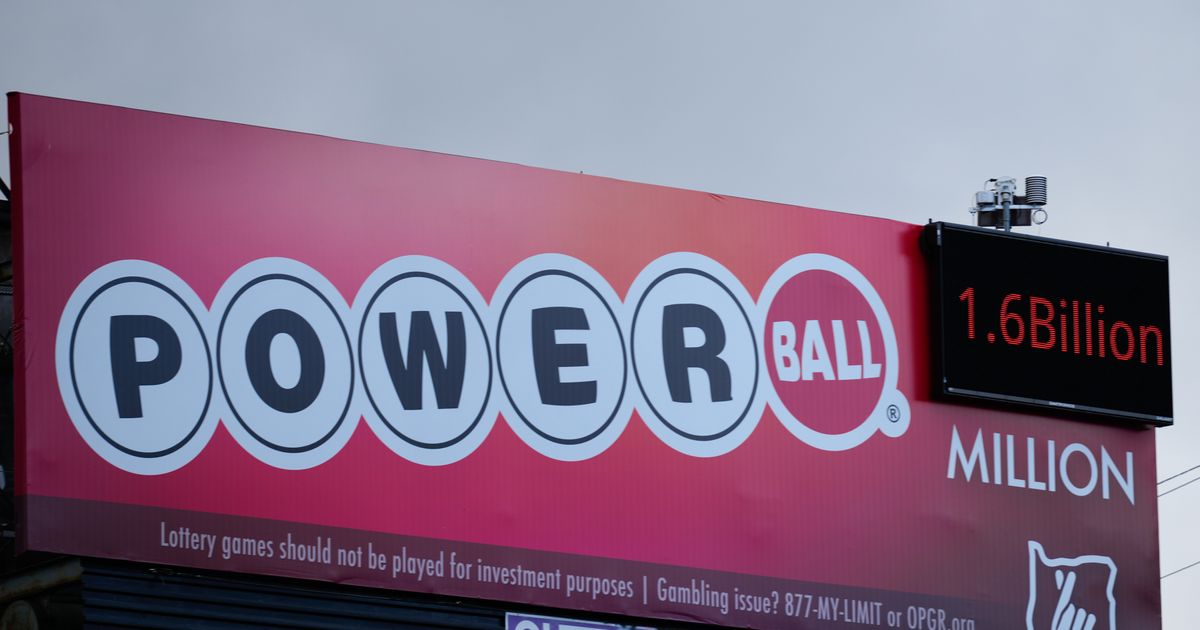
A Powerball ticket sold at West 10th Mart in Roanoke Rapids matched all six numbers in Wednesday's drawing (11, 26, 27, 53, 55; Powerball 12), winning the $209.3 million jackpot. The winner has 180 days to claim and may elect the advertised annuity of $209.3 million paid in 30 payments over 29 years or a $95.3 million lump-sum; this is the sixth Powerball jackpot claimed by a North Carolina player.
Market structure: The direct winners are the retail outlet (West 10th Mart) which gets a commission and short-term foot-traffic lift, the North Carolina Lottery (one-off publicity), and suppliers of impulse items (cigarettes, snacks, fuel) within a 1–2 week window. There is no durable market-share shift for national retailers; expect a localized revenue bump of roughly $5k–$50k over 7–14 days for the selling location and negligible change to national consumer patterns.
Risk assessment: Tail risks include fraud/litigation around the ticket, winner anonymity/state tax disputes, and the winner’s payout choice (annuity vs lump sum) materially altering local cash injection; if the winner takes the $95.3M lump sum, estimated post-tax disposable (~55M assuming ~42% combined tax) concentrates spending but still dissipates quickly. Time horizons: immediate (days) spike in local retail, short-term (weeks) normalization and likely 20–50% drop in ticket sales vs pre-win jackpot-run levels, long-term (quarters+) no structural impact on lotteries or retail economics.
Trade implications: Tactical alpha is in lottery-equipment/operators (IGT, SGMS) volatility around jackpot cycles — buy call spreads while jackpots run up, then short post-win reversion for 1–3 weeks. Local retail/consumer plays (CASY) can capture the transient traffic spike with small, short-duration exposure; broader consumer/REIT allocations should not be re-weighted on a single jackpot event.
Contrarian view: Consensus may overstate durable benefit to local economy; much of the headline $209.3M is illusory (annuity vs lump-sum mechanics and taxes) so downstream spending is smaller and front-loaded. Historical precedent (past Mega Millions/Powerball hits) shows rapid reversion in ticket volume and a short-lived retail uplift — trades should be time-bound and volatility-driven, not buy-and-hold.
AI-powered research, real-time alerts, and portfolio analytics for institutional investors.
Request DemoOverall Sentiment
neutral
Sentiment Score
0.00
