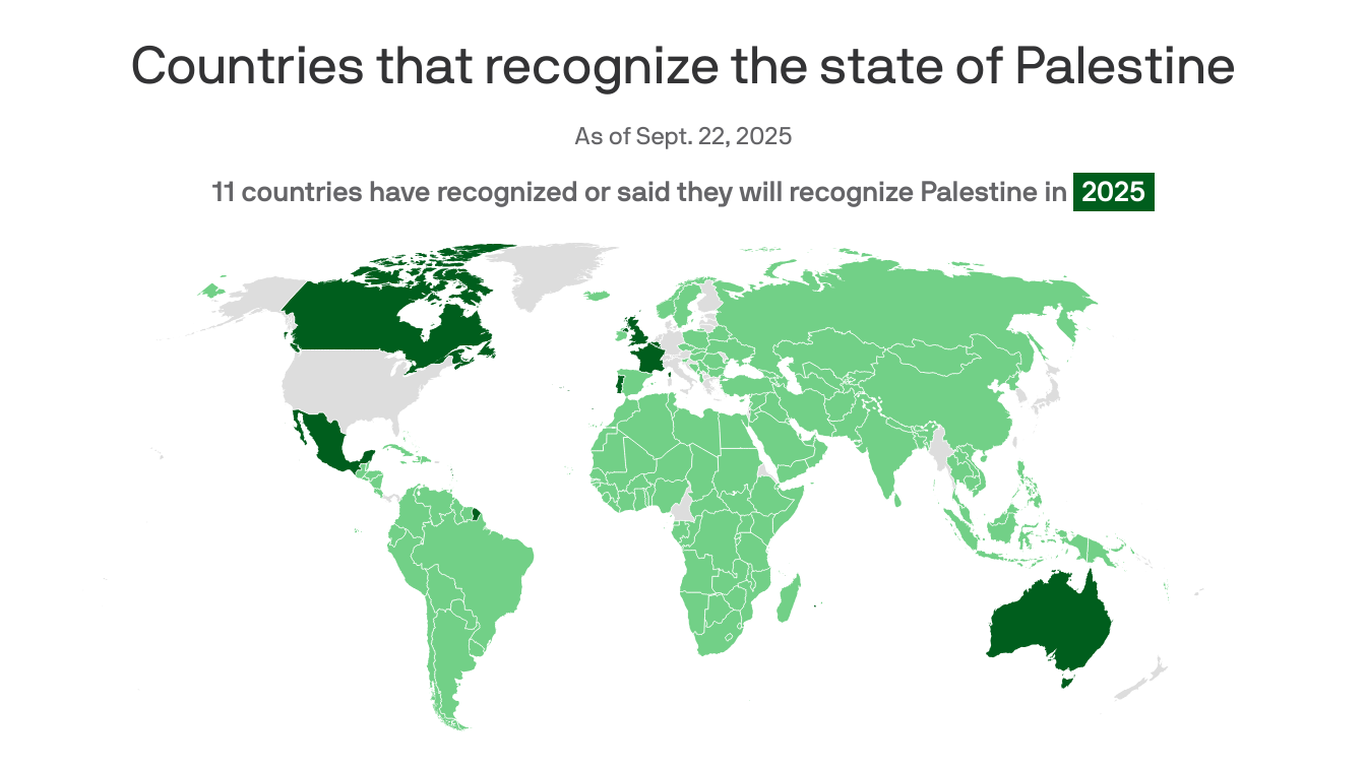
The UN General Assembly this week will be dominated by the accelerating international recognition of a Palestinian state, with France poised to join Spain, Ireland, and Norway in formally acknowledging statehood. This diplomatic push, advocated by proponents as crucial for a two-state solution and empowering the Palestinian Authority against Hamas, faces significant opposition from the U.S. and Israel, highlighting a growing geopolitical divergence with potential implications for regional stability.
A significant geopolitical divergence is crystallizing around the formal recognition of a Palestinian state, positioning the United States and Israel against a growing coalition of countries, including key European allies. This week's UN General Assembly will serve as a focal point for this debate, with France's planned recognition on Monday marking an acceleration of a trend that saw Spain, Ireland, Norway, and others take the same step in 2024. Proponents, such as the leaders of France, the UK, and Canada, frame recognition as a necessary step toward a two-state solution and a strategic maneuver to empower the Palestinian Authority, thereby undermining Hamas. Conversely, the U.S. administration, exemplified by Secretary of State Marco Rubio's description of the move as 'reckless', and the Israeli government view it as a reward for terrorism. Despite the profound diplomatic implications and the theme of 'Geopolitics & War', the associated data signals a neutral sentiment and a very low market impact score of 0.1, suggesting that financial markets are not currently pricing in this development as a significant, immediate threat to stability or asset values.
AI-powered research, real-time alerts, and portfolio analytics for institutional investors.
Request DemoOverall Sentiment
neutral
Sentiment Score
0.00
