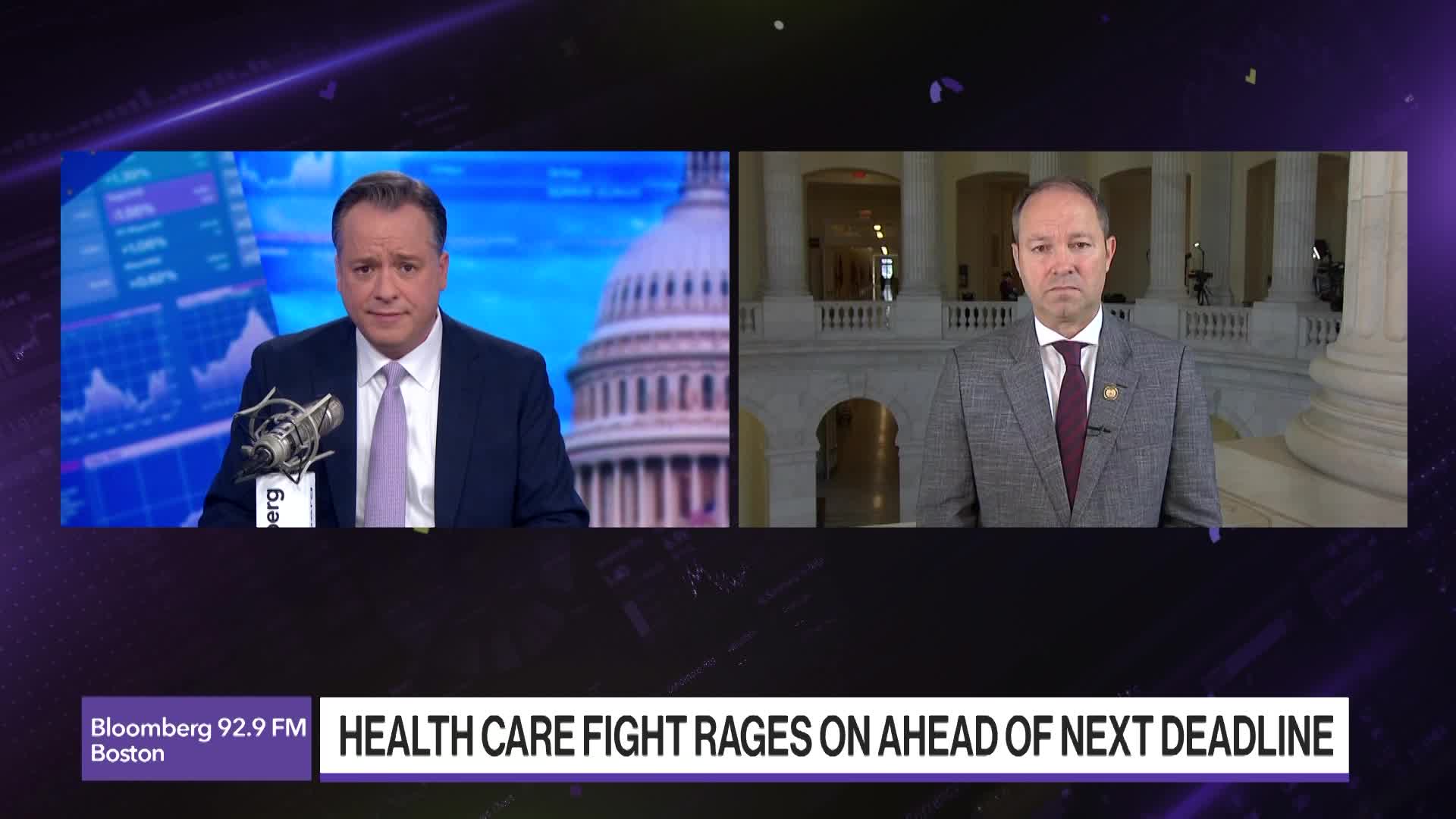
A House Republican lawmaker warned the Affordable Care Act remains unaffordable for businesses and consumers and expressed opposition to routing temporary insurance subsidies to insurers, favoring direct consumer-directed vehicles (FSAs/HSAs) instead; he was skeptical of a one-year Gottheimer-Kagan subsidy extension that channels funds through insurers. He expects Congress to avoid a shutdown via minibus appropriations, supports Speaker Johnson’s approach to budget cuts and NDAA negotiations, backs redistricting efforts in Indiana, and voiced support for Kevin Hassett as a potential Fed chair, noting modestly easing interest-rate conditions.
Market structure: Congress pushing subsidy redesign and consumer-directed HSAs favors HSA custodians and fintech that administer pre-tax health accounts, while it risks compressing pricing power and margins of large commercial insurers (UNH, ELV, CI, HUM) if subsidies flow to individuals not premiums. Expect short-term volatility as insurers incur higher admin/compliance costs from eligibility guardrails and fraud enforcement, while demand for HSA-linked investment products should rise 15–30% y/y if policy shifts are enacted within 3–12 months.
Risk assessment: Immediate risk (days–weeks) is legislative ambiguity driving headline volatility; short-term (1–3 months) risk is a partial extension vs consumer-direct accounts debate that will determine earnings impact for 2026 pricing cycles; long-term (12–36 months) is structural if subsidies permanently redirect, lowering insurer gross margins by mid-single-digit percentage points. Tail scenarios: a shutdown or sweeping price controls would be high-impact (>-10% EPS shock for insurers); hidden dependency: insurers’ Medicare Advantage and employer contract re-pricing can blunt consumer-account losses.
Trade implications: Tactical plays: long HSA administrators (HQY) and select consumer-health fintechs; tactical short/hedge large insurers (UNH, ELV) via equity or put spreads. Use pair trades (long HQY, short UNH) to isolate policy risk; consider 3–9 month option structures (buy HQY calls, UNH/ELV put spreads) sized 0.5–3% NAV; if Republicans secure verifiable spending-cut language in 4–8 weeks, add 2–5% duration to 7–10y Treasuries.
Contrarian angles: Consensus underestimates insurers’ ability to reprice employer and MA books — blanket shorts are risky without hedges; historical parallels (ACA subsidy debates 2017–18) show headline-driven drawdowns reversed once pricing cycles adjusted. Unintended consequence: higher consumer price sensitivity via HSAs could reduce utilization and medical-loss ratios, creating mixed outcomes across hospital vs insurer stocks—favor granular pair trades over sector bets.
AI-powered research, real-time alerts, and portfolio analytics for institutional investors.
Request DemoOverall Sentiment
moderately negative
Sentiment Score
-0.25
