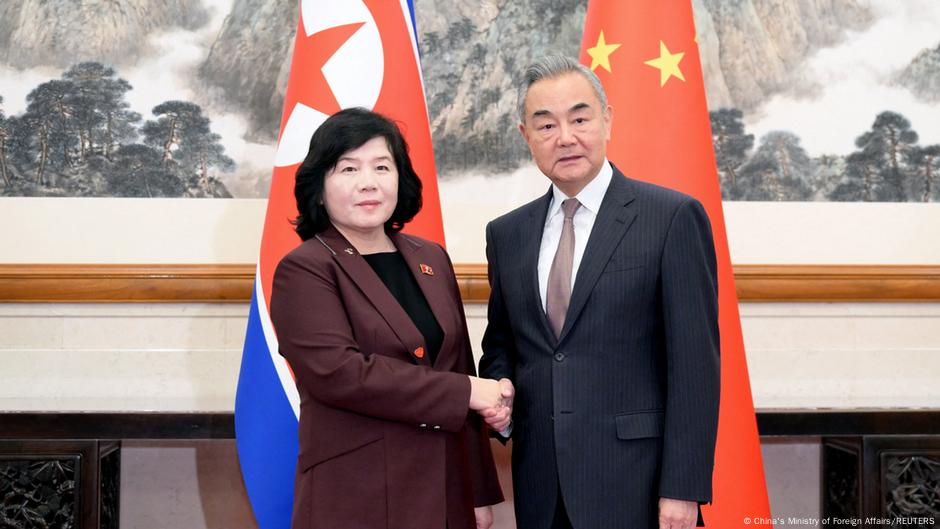
China and North Korea's foreign ministers met in Beijing, agreeing to deepen bilateral ties and resist 'all forms of hegemonism,' a clear signal against perceived U.S. influence. This re-strengthening of their alliance, following a period where Pyongyang prioritized relations with Russia, indicates a coordinated effort to counter the U.S. and promote an alternative world order. The move carries implications for regional stability and geopolitical dynamics, particularly as North Korea seeks to reinforce traditional alliances ahead of anticipated post-Ukraine war shifts.
The recent meeting between the foreign ministers of China and North Korea signals a significant recalibration and strengthening of their strategic alliance, explicitly aimed at countering perceived U.S. 'hegemonism.' This development follows a period where Pyongyang's diplomatic focus appeared to shift towards Russia, particularly through its support for the war in Ukraine. The reaffirmation of China's 'unswerving strategic policy' towards North Korea, coupled with Pyongyang's commitment to resist 'unilateralism,' indicates a coordinated effort to present a united front against the U.S. and its regional allies. According to experts cited in the report, North Korea's move to reinforce ties with Beijing is a strategic preparation for the post-Ukraine war geopolitical landscape. This renewed alignment, underscored by an anticipated high-level Chinese delegation visit to Pyongyang, heightens geopolitical tensions in East Asia and solidifies a trilateral axis of interests between China, North Korea, and Russia, posing direct challenges to regional stability and U.S. foreign policy.
AI-powered research, real-time alerts, and portfolio analytics for institutional investors.
Request DemoOverall Sentiment
mildly negative
Sentiment Score
-0.20
