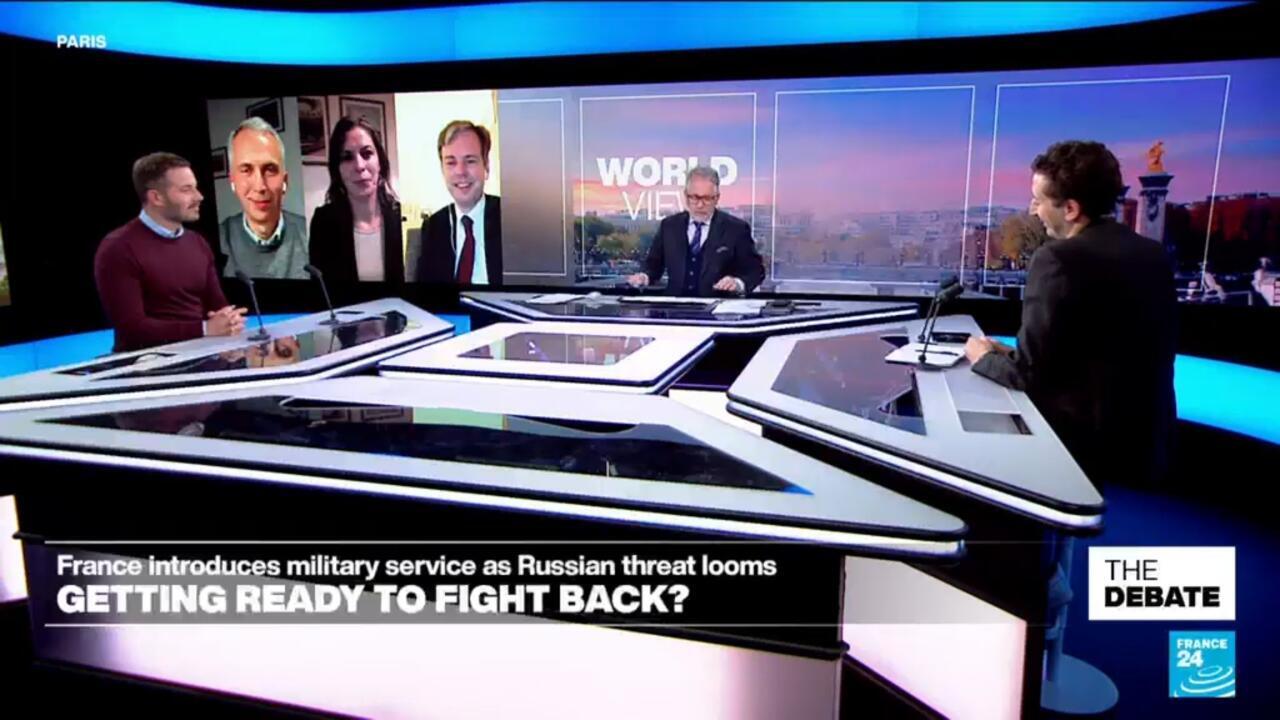
French President Emmanuel Macron announced the reintroduction of a national military service, to be voluntary, last around one year and pay participants €800 per month, open to all young people; the announcement was made at an army barracks in Varces, Isère. Macron framed the move as a response to a growing threat from Russia; the policy implies a measurable near-term fiscal cost and potential modest lift to defense readiness and related contractors, while contributing to broader geopolitical risk that may weigh on investor risk appetite.
Market structure: Macron’s national service reintroduction signalizes incremental, multi-year uplift in French and European defense demand (equipment, training, logistics, cyber) rather than a one-off consumer stimulus; if France enrolls 50k–200k people initially, annual direct wage bill is €0.5–2.0bn and procurement follow‑on could be €1–5bn over 2–4 years, favoring defense primes (Thales HO.PA, Safran SAF.PA, Dassault AVMD.PA, Rheinmetall RHM.DE) and training/logistics contractors. Consumer-discretionary and hospitality in France are modest losers via diverted fiscal resources and possible labour reallocation; domestic small-caps with heavy French consumer exposure are most at risk.
Risk assessment: Near-term (days–weeks) expect modest risk‑off in EUR and French sovereign spreads (OATs widening vs Bunds by 5–20bp); medium-term (3–12 months) procurement announcements and EU defense coordination are key catalysts; long-term (1–5 years) structural budget reweighting could raise French yields by 10–30bp if scaled to large cohorts. Tail risks include escalation with Russia triggering energy embargoes (oil +$10–$30/bbl shock) and sudden sovereign funding stress; hidden dependencies include labor shortages in low‑wage sectors and higher inflationary pressure from defense supply chains.
Trade implications: Favor overweight positions in European defense primes and cybersecurity integrators with 12–24 month horizons (target +20–35%), hedge EUR exposure and buy duration protection on OAT‑BUND spread. Use option structures to express asymmetry (call spreads on defense names, EUR puts) and prefer pair trades (long defense vs short French discretionary) to isolate geopolitical beta from market beta.
Contrarian angles: Consensus may underprice the multi-year procurement ripple — market reaction today likely conservative because headline cost seems small; conversely, uptake could be weak if voluntary take‑up disappoints, leaving defense suppliers exposed to margin compression from one‑off capacity builds. Historical parallel: post‑2015 France saw multi‑year rerating of Thales/Rheinmetall after terror‑driven budgets; monitor concrete budget lines within 30–60 days to separate noise from durable procurement flows.
AI-powered research, real-time alerts, and portfolio analytics for institutional investors.
Request DemoOverall Sentiment
mildly negative
Sentiment Score
-0.25
