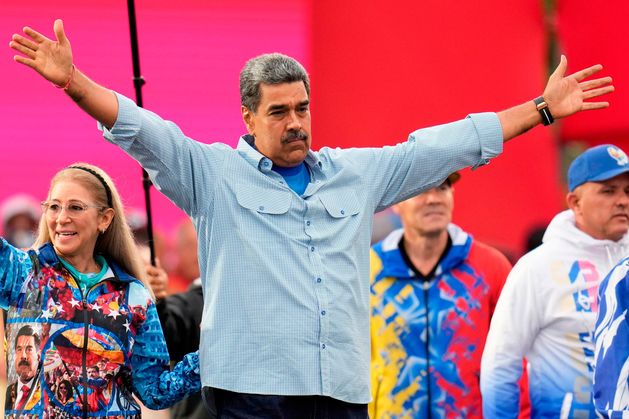
Venezuela, despite holding the world’s largest oil reserve, is undergoing severe humanitarian decline with famine and rising child mortality, illustrating a stark disconnect between natural-resource endowment and population welfare. Western travel advisories and the rarity of foreign media access—highlighted by a CBS 60 Minutes crew visit in October—underscore elevated country risk and practical constraints for foreign investors and energy companies operating or considering exposure to Venezuelan assets.
Market structure: Venezuela’s latent ~0.8–1.5 mb/d upside (realistic 12–24 month ramp if sanctions/financing change) creates asymmetric winners — heavy‑crude refiners (PBF, VLO) and any majors with local waivers (Chevron CVX) — and losers: PDVSA bondholders, small-cap E&P names and regional sovereign-credit sensitive instruments. Pricing power remains with OPEC+ in the near term because Venezuelan output is capital‑and‑power constrained; a staggered return would shave $3–8/bbl from Brent over 12–24 months, not a sudden collapse.
Risk assessment: Tail risks include renewed sanctions/hybrid warfare shutting any recovery (low probability, high impact) or a rapid policy thaw in Washington enabling ~+1 mb/d within 12 months (policy catalyst). Immediate (days) — headline volatility in oil and EM FX; short term (weeks–months) — spread moves between heavy/light crude; long term (quarters–years) — structural capex need and investment returns tied to political reform. Hidden dependencies: power grid, skilled labor, and foreign financing; without these, production gains plateau despite reserve size.
Trade implications: Tactical plays should prefer asymmetry — option structures and relative value across the energy/refining chain rather than binary sovereign exposure. Cross‑asset: oil downside compresses energy credit spreads and hurts US shale cash flows (wider spreads), while geopolitical risk lifts gold and USD‑safe assets. Time entries around US policy windows and OPEC meetings (next 3–9 months).
Contrarian angles: Consensus underestimates the operational frictions — historical parallels (Iraq/Libya) show multi‑year reintegration, so market may be too bullish on immediate Venezuelan relief. Conversely, if markets price in a political thaw, heavy‑crude tailwind could be overdone — enabling short‑duration, event‑driven trades. Unintended consequence: a measured Venezuelan comeback benefits refiners more than producers and can structurally compress heavy/light spreads.
AI-powered research, real-time alerts, and portfolio analytics for institutional investors.
Request DemoOverall Sentiment
strongly negative
Sentiment Score
-0.70
