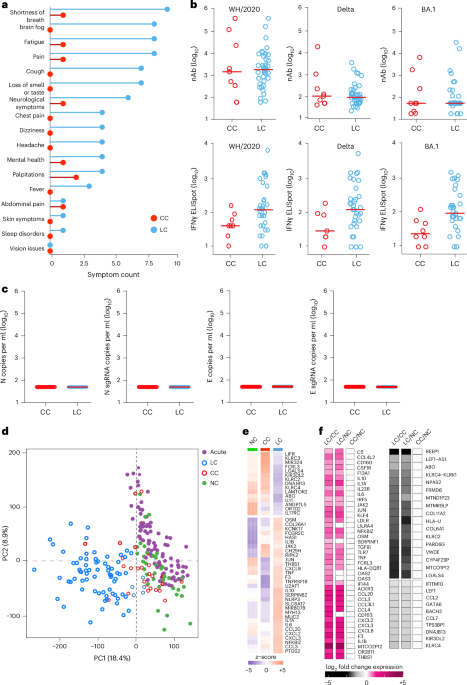
A multi-omics study of cohorts enrolled in 2020–21 (n=142) and 2023–24 (n=38) found that Long COVID (LC) is marked by persistent systemic inflammation for >180 days versus convalescent controls, with upregulation of IL‑6, JAK‑STAT and IFNγ signaling, complement and coagulation cascades, metabolic dysregulation and signatures of CD8+ T‑cell exhaustion; proteomics and transcriptomics converged on these pathways and acute-phase inflammatory activation predicted later LC development. SARS‑CoV‑2 RNA was not detected in plasma, neutralizing antibody titers did not differ from controls, and prior trial data showing no benefit of nirmatrelvir‑ritonavir underscore the limited role of antivirals for LC in this dataset. The findings nominate IL‑6/JAK‑STAT and related inflammatory and metabolic pathways as candidate biomarkers and therapeutic targets (the authors have initiated a JAK1 inhibitor trial, abrocitinib, NCT06597396), supporting a shift toward immunomodulatory/metabolic strategies for LC treatment and biomarker-driven clinical development.
The study reports multi-omics analyses in a discovery cohort (2020–2021, n=142) and an independent validation cohort (2023–2024, n=38) showing that Long COVID (LC) is associated with persistent systemic immune activation for more than 180 days versus convalescent controls. Transcriptomics and plasma proteomics consistently identified upregulation of IL‑6, JAK‑STAT and IFNγ signaling, complement and coagulation cascades, metabolic pathway shifts and signatures of CD8+ T‑cell exhaustion, while neutralizing antibody titers were similar and no plasma SARS‑CoV‑2 RNA was detected.
A supervised random‑forest model and acute‑phase profiling indicated that early proinflammatory activation (IL‑6, JAK‑STAT, complement, IFN) predicted subsequent LC development; plasma IL‑6R was specifically elevated in LC and clinical symptoms (fatigue, dyspnea, cognitive complaints) correlated with these pathways. The STOP‑PASC trial is cited showing nirmatrelvir‑ritonavir did not improve LC symptoms, and the authors have opened a JAK1 inhibitor trial (abrocitinib, NCT06597396) targeting the nominated pathways.
Proteomics also revealed decreased cytotoxic T‑cell and DNA‑repair/telomere maintenance signatures, suggesting broader immunometabolic dysfunction that could influence therapeutic response and biomarker selection. The authors acknowledge limitations including relatively small, female‑skewed cohorts and bulk RNA‑seq resolution, underscoring that findings are hypothesis‑generating and require larger, diverse and single‑cell/functional validation before changing clinical practice.
AI-powered research, real-time alerts, and portfolio analytics for institutional investors.
Request DemoOverall Sentiment
mixed
Sentiment Score
0.00
Ticker Sentiment
