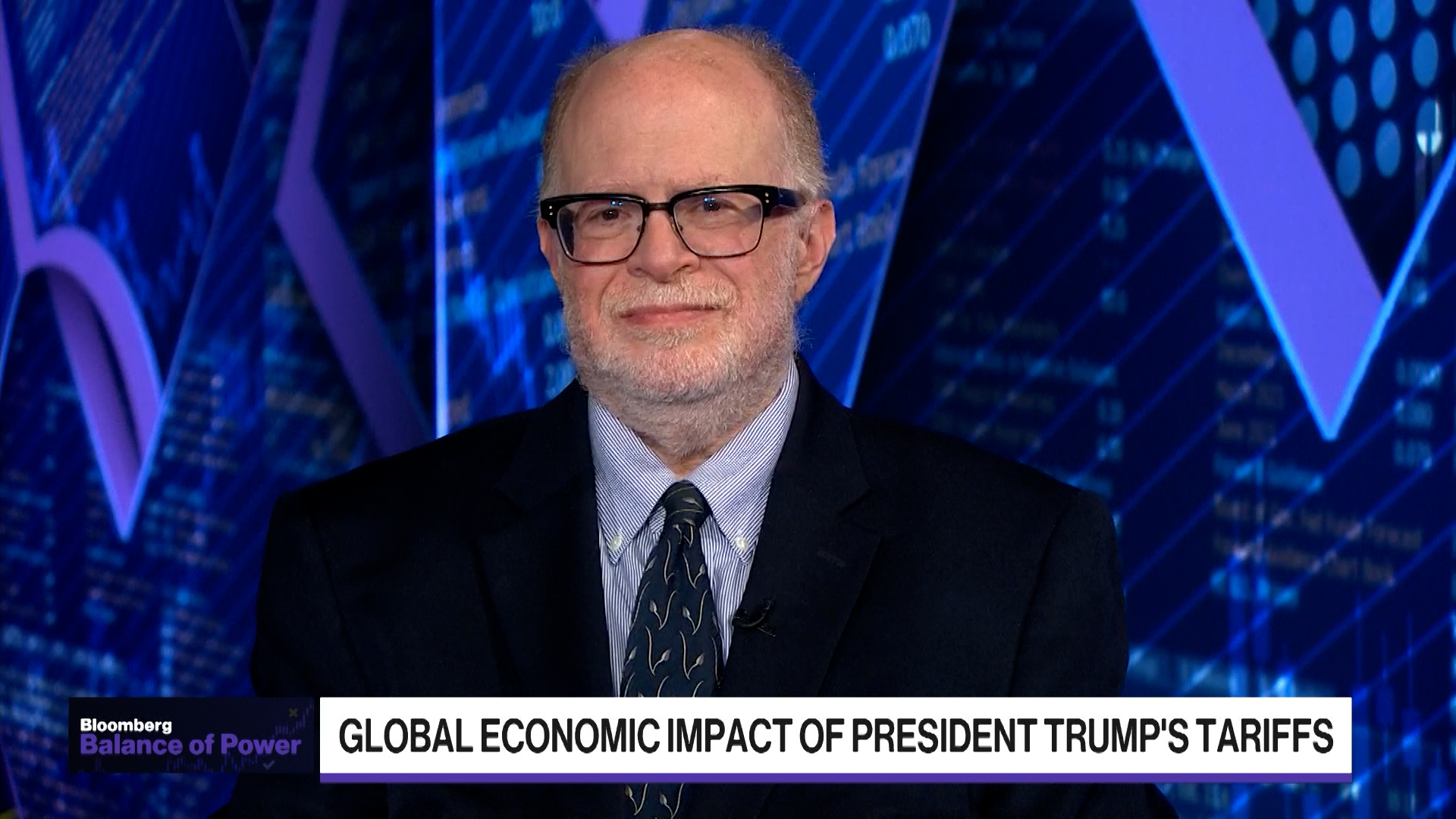
Recent Bloomberg coverage indicates former President Trump is advocating for flexibility from both Putin and Zelenskiy, pushing for a summit to resolve the Ukraine conflict, a view that contrasts with advice against Zelenskiy making concessions. Separately, a former National Security Official underscored AI's critical role in the US-China cybersecurity race, highlighting key geopolitical and technological strategic concerns for investors.
Recent commentary highlights two distinct and significant geopolitical vectors for investors to monitor. First, in relation to the Russia-Ukraine conflict, divergent potential policy paths are emerging. Former President Trump's advocacy for a summit where both parties show "flexibility" signals a potential shift towards a negotiated settlement, a stark contrast to the view expressed by former officials like William Taylor, who advise against Ukrainian concessions. This introduces uncertainty regarding the future of Western support and the conflict's duration, with direct implications for defense, energy, and European markets. Second, the strategic competition between the US and China is underscored by the emphasis on AI's critical role in cybersecurity. This reinforces the long-term, structural trend of technological decoupling and national security-driven investment, suggesting sustained tailwinds for domestic leaders in these strategic sectors. The neutral sentiment and low immediate market impact score reflect that these are developing narratives and long-term themes rather than immediate market-moving catalysts.
AI-powered research, real-time alerts, and portfolio analytics for institutional investors.
Request DemoOverall Sentiment
neutral
Sentiment Score
0.00
