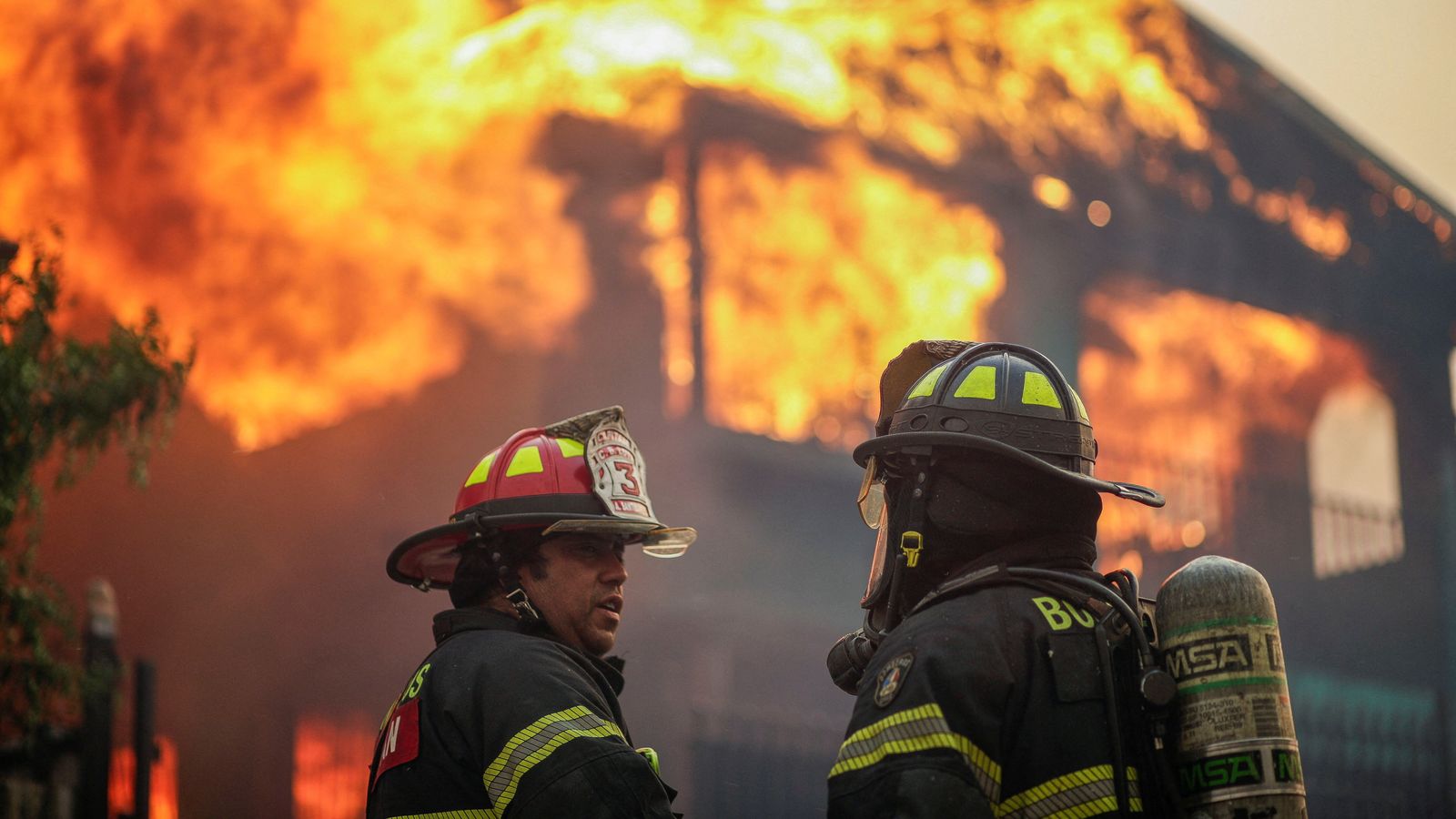
Chile declared a state of catastrophe in the Nuble and Bío Bío regions after wildfires killed at least 16 people, destroyed more than 250 properties, burned roughly 33 square miles, and forced nearly 20,000 residents to evacuate while firefighters fought 24 separate blazes. Strong winds and unusually high temperatures (up to 38°C) have worsened the situation, creating near-term risks to regional infrastructure, agriculture and insurance exposures and likely prompting emergency resource deployment and potential government fiscal support.
Market structure: Winners in the near-term are reconstruction and heavy-equipment suppliers (global OEMs like CAT) and regional construction/materials contractors; losers are property insurers/reinsurers (claims flow) and Chile-exposed equity/bondholders as local economic activity and ports are disrupted. Expect short-lived regional pulp/wood price spikes (days–weeks) from port/logistics disruption despite burnt area (~33 sq miles) being <0.5% of Chile’s planted forest area, and a 1–3% FX shock in USD/CLP as capital flows to safety.
Risk assessment: Tail risks include escalation to mining/energy assets (knock-on to copper output) or a multi-month drought that raises insured losses to high hundreds of millions or >$1bn public reconstruction costs, which would widen Chile sovereign spreads by 25–75bps. Immediate (0–7 days) risk: logistics/port closures and volatility; short-term (weeks–3 months): insurance loss estimation and equity repricing; long-term (6–24 months): fiscal spending, regulatory ESG/land-use changes, and higher insurance premia.
Trade implications: Tactical trades: short-term volatility favoring buying protection in FX and insurance names — buy USD/CLP calls or forwards for 1–3 months and buy 1–3 month puts on major reinsurers (e.g., MUV2.DE, SREN.SW) size 1–2% NAV to capture a 5–15% downside. Reconstructive demand supports a 3–9 month long in CAT (target +10–15%). Avoid or underweight Chile-exposed equities/banks until claims and fiscal plan clear (30–90 days).
Contrarian angles: Consensus will punish reinsurers immediately but historical catastrophe sell-offs (post-loss drawdowns often >10%) offer 6–12 month buying opportunities once losses are booked; if global reinsurers fall >12% consider buying tier-1 reinsurers for a mean reversion trade. Also, regulatory response could accelerate public spending into grid/fire mitigation—long renewable/utilities with Chile exposure (e.g., ENEL Chile) on 6–18 month view.
AI-powered research, real-time alerts, and portfolio analytics for institutional investors.
Request DemoOverall Sentiment
moderately negative
Sentiment Score
-0.45
