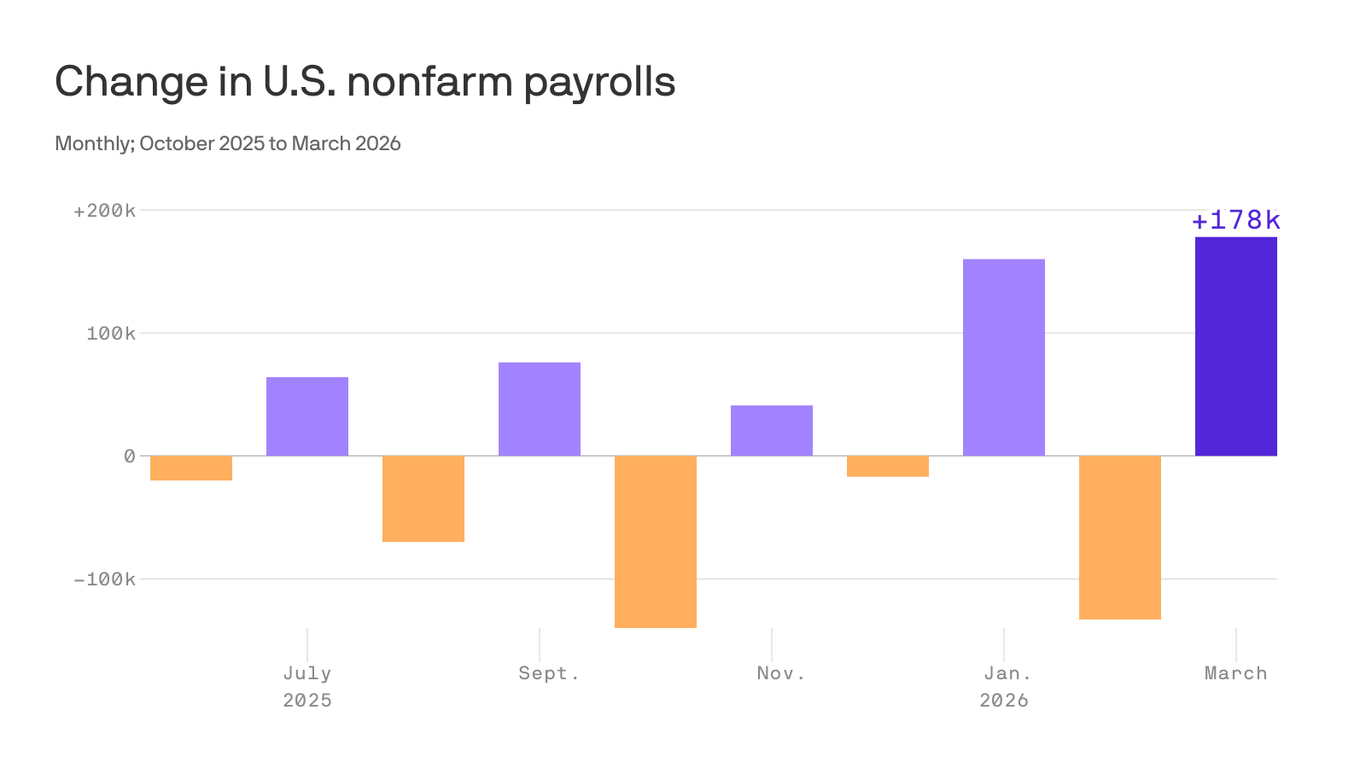
The economy added 178,000 jobs in March and the unemployment rate fell to 4.3%, a beat of nearly three times economists' expectations. Health care led gains with +76,000 (post-strike returns), construction added +26,000 and transportation & warehousing +21,000; February was revised down to a 133,000 job loss and federal payrolls fell another 18,000 (−355,000 since Oct 2024). The print shows early labor-market resilience amid the Iran war but heightens Fed tension: potential upside inflation from energy shocks versus downside labor risk, leaving policy decisions uncertain.
The March payroll rebound masks an important composition effect: a large share of the strength is catch‑up hiring in healthcare as strike disruptions unwind. That implies a concentrated, near‑term boost to staffing agencies, temporary labor pools and payroll processors rather than a broad‑based acceleration of underlying labor demand; expect sequential payrolls to soften once strike backlog is cleared unless underlying demand re‑accelerates.
Federal payrolls have been down for multiple months — a structural drain on consumption in federal‑heavy labor markets and a persistent headwind for agencies and IT/consulting contractors that rely on government billings. Meanwhile the pickup in transportation and warehousing hiring signals ongoing logistics activity (inventory rebuild / supply‑chain rebalancing) but leaves those margins exposed to higher diesel and freight costs if the Middle East shock keeps energy elevated.
For policy and markets, the key second‑order effect is greater volatility in inflation breakevens and real yields: an energy shock raises headline and near‑term core risks even as labor fragility argues against a sustained tightening cycle. That creates a multi‑month window to trade inflation protection, duration dispersion and sectoral dispersion (healthcare staffing vs federal contractors vs logistics owners) as successive data prints reveal whether the March bounce was transitory or the start of renewed resilience.
AI-powered research, real-time alerts, and portfolio analytics for institutional investors.
Overall Sentiment
mildly positive
Sentiment Score
0.20
