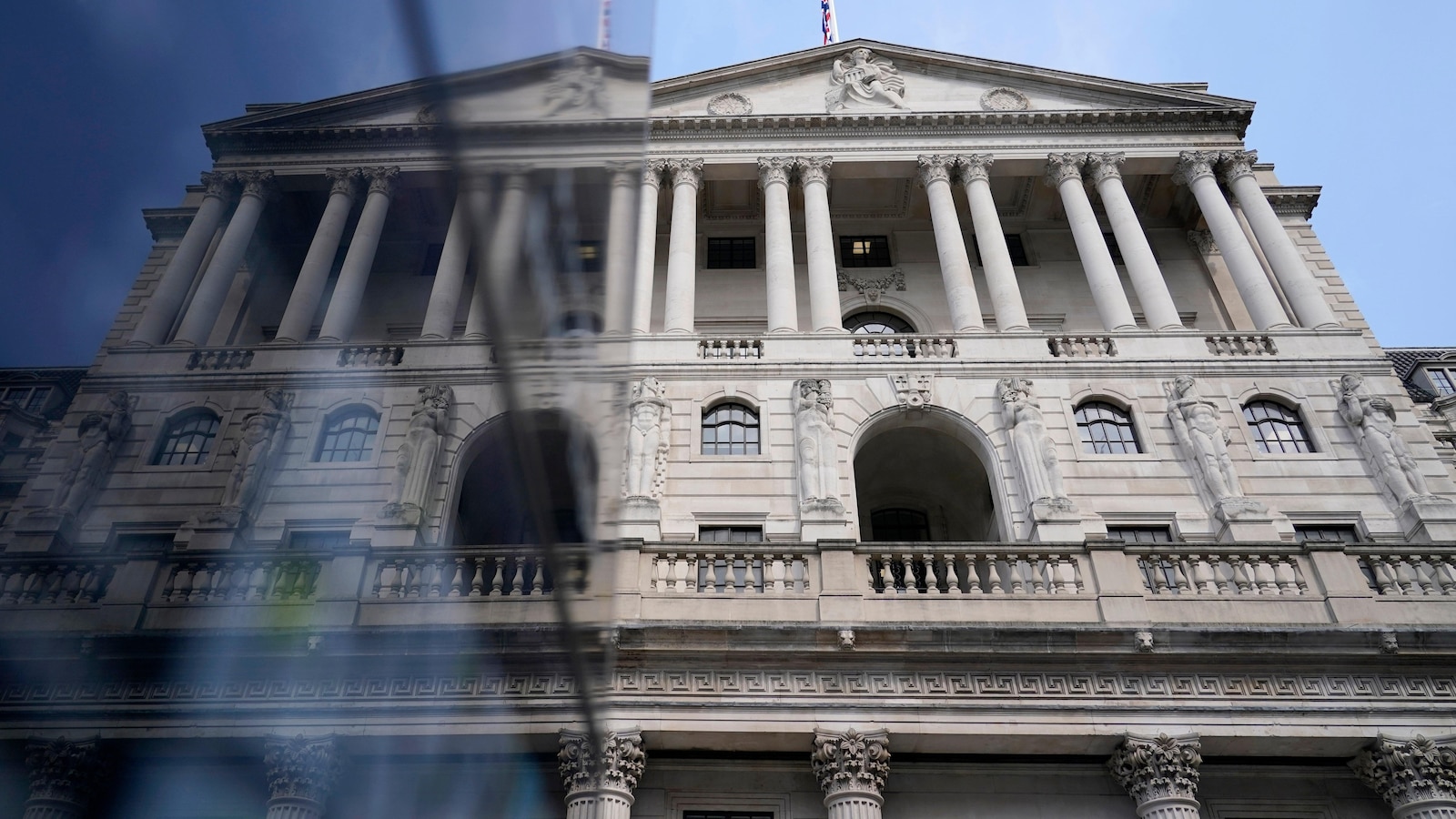
The Bank of England maintained its key interest rate at 4% following a divided vote (5-4), pausing its gradual rate-cutting cycle despite indications that inflation, currently at 3.8%, has likely peaked. This decision underscores policymakers' need for further data on inflation's trajectory and the potential impact of the upcoming UK government budget on November 26th, which is anticipated to include tax increases that could affect the economy and future price pressures. The central bank's cautious stance, contrasting with recent Federal Reserve cuts, signals continued uncertainty regarding the timing of future monetary easing.
The Bank of England maintained its key interest rate at 4% following a divided 5-4 vote, pausing its gradual rate-cutting cycle. This decision, while widely anticipated, marks the first time the BoE has opted against a quarterly rate cut since initiating reductions in August 2024, contrasting with recent Federal Reserve easing. Policymakers cited the need for more data on inflation's trajectory before further adjustments.
Current UK consumer price inflation stands at 3.8%, nearly double the 2% target, although the Monetary Policy Committee believes it has likely peaked below its previous 4% forecast. Future monetary policy is heavily influenced by the upcoming UK government budget on November 26th, which Treasury chief Rachel Reeves indicated would include tax increases aimed at reducing inflation and potentially dampening the economy.
Many economists anticipate a potential rate cut in December, contingent on inflation continuing its downward trend towards the 2% target next year. However, the BoE's cautious stance, coupled with the uncertain economic impact of the impending fiscal tightening, introduces significant ambiguity for future policy moves. The overall market sentiment is mixed with an uncertain tone, reflecting this complex outlook.
AI-powered research, real-time alerts, and portfolio analytics for institutional investors.
Overall Sentiment
mixed
Sentiment Score
-0.10
