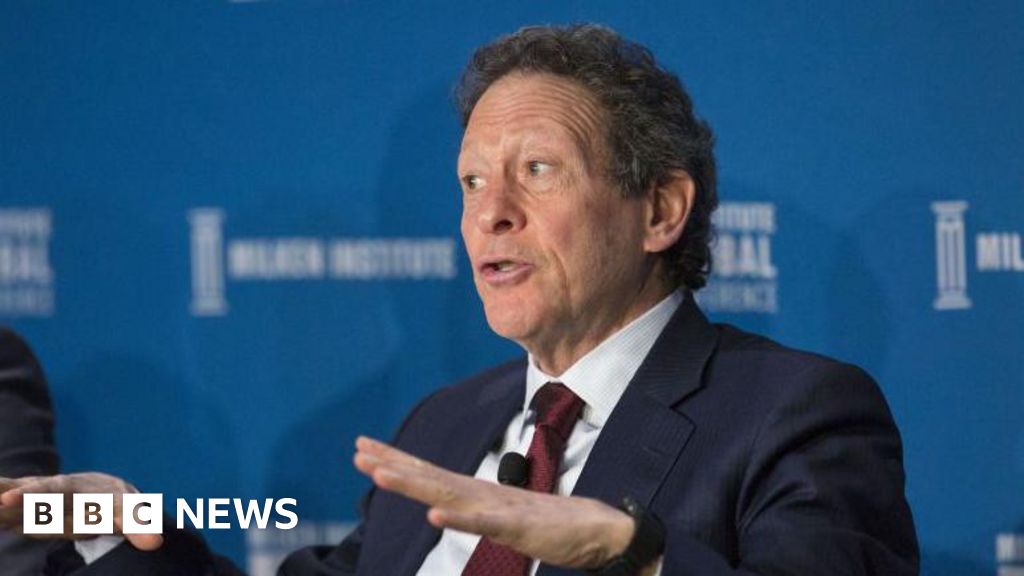
Thomas Pritzker, Hyatt Hotels' executive chairman since 2004, has retired and will not stand for re-election after Department of Justice files showed he maintained contact with convicted sex offender Jeffrey Epstein; Pritzker acknowledged exercising "terrible judgement" and said he deeply regretted the association. The board has named CEO Mark Hoplamazian as chairman, and Hyatt emphasized it is in a "strong and sustainable position," suggesting limited operational disruption but elevated reputational and governance scrutiny that could attract investor attention.
Market Structure: The immediate market impact is reputational rather than demand-driven — Hyatt (H) faces a short-term governance premium hit while room-night demand and pricing power in travel remain intact. Competitors with cleaner governance (e.g., HLT, MAR) can capture incremental institutional flows; expect a 2–6% relative performance swing over 1–3 months as ESG-driven index and ETF flows reweight. Credit markets may see a modest spread widening for Hyatt bonds (10–40bp) if headlines persist; options IV on H should be bid for 2–6 weeks.
Risk Assessment: Tail risks include class-action suits, proxy fights, or further DOJ disclosures creating persistent headline risk; low-probability but high-impact scenarios could knock H down >15% and invite covenant scrutiny on leveraged subsidiaries. Immediate (days): elevated volatility and potential 3–8% swings; short-term (weeks–months): board transition and institutional rebalancing; long-term (quarters–years): fundamentals recover if RevPAR growth remains +5–10% y/y. Hidden risks: supplier/franchise contract clauses and insurance exclusions tied to reputational events.
Trade Implications: Short-term defensive play: buy 1–2% portfolio protection via 3-month H puts (5–10% OTM) to hedge a 5–12% downside over 30–90 days. Relative-value: establish a 2% long in HLT (or MAR) vs 2% short H for 3–6 months to capture governance re-rating; use equity swaps or futures to match beta. If H gaps down >8% within 60 days, scale a tactical 2–3% long with 6-month puts 5% below cost as hedge.
Contrarian Angles: Consensus focuses on reputational headlines but underestimates balance-sheet resilience — Hyatt EBITDA margin shocks would need sustained revenue declines >15% to justify deep multiple compression. Historical precedent (executive resignations over scandals) shows operational recovery in 3–12 months if management change is orderly. Activist-driven governance fixes are a positive tail that could restore multiple; contrarian long-on-dip with option hedges is asymmetric.
AI-powered research, real-time alerts, and portfolio analytics for institutional investors.
Request DemoOverall Sentiment
moderately negative
Sentiment Score
-0.30
Ticker Sentiment
