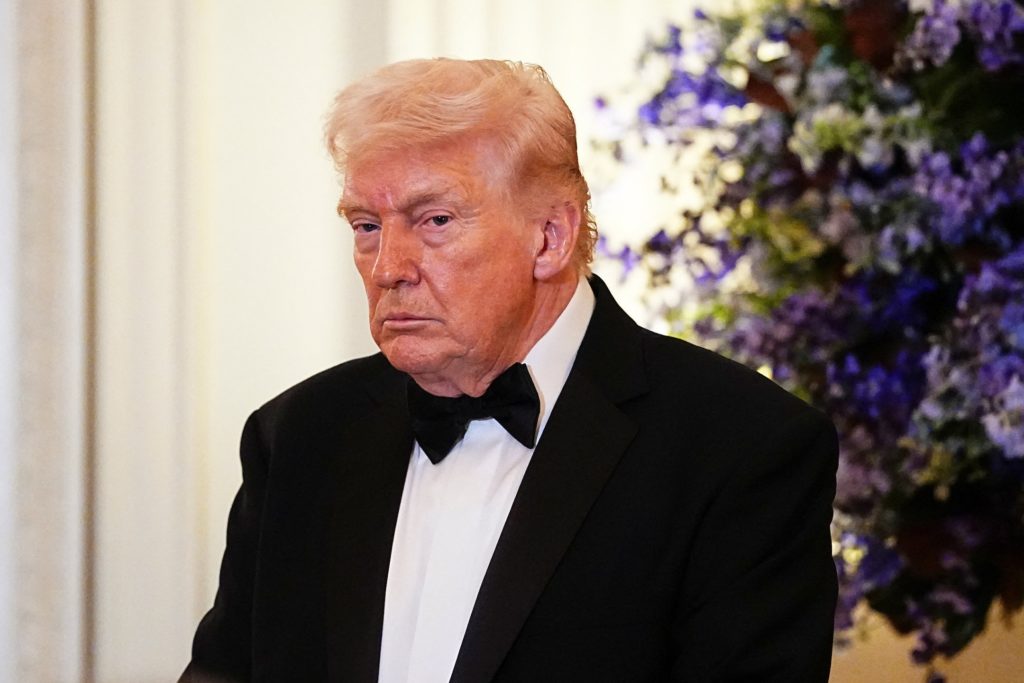
A federal judge has permanently blocked the release of a report on President Biden's predecessor’s handling of classified documents after he left office in 2021, underscoring ongoing political-legal risk tied to high-profile records and investigations. The piece also notes President Trump urging trading partners to honor existing tariff agreements, signaling potential trade policy stickiness, and the Supreme Court agreeing to hear oil and gas companies’ bid to block climate-liability lawsuits—an action that could materially affect legal exposure for energy firms and related insurers depending on the court’s ruling.
Market structure: The blocked report and continued tariff rhetoric primarily benefit large, integrated energy majors (XOM, CVX) and domestic-capex heavy industrials (NUE, X) because reduced litigation or firmer tariff enforcement preserves margins and raises pricing power; small-cap exporters and litigation-dependent plaintiffs (litigation finance, certain municipal creditors) are the losers. Supply/demand: a favorable legal outcome for oil firms reduces a near-term liability overhang, supporting free cash flow by an estimated 2–5% annually for majors; stronger tariffs shift ~1–3% of demand toward domestic producers in steel/industrial sectors over 6–12 months. Cross-asset: expect knee-jerk equity volatility (+20–40% VIX spikes intraday around rulings), short-term Treasury safe-haven bids (10y -10–30bps), and modest gold upside (3–6%) on political/legal uncertainty.
Risk assessment: Tail risks include an adverse Supreme Court or state-level rulings forcing multi-billion dollar settlements (high impact, low probability) or escalation of tariff wars prompting supply-chain shocks; either could erase near-term equity gains. Time horizons: immediate (days) = event-driven volatility; short-term (weeks–months) = legal briefs, oral arguments and tariff announcements; long-term (quarters–years) = regulatory precedent that alters capex and ESG investment flows. Hidden dependencies: outcomes hinge on narrow legal doctrines (federal preemption vs state tort law) and concurrent political calendar events that can amplify markets. Catalysts: SCOTUS docket dates, DOJ filings, state AG announcements, and any new tariff enforcement statements.
Trade implications: Direct plays favor 6–12 month longs in XOM/CVX (capture liability re-rating and cash returns) and selective longs in domestic steel (NUE) sized at 1–3% each; offset with shorts in export-sensitive industrials (CAT) where tariff protection is ambiguous. Options: use cost-efficient call spreads on energy majors (buy ATM, sell +12–20% strike, 6–9 month expiries) to express bullish view while limiting premium. Hedging: allocate 0.25–0.5% portfolio to 1-month VIX call spreads into major hearing dates and set stop-losses at 25% of premia paid.
Contrarian angles: Consensus underestimates the potential for a favorable SCOTUS ruling to re-rate oil majors by more than 5–10% if it removes a chronic litigation discount—historical parallel: post-tobacco indemnity reductions that lifted integrated producers. Conversely, if markets rally on that thesis, short-term overextension could be undone by state legislative countermeasures (new taxes or disclosure rules) — an asymmetric risk often ignored. Unintended consequence: a legal win for oil may accelerate ESG-driven capital reallocation risk in renewables funding, creating opportunistic long-term buys in beaten-down clean-energy names after volatility subsides.
AI-powered research, real-time alerts, and portfolio analytics for institutional investors.
Request DemoOverall Sentiment
neutral
Sentiment Score
0.00
