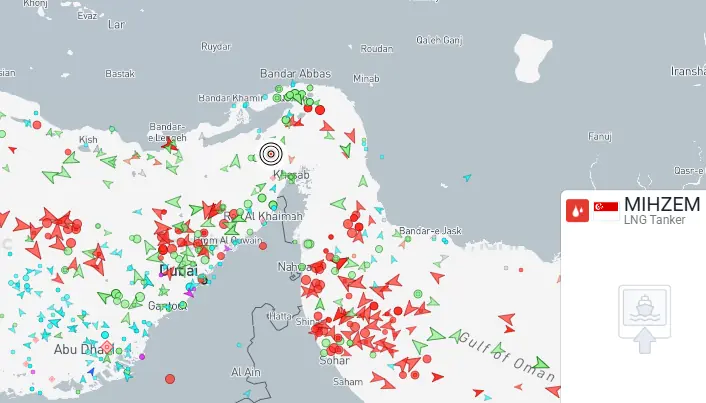
A second Qatari LNG tanker, Mihzem, is transiting the Strait of Hormuz and is expected to reach Karachi’s Port Qasim on May 12, marking the second successful passage for a Qatari LNG cargo since the Iran war began. The move underscores that LNG shipments are still getting through the chokepoint, but only on a case-by-case basis amid elevated conflict risk. The article is operationally significant for regional energy flows and shipping routes, though not an immediate market shock.
The key signal is not the individual cargo; it is that shipping through Hormuz is becoming increasingly bilateral and permissioned. That creates a two-tier market: counterparties with explicit state-level coordination can keep moving molecules, while everyone else faces a higher effective war-risk premium, longer routing decisions, and more expensive marine insurance. The second-order winner is any producer or trader with flexible destination clauses and diplomatic optionality; the loser is the spot-market buyer that relies on just-in-time LNG replacement and has little ability to front-run disruptions.
For gas markets, this is bearish near-term volatility but not necessarily bearish price. If cargoes continue to clear case-by-case, prompt supply is preserved, which caps an immediate panic spike; however, the market will start pricing a higher probability of a sudden closure or selective interdiction, steepening the forward curve and widening regional basis spreads. Europe and Asia both face higher delivered-cost risk, but the largest relative beneficiary may be U.S. LNG with no transit exposure, especially if buyers seek redundancy rather than pure cost.
The contrarian takeaway is that repeated successful passages can lull the market into underpricing tail risk. The real asymmetry is not a steady-state supply reduction; it is a regime shift where a single incident forces insurers, charterers, and buyers to de-risk en masse, causing a sharp move in freight and basis before physical supply is actually lost. That makes short-dated optionality more attractive than outright directional exposure, because the calendar of escalation is measured in days, while the pricing response can happen in hours.
Emerging-market importers with thin FX buffers are vulnerable if delivered LNG prices rise just modestly; the energy bill shock can hit current accounts and local power tariffs before headline Brent reacts. Pakistan-style arrangements may also become a template for politically mediated energy trade, which favors countries with diplomatic leverage and penalizes those forced into transparent spot procurement.
AI-powered research, real-time alerts, and portfolio analytics for institutional investors.
Request DemoOverall Sentiment
mildly negative
Sentiment Score
-0.15
