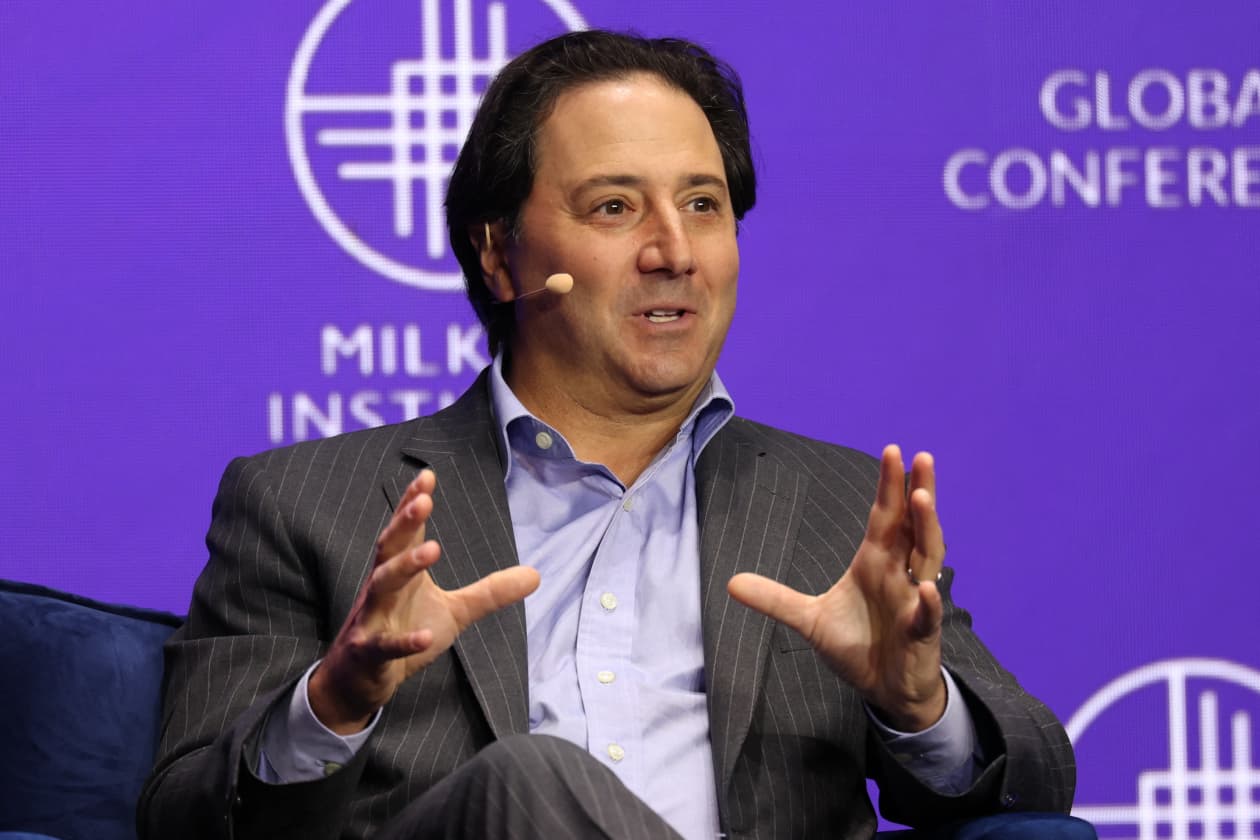
Ares Management will be added to the S&P 500 effective before the open on Dec. 11, a slot freed after Mars Inc. closes its $36 billion acquisition of Kellanova; Ares shares jumped roughly 7% in after‑hours trading. The index committee chose the asset manager over other large eligible candidates such as Marvell, Vertiv and MicroStrategy, while Carvana, CRH and Comfort Systems USA will join in the routine Dec. 22 rebalance, signaling index-driven buying into an underweight financial‑services sector.
Market structure: Ares (ARES) is the clear immediate winner — S&P inclusion on Dec 11 forces mechanical passive flows that likely amount to order-of-magnitude hundreds of millions to low‑billions of dollars of buying over days as ETFs/trackers rebalance; expect elevated volume and a >5–15% near-term premium vs. pre-announcement levels. Losers include the large missed candidates (MRVL) and benchmark-eligible idiosyncratic names (MSTR, VRT) which may see short-term outflows and multiple compression as index committees prefer profitable, financial-services exposure. Sector tilt: the S&P becomes slightly more financials-heavy, improving funding spreads and liquidity for asset managers while marginally reducing cap-weight in tech pockets.
Risk assessment: Tail risks include a committee reversal (very low probability), a major AUM redemptions shock tied to credit-market stress, or regulatory actions around index eligibility for holdings-heavy vehicles (MSTR). Time horizons: immediate (Dec 11–22) is dominated by rebalancing flows and volatility; short-term (next 1–3 months) by AUM/earnings reaction and ETF reweights; long-term (3–12+ months) by organic AUM growth and performance fees. Hidden dependencies: passive buying can create follow-on volatility from ETF delta-hedging and options flows; a 3–5% decline in public credit spreads would meaningfully reduce Ares’ fee-bearing AUM assumptions.
Trade implications: Direct trade — establish a tactical long in ARES to capture rebalancing and follow-on flows, using capped risk via options or tight stops; consider reducing direct MRVL exposure given missed inclusion and sector headwinds. Relative/value — a pair trade long ARES vs short MRVL (or short MSTR) isolates index‑inclusion premium; size the short ~50–75% notional of the long to limit beta. Options — prefer buy‑call spreads on ARES with Jan 2026 expiry to capture post-inclusion upside while capping premium; avoid naked short vol into the event.
Contrarian angle: The market may be overpaying for the mechanical inclusion — expect a 5–10% mean reversion window after ETF flows settle if Ares misses AUM/fee growth targets over the next two quarters. Historical parallels (index additions) show 1–3 month outperformance often fades absent fundamental improvement; if Ares’ distributable earnings or credit exposure disappoints, downside can outpace the initial pop. Unintended consequence: higher passive ownership can amplify drawdowns on ARES during broad equity or credit stress, making leverage risky for the next 6–12 months.
AI-powered research, real-time alerts, and portfolio analytics for institutional investors.
Request DemoOverall Sentiment
moderately positive
Sentiment Score
0.45
Ticker Sentiment
