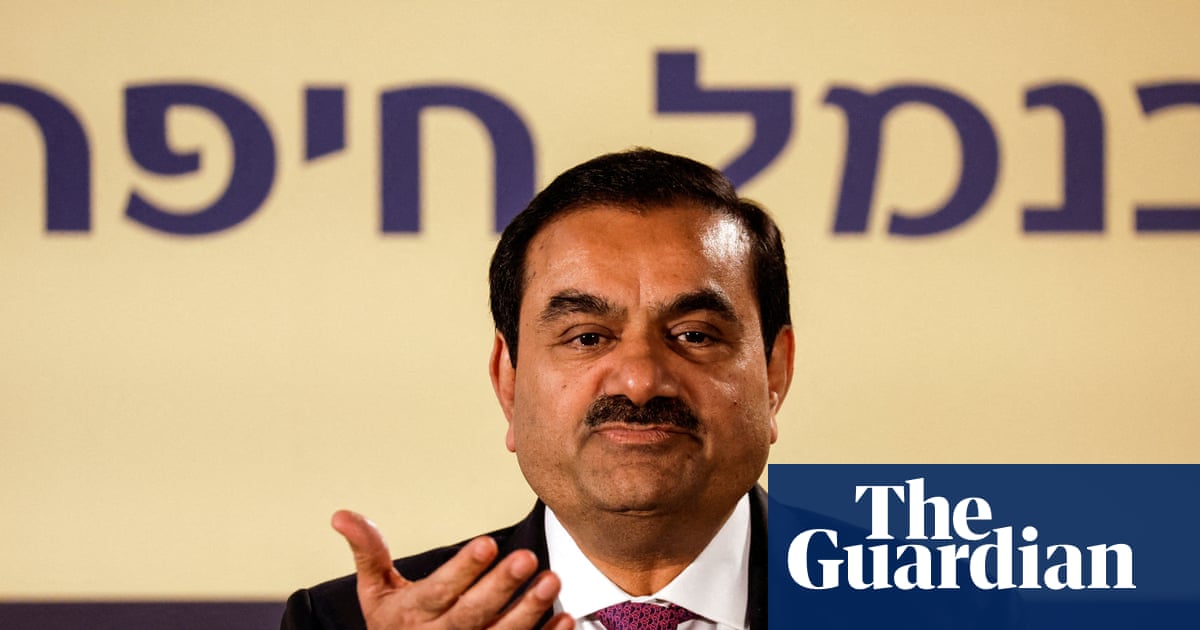
The US Justice Department is reportedly dropping fraud charges against Gautam Adani after his legal team offered a $10bn US investment and 15,000 jobs, though prosecutors said the proposal would not affect the case. Adani had been indicted in New York in November 2024 over allegations of $250m in bribes and misleading investors, making the case a major legal and reputational overhang for Adani Group. The article highlights governance, corruption, and regulatory risk for one of Asia’s most prominent conglomerates.
The immediate market read is not about Adani’s legal outcome in isolation; it is about the signaling effect that political capital can now be converted into litigation risk reduction. That lowers the perceived friction premium on India-linked, politically exposed conglomerates and may tighten funding spreads for the broader Indian infra/renewables complex, even if the underlying governance discount does not disappear. The second-order winner is likely Adani’s ecosystem of lenders, contractors, and project counterparties that can now price in a lower probability of a prolonged US enforcement overhang. The more interesting implication is for ESG and transition capital formation. If a high-profile renewables-linked defendant can negotiate away a fraud case after promising domestic investment, allocators may conclude that “governance risk” in emerging-market clean energy is more cyclical than structural, which could compress the valuation gap between Indian renewables developers and Western peers over the next 3-12 months. That said, a short-run relief rally can coexist with a longer-run discount if US investors decide the enforcement process itself is politicized; in that scenario, the cost of capital for any sponsor with related-party complexity rises, not falls. For markets, the direct equity read-through is limited in the US, but the cross-asset impact is meaningful in sentiment-sensitive EM credit and infrastructure proxies. If the dismissal becomes formal, expect a fast but likely shallow rebound in Adani-related financing conditions, followed by renewed scrutiny from auditors, index providers, and passive ESG screens. The bigger tail risk is that any reversal or procedural challenge reactivates the case into the US election cycle, which would extend volatility for months rather than days.
AI-powered research, real-time alerts, and portfolio analytics for institutional investors.
Request DemoOverall Sentiment
moderately negative
Sentiment Score
-0.30
Ticker Sentiment
