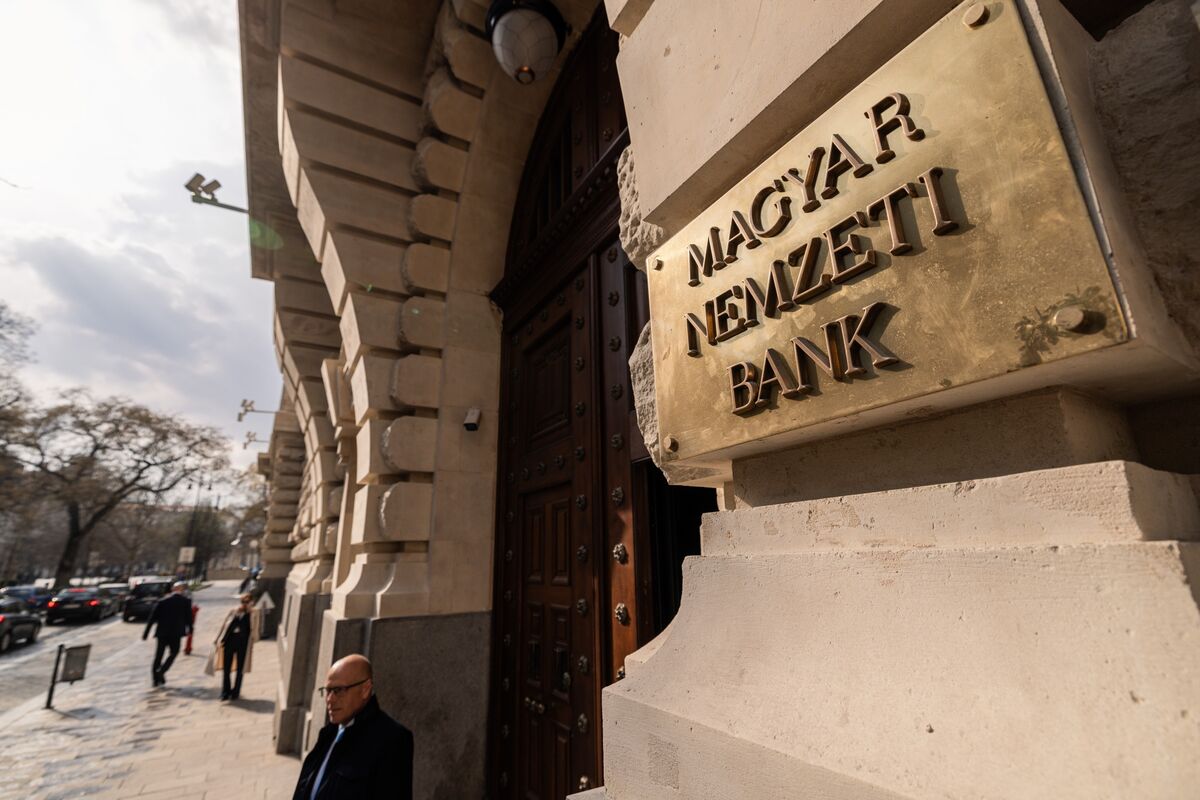
The 40 billion yuan (≈$5.8bn) swap line between the National Bank of Hungary and the People’s Bank of China, extended last year, provides a funding backstop and source of stability amid market volatility, Vice Governor Daniel Palotai said at the Boao Forum. The facility highlights Hungary’s pursuit of Chinese financing and represents a material liquidity buffer for a small emerging-market economy.
Access to an additional non‑EU currency financing channel materially lowers Hungary’s acute rollover risk and the need to tap EUR short‑term markets; that reduces banks’ FX hedging demand and can shave 20–70bp off the 5y sovereign risk premium in a benign scenario over 3–6 months via lower forced selling of reserves. The immediate market effect is asymmetric: local financials and domestic bond auctions gain optionality and funding cost relief, while EU‑centric contractors and export‑dependent suppliers face a longer, quieter erosion of market share if new financing comes tied to foreign procurement (2–18 months).
Second‑order corporates to watch are domestic banks with large FX‑liability footprints and construction firms that are already positioned to execute externally financed projects; these will see NIM stabilization and higher fee pipelines if volatility subsides, translating into 10–25% EPS upside potential over the next 6–12 months under favorable funding flows. Conversely, EU suppliers competing for infrastructure work are at risk of lost tenders and delayed receivables, increasing short‑cycle working capital stress for some regional industrial SMEs within a 6–12 month window.
Key risk paths that would reverse any calming effect include a global EM liquidity shock (days–weeks), a sharp revaluation or capital control move in the financing currency (weeks–months), or punitive EU policy measures that cut other funding sources (months–years); any of these could blow out yields by 100–300bp quickly. Watch catalysts: next sovereign auctions, EU budget/vote events, and China’s currency/monetary liquidity announcements — each can shift pricing inside a 30–90 day horizon.
Practical implication: this is a stabilization play, not de‑risking of long‑term geopolitical exposure. Trade sizing should therefore be tactical and paired with tail hedges; expect modest near‑term alpha from funding‑sensitivity trades but retain downside insurance for a politically driven regime shift over the next 12–24 months.
AI-powered research, real-time alerts, and portfolio analytics for institutional investors.
Request DemoOverall Sentiment
mildly positive
Sentiment Score
0.20
