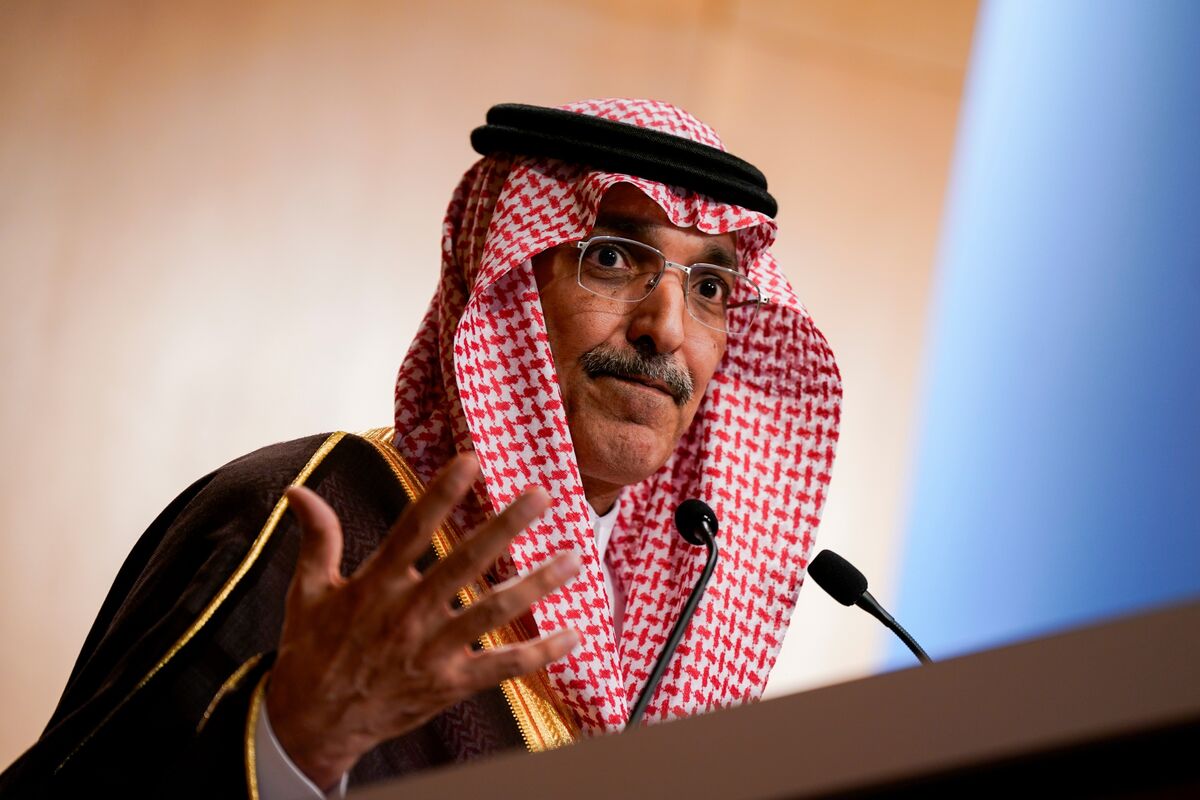
Saudi Finance Minister Mohammed Al-Jadaan said in Riyadh that the kingdom is willing to adjust, defer or cancel projects under its Vision 2030 program, stating there is "no ego" about previously announced plans. The comments signal a readiness to re-prioritize capital allocations and rein in costly developments, which could reduce near-term government capex and affect sectors exposed to Saudi megaprojects (construction, real estate, contractors) while supporting fiscal discipline and sovereign balance-sheet management.
Market structure: A credible willingness to cancel Vision 2030 projects is a fiscal shock absorber for the Saudi balance sheet — winners are sovereign credit and domestically-focused banks (e.g., Saudi National Bank 1180.SR, Al Rajhi 1120.SR) and large-cap domestic equities (iShares MSCI Saudi Arabia KSA) as deficit/path-to-surplus odds improve. Direct losers are international giga-project contractors and commodity-intensive suppliers (e.g., Fluor FLR, Jacobs J, global cement/steel exporters) whose booked backlog and pricing power versus sovereign clients are now at risk; expect a 5–20% re-rating of exposed contractors over 3–12 months if cancellations accelerate.
Risk assessment: Tail risks include a political backlash raising social spending needs (risking higher fiscal deficits) or credit-rating action if cancellations delay revenue-generating projects; both are low probability but high impact over 6–24 months. Short-term (days–weeks) expect volatility in equities and credit spreads as markets parse specifics; medium-term (3–12 months) the market will differentiate between cancellable vanity projects versus revenue-driving infrastructure. Hidden dependencies include contractor subcontractor chains, foreign worker repatriation costs, and scheduled sovereign bond issuance (could be pared back or accelerated).
Trade implications: Tactical trades: favor long Saudi domestic exposure and sovereign credit while tactically short global contractors/materials names with documented Middle East backlog. Use options to skew risk — buy calls on KSA (3–6 month) and puts on FLR/J (3 months) to capture idiosyncratic downside. Rebalance away from cyclical construction/materials into Saudi banks, selective defense/tech suppliers likely to pick up redirected capital.
Contrarian angles: Consensus assumes blanket cancellations; the more probable outcome is selective pruning — projects with weak IRR cut and others accelerated, which benefits asset managers and Aramco (2222.SR) if capital is redeployed into energy/sovereign investments. Market may over-penalize contractors with diversified revenue; look for mispricings where backlog is not Saudi-dependent. Unintended consequence: an initial credit spread tightening could reverse if social spending rises, so scale position sizing and use protective hedges.
AI-powered research, real-time alerts, and portfolio analytics for institutional investors.
Request DemoOverall Sentiment
neutral
Sentiment Score
0.12
