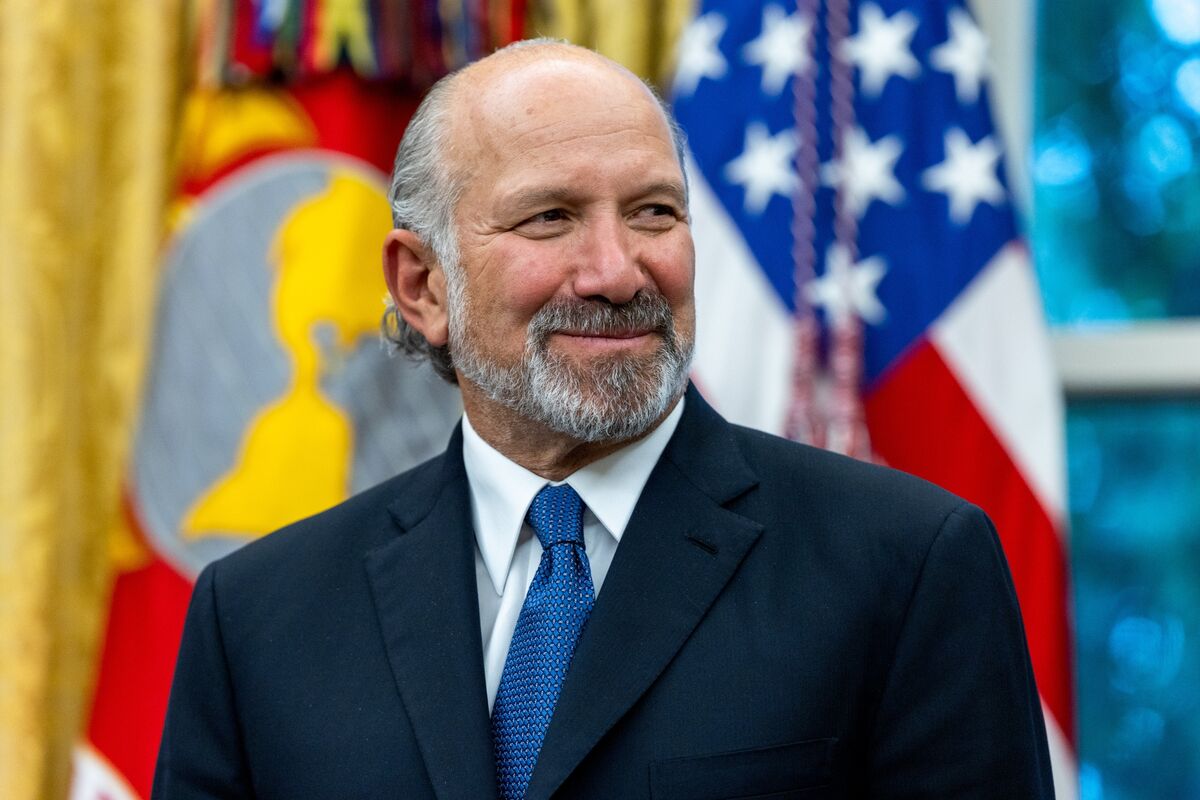
U.S. Commerce Secretary Howard Lutnick said Washington is expecting a large investment pledge from Taiwan in ongoing trade talks as part of an administration push to bring semiconductor manufacturing to the U.S. Taiwan President Lai Ching-te signaled that several issues must be addressed for projects to proceed, underscoring potential implementation risks despite the prospect of significant capital flows into U.S. chip production and related supply chains.
Market structure: A large Taiwan-to-US semiconductor investment would directly benefit semiconductor equipment makers (Applied Materials AMAT, Lam Research LRCX, KLA KLAC), US fabs (INTC) and local industrial contractors/chemicals (DuPont DD, Air Products APD). Expect equipment lead times and pricing power to rise — model a 15–30% revenue uplift for top equipment vendors over 12–24 months if multiple greenfield fabs are funded. Downside: incumbent Taiwan cluster participants could see slower domestic capex and FX flows.
Risk assessment: Tail risks include a China–Taiwan escalation, US export-restriction clashes (ASML ASML supply constraints), or US permitting/subsidy delays that push projects >18 months and increase costs by 20–40%. In the immediate term (days–weeks) price moves will track headlines; short-term (3–6 months) outcomes hinge on formal MOUs and CHIPS disbursements; long-term (12–36 months) depends on execution: power/water/logistics and skilled-labor bottlenecks are material hidden dependencies. Key catalysts: formal signed investment announcements, CHIPS Act tranche releases, and local permitting decisions.
Trade implications: Tilt toward semiconductor equipment and industrials with 12–24 month horizons; expect outperformance vs fabless and memory cycles. Options: use 9–15 month call spreads to cap capital while capturing upside on high-cost names if announcements arrive within 3 months. Cross-asset: modest upward pressure on 10Y yields (funding/subsidies) and tighter copper/industrial metals markets if large buildouts proceed.
Contrarian angles: The market may be pricing a near-term “all-in” build; Lai’s caution signals execution risk — delays of 6–18 months are underappreciated. Historical parallel: green energy subsidy waves (2010–2015) showed winners concentrated in equipment suppliers but many downstream projects failed on permitting/financing. Unintended consequence: localized inflation (construction, power) can compress margins for fab owners and extend payback beyond modeled IRR thresholds.
AI-powered research, real-time alerts, and portfolio analytics for institutional investors.
Request DemoOverall Sentiment
mildly positive
Sentiment Score
0.25
