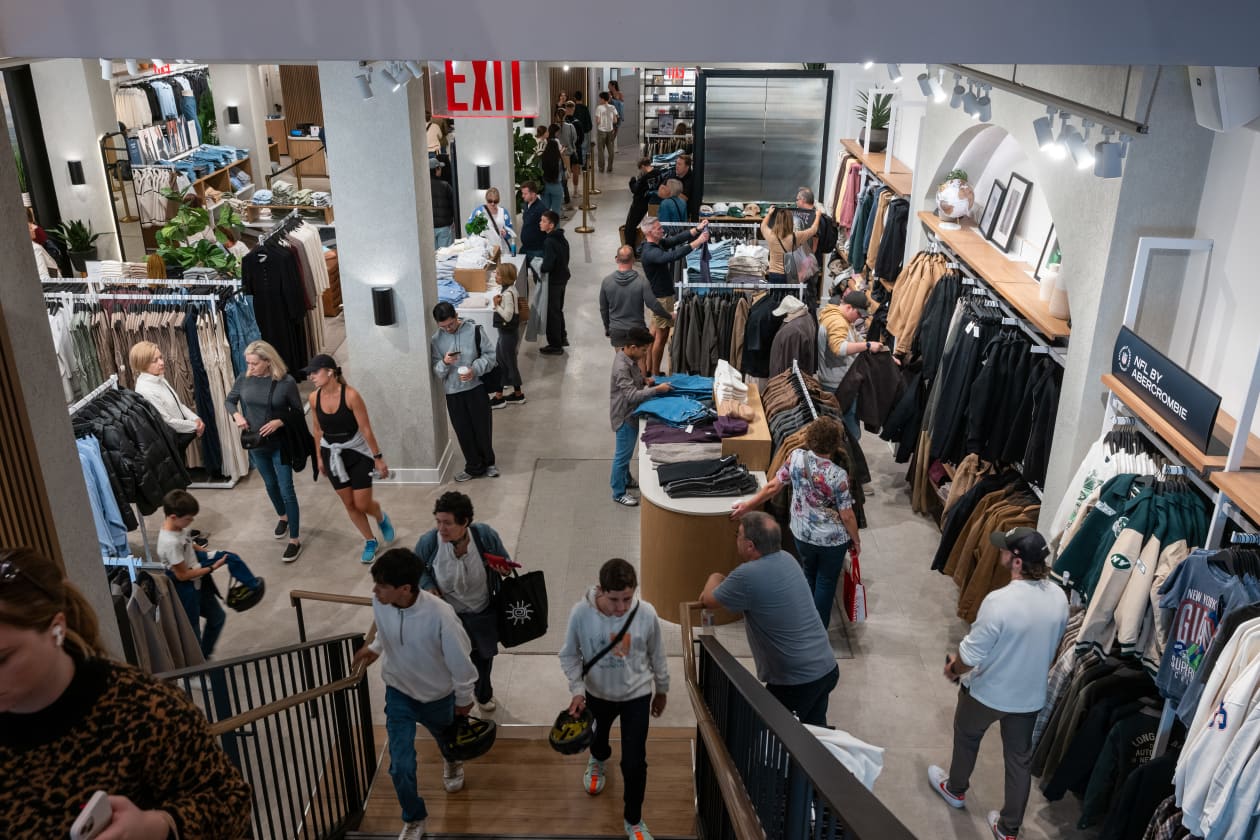
UBS analysts flagged Abercrombie & Fitch, Gap and TJX as likely further along in AI adoption, citing improvements in sales per employee and stronger EBIT as evidence. They caution the exact impact of AI is hard to quantify but say recent productivity gains may be AI-driven. Implication: early AI adopters could gain a competitive productivity edge as retail IT budgets and execution evolve.
AI-like tools in apparel retail act through three measurable levers: demand-forecast error reduction, localized assortment/pricing, and labor-hour optimization. A realistic implementation that trims forecasting error by 20-30% typically converts into a 50–200bps gross-margin lift and a 2–6% reduction in markdowns over a 6–12 month rollout, with most P&L benefit manifesting in the first full year after deployment.
Second-order effects matter more than headline productivity gains. Better matching of buys to sell-through reduces the dump flow into off-price channels, compressing supply for opportunistic resellers while improving working capital for the full-price seller; simultaneously, a shift to micro-fulfillment and demand-aware replenishment will reprice costs across 3PLs, parcel carriers and short-lead OEMs over 12–24 months. Winners will be those with flexible sourcing and clean data estates; losers are legacy assortments, long-lead vendors and players monetizing excess inventory.
Key risks that could reverse the trend are implementation noise (model overfit to seasonal patterns), competitive catch-up as IT budgets reallocate, and regulatory or third-party data constraints that raise marginal costs of personalization. Expect quarter-to-quarter noise and confirmation via sequential capex guidance and incremental gross-margin disclosure—true durable margins should be visible by 3–4 quarters after measured rollouts.
AI-powered research, real-time alerts, and portfolio analytics for institutional investors.
Overall Sentiment
mildly positive
Sentiment Score
0.15
Ticker Sentiment
