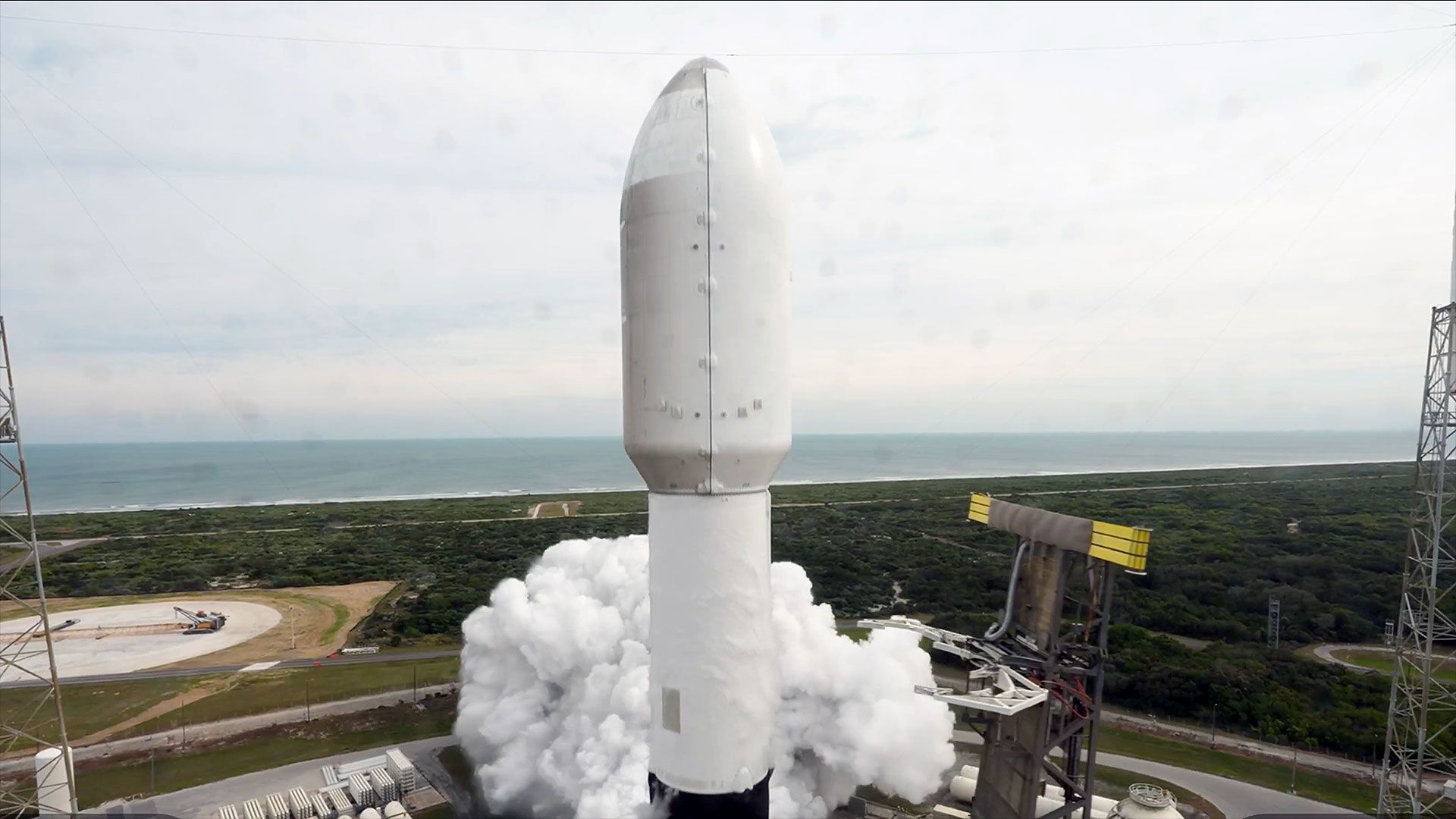
SpaceX launched a Falcon 9 from Cape Canaveral on Jan. 14 at 1:08 p.m. EST carrying 29 Starlink broadband satellites (Group 6-98), reaching preliminary orbit about nine minutes after liftoff and with deployments scheduled roughly an hour into the flight. The first stage (B1085) completed its 13th flight and landed on the droneship A Shortfall of Gravitas, underscoring reuse cadence; the additions bring Starlink’s constellation to nearly 9,500 active units, expanding coverage in underserved areas and signaling steady operational execution ahead of further commercial rollouts.
Market structure: Continued Starlink launches reinforce a winner-takes-most dynamic in consumer and rural broadband. Direct winners: SpaceX (private), ground-equipment vendors and national defense prime contractors (LHX, NOC) that supply terminals, antennas and launch services; direct losers: consumer-focused satellite incumbents (VSAT, SATS/EchoStar exposure) as retail ARPU and subscriber growth face deflationary pressure. Pricing power shifts toward low-cost, vertically integrated operators — expect retail satellite broadband pricing and gross adds for public peers to compress by 10–30% over 12–24 months absent product differentiation.
Risk assessment: Tail risks include a regulatory clampdown (US/EU spectrum restrictions) or a catastrophic on-orbit collision degrading trust and access; assign these 3–10% probability but high impact. Immediate (days) effects are muted; short-term (weeks–months) volatility around launches and earnings is likely; long-term (quarters–years) structural share shifts matter. Hidden dependencies: terrestrial backhaul capacity, user terminal subsidization, and government defense contracts can decouple revenues from consumer trends.
Trade implications: Concrete plays — bias toward aerospace primes and launch/ground-equipment suppliers (LHX, NOC, RKLB selectively) and underweight/hedge consumer satcom (VSAT, SATS). Use 6–12 month option structures: buy 12-month LEAPS calls on LHX/NOC sized 1–3% of NAV with 15% stop, and buy 6–12 month put spreads on VSAT sized 0.5–1% NAV to cap cost. Rotate capital from consumer-telecom and legacy satellite equipment into defense-capex and ground-station infrastructure names over the next 3–12 months.
Contrarian angles: Consensus underestimates margin recovery for incumbents that pivot to B2B/govt or piggyback on Starlink (terminal OEMs). The market may over-penalize VSAT-type names near-term — look for entry if VSAT falls >30% on headline risk with stable backlog. Historical parallel: fiber overbuild cycles where incumbents survived by resegmenting to enterprise/government; expect similar bifurcation here. Unintended consequence: faster Starlink scale could attract stricter spectrum/antitrust oversight within 12–24 months, creating episodic windows to sell rallies.
AI-powered research, real-time alerts, and portfolio analytics for institutional investors.
Request DemoOverall Sentiment
mildly positive
Sentiment Score
0.35
