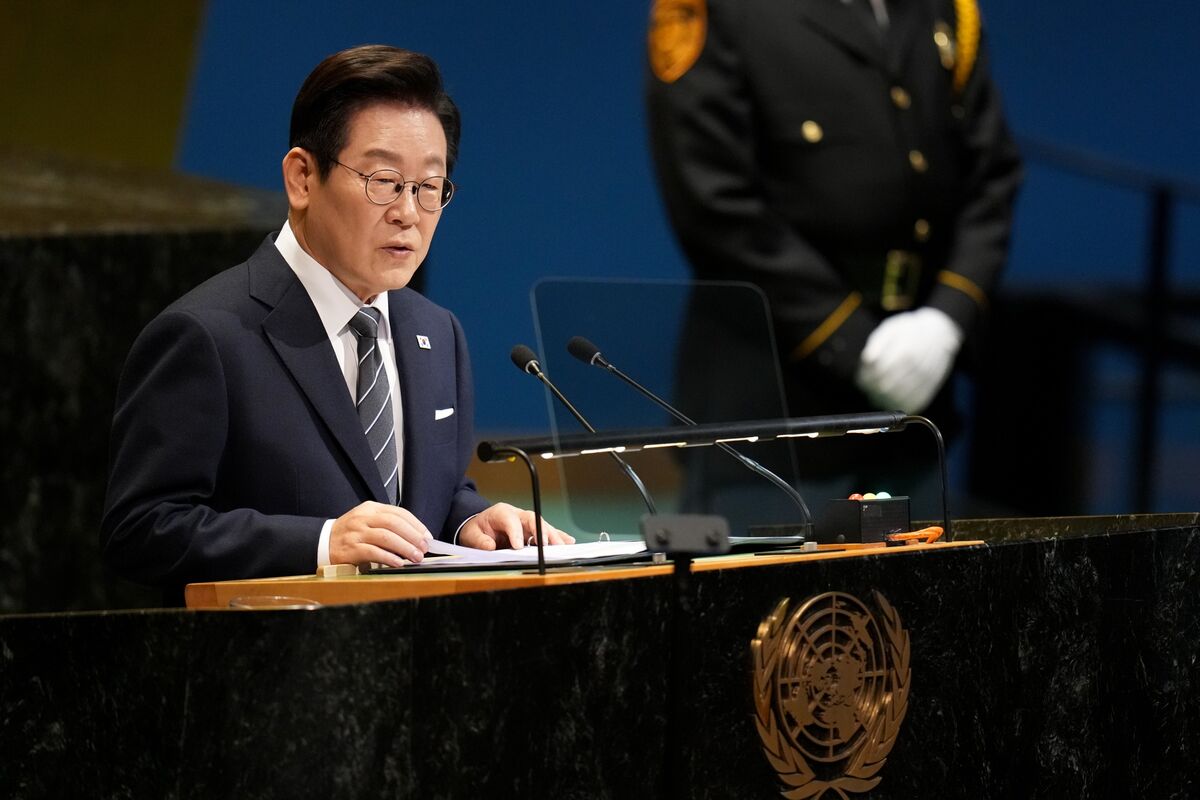
South Korean President Lee Jae Myung informed investors at the NYSE that North Korea has secured sufficient nuclear weapons for regime survival and is nearing completion of ICBM technology capable of reaching the U.S. He attributed South Korea's chronic market undervaluation to these geopolitical concerns, reassuring global financiers of his administration's commitment to easing tensions through dialogue and engagement.
South Korean President Lee Jae Myung has officially acknowledged to global investors that North Korea possesses a sufficient nuclear arsenal for regime survival and is nearing the deployment of ICBMs capable of reaching the US. This high-level confirmation frames the persistent geopolitical tension as a direct cause for the chronic undervaluation of the South Korean market, often referred to as the 'Korea discount'. While the statement underscores a significant tail risk for the region, its primary purpose was to reassure financiers at the NYSE by coupling this risk acknowledgment with a stated commitment to de-escalation through dialogue and engagement with Pyongyang. Consequently, the remarks serve to both validate the existing risk premium priced into South Korean assets and signal a political intention to manage and potentially reduce this premium over time, creating a complex risk-reward calculus for investors in the region.
AI-powered research, real-time alerts, and portfolio analytics for institutional investors.
Request DemoOverall Sentiment
moderately negative
Sentiment Score
-0.40
