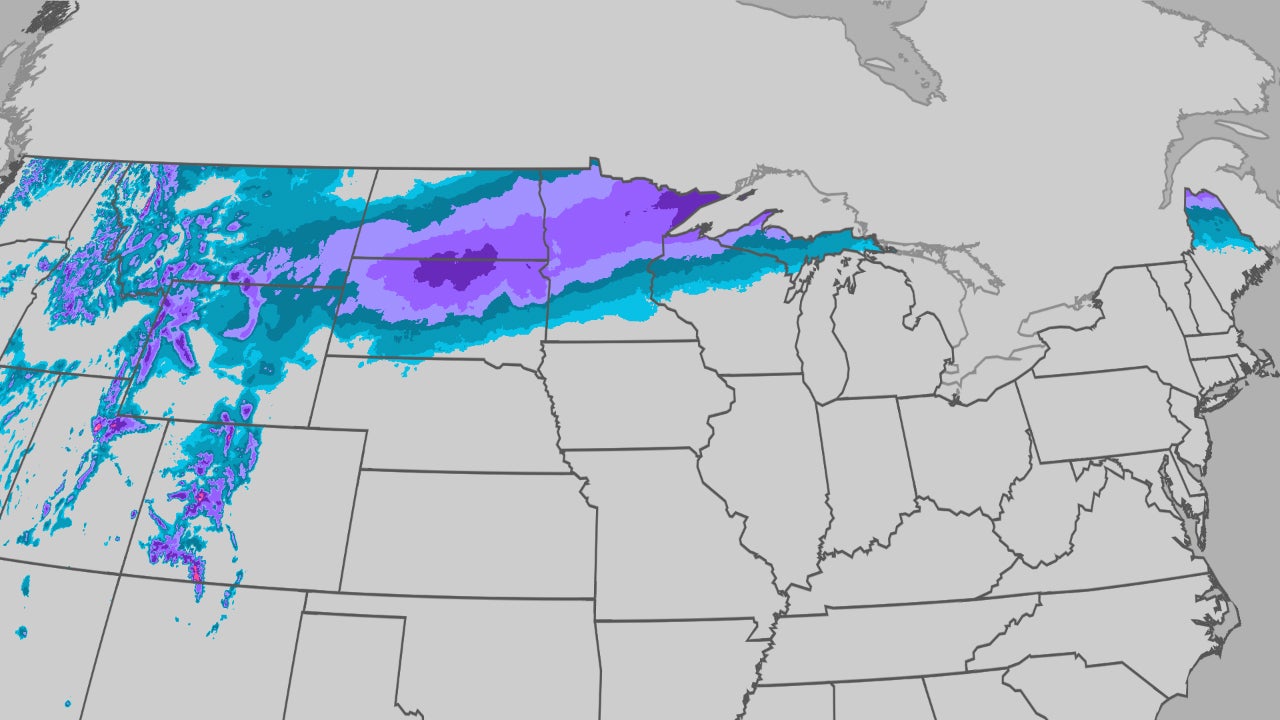
A pair of winter storms (Winter Storm Joseline and Winter Storm Kadence) will bring a swath of 6-inch-plus snowfall across parts of the Dakotas into northern Minnesota, far northwest Wisconsin and possibly western Upper Peninsula of Michigan, with additional near-6" totals possible in far northern Maine. Accumulating ice is expected in parts of the upper Midwest and far northern New England (highest concerns Thursday and early Saturday in the Great Lakes, early Friday and possibly early Sunday in northern New England), creating dangerous travel conditions on Interstates 94, 29, 35 and 90 and raising the risk of localized power outages and tree damage into the Easter weekend.
Late-season wintry disruptions act like forced micro-shocks to a tightly scheduled logistics system: a multi-day ripple in northern freight corridors typically boosts spot truckload rates 10-30% while simultaneously reducing loaded utilization for asset-heavy carriers (trucks, rails, planes). The mechanism is not just slower transit but increased empty miles, detention, and temporary terminal congestion that compounds cost-per-ton for time-sensitive goods (fresh food, parcel).
On energy, a short-lived surge in space-heating and electric heat-pump load in constrained regional grids can pull near-month natural gas balances tighter and lift day-ahead power prices by low-double digits; these moves are usually concentrated in the front month and decay within 1–2 weeks as storage rebalancing and milder weather return. Simultaneously, ice-related outages create asymmetric upside to utility service-recovery revenues (storm-repair OPEX/capex) for regulated distributors but also create near-term load volatility that can pressure merchant generators with tight fuel inventories.
Airlines and parcel networks take immediate reputational and operational hits around major holiday travel windows — even modest cancellation rates cause outsized revenue-per-day loss because of fixed-cabin costs and re-accommodation expenses; retail demand often re-shifts to grocers and local stores for perishables, compressing e-commerce convenience premiums for 3–10 days.
Contrarian lens: the market tends to treat these April systems as either a headline sell-off for transport names or a guaranteed commodity shock; empirically, rails and large integrators recover within 2–6 weeks while front-month energy moves mean-revert. That creates asymmetric, short-duration trade opportunities where transient positioning and options structures outperform directional cash exposure.
AI-powered research, real-time alerts, and portfolio analytics for institutional investors.
Request DemoOverall Sentiment
neutral
Sentiment Score
0.00
