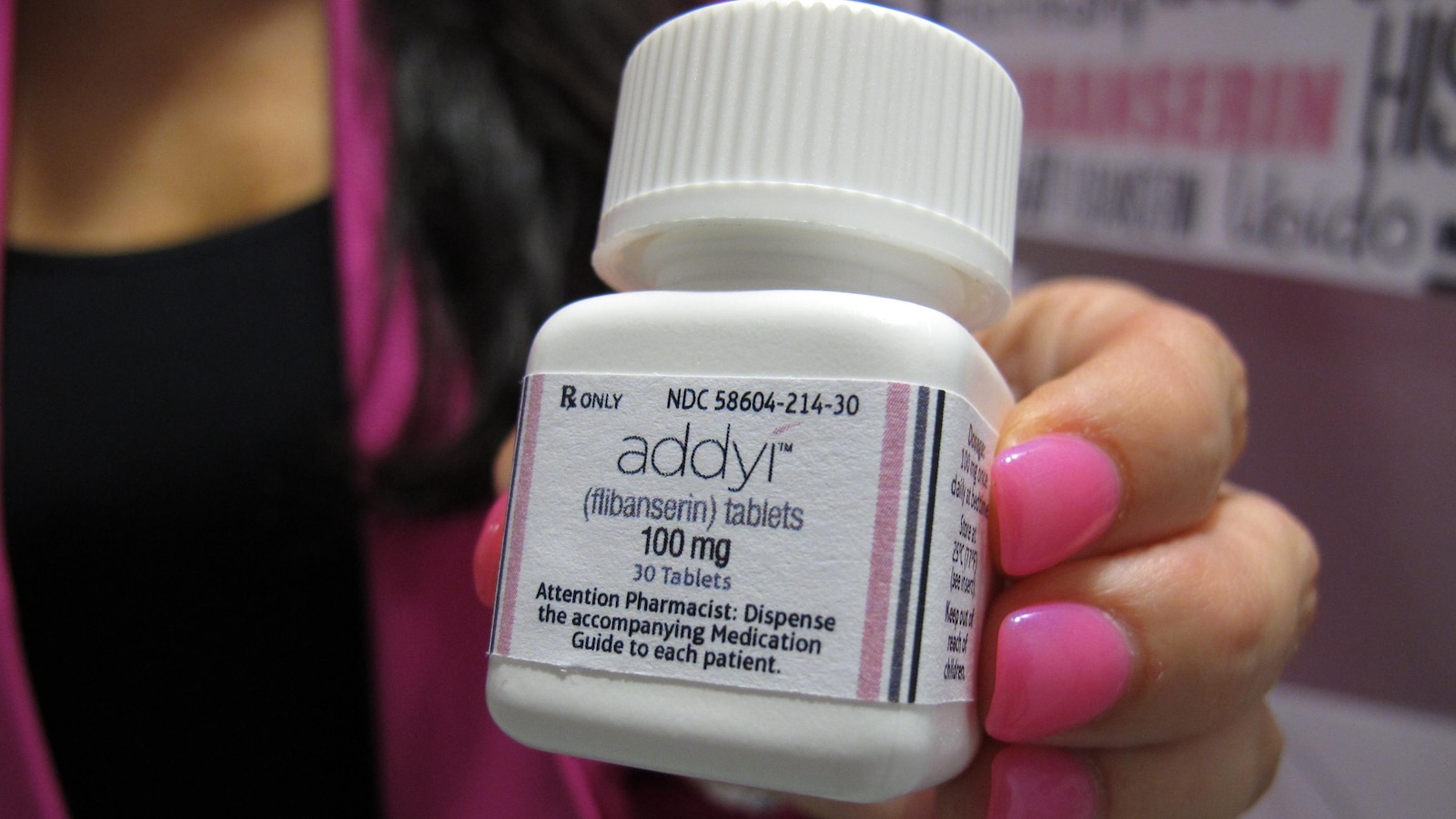
The FDA has expanded approval of Addyi, the once-a-day libido pill from Sprout Pharmaceuticals, to include postmenopausal women over 65, a decade after its initial 2015 approval for premenopausal women; Sprout hailed the update as progress for women's sexual health. Addyi— which acts on brain chemicals affecting mood and appetite— has seen limited sales due to modest efficacy, notable side effects (dizziness, nausea) and a boxed warning that combining the drug with alcohol can cause dangerously low blood pressure and fainting; a second, on‑demand injectable treatment for low female libido was approved in 2019. While the label expansion enlarges the potential patient pool, the article notes diagnostic complexity around hypoactive sexual desire disorder and safety constraints that are likely to temper broad adoption and commercial upside.
The FDA has expanded approval of Addyi (flibanserin) to include postmenopausal women older than 65, a label change announced by Sprout Pharmaceuticals that follows the drug's initial 2015 approval for premenopausal women; CEO Cindy Eckert framed the decision as progress for women’s sexual health. The decision enlarges the nominal addressable population more than a decade after approval but comes against a history of modest efficacy findings and two prior FDA rejections cited in the article.
Commercial prospects remain constrained by safety and tolerability: Addyi is associated with dizziness and nausea and carries a boxed warning that concomitant alcohol use can cause dangerously low blood pressure and fainting, factors the FDA previously flagged. The article notes limited sales since launch and the emergence of a second, on-demand injectable therapy approved in 2019, underscoring competitive and product-differentiation challenges.
Clinical and diagnostic complexity around hypoactive sexual desire disorder — including the need to exclude relationship issues and psychiatric or medical causes before prescribing — is likely to temper uptake among older women despite the label expansion. Investors should therefore view the approval as a modest commercial positive that materially increases addressable patients but does not resolve safety, efficacy or adoption barriers that have limited revenue to date.
AI-powered research, real-time alerts, and portfolio analytics for institutional investors.
Request DemoOverall Sentiment
mixed
Sentiment Score
0.08
