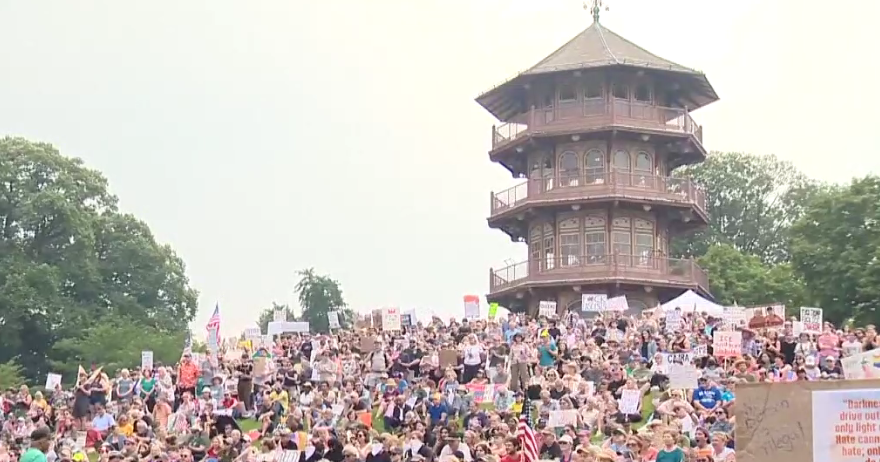
Nationwide "No Kings" protests described by organizers as "the biggest protest in U.S. history" took place in Maryland (Baltimore City, Baltimore County, Howard County, Harford County) targeting the Trump administration's immigration, economic and foreign-policy actions amid an ongoing Iran war. The White House spokesperson dismissed the demonstrations while GOP Rep. Andy Harris affirmed protesters' rights. Direct market impact is negligible, though continued political mobilization could raise policy and electoral risks ahead of upcoming political cycles.
This protest surge is best read as a signal of renewed grassroots organizing capacity ahead of the next major electoral windows, not as a one-off event. That increases the probability (months–to–2 years horizon) of more progressive primary challenges, faster candidate recruitment, and a higher baseline of small-dollar donor activity — all of which amplify policy risk around immigration, criminal-justice contracting, and local regulatory agendas.
The clearest second-order market channel is contract and reputational risk to firms tied to immigration enforcement and detention services: state and county boards react faster than Congress, and non-renewals or legal challenges can remove 10–30% of near-term revenues for niche providers within 6–18 months. At the same time, polarization creates a bifurcated outcome for defense/homeland budgets — either constrained by public pressure against escalation or reallocated toward domestic border and surveillance spending, producing divergent winners among contractors.
Short-term catalysts to watch are local procurement cycles, state attorney-general investigations, high-profile legal rulings, and primary calendars; any of these can force abrupt re-pricing. Tail risks include a defensive federal policy swing after a security shock that would reverse pressures quickly; conversely, sustained mobilization that flips a few key state legislatures would prolong downside for exposed incumbents for multiple years.
AI-powered research, real-time alerts, and portfolio analytics for institutional investors.
Overall Sentiment
neutral
Sentiment Score
0.00
