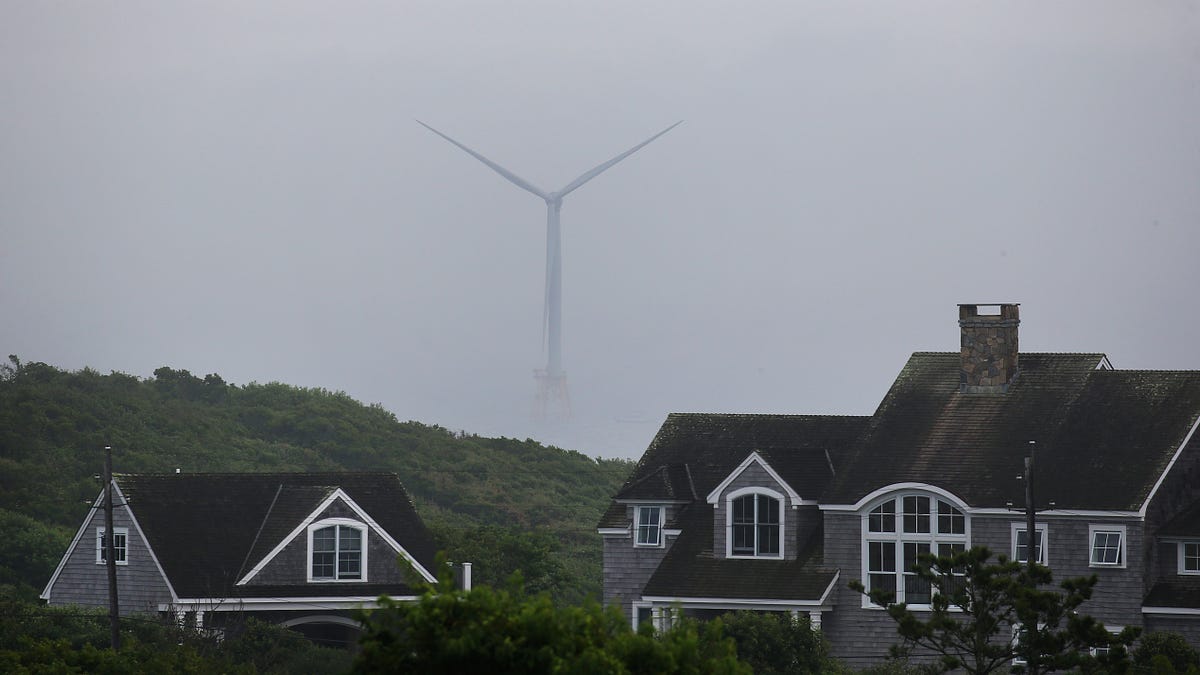
The administration proposes a ~$928 million payout to TotalEnergies to abandon two offshore wind leases (Attentive Energy and Carolina Long Bay), part of a broader effort to curtail offshore wind despite multiple court losses. Several projects had billions invested (e.g., $6.2B Revolution Wind; $4B in Empire Wind) and were up to ~95% complete, raising substantial stranded‑asset and legal risk for developers. The plan would use taxpayer funds and encourage accelerated natural gas investment, increasing policy and regulatory uncertainty across the US offshore wind sector.
A pattern of using fiscal transfers or negotiated settlements to unwind privately financed energy permits will reprice political risk into renewable project finance. Lenders and equity sponsors will demand higher coupons and returns (expect a near-term repricing of 200–400bps in project finance spreads for offshore builds), which slows deployment even where technical and commercial fundamentals remain intact. Second-order winners are companies and sectors that absorb incremental fossil-fuel generation and adjacent infrastructure: midstream pipeline operators, LNG exporters, and firms selling gas-fired capacity or peaking plants — these capture both diverted capital and margin from higher gas burn. Offset losers include turbine OEMs, installation contractors, port upgrades and specialized marine vessel owners; expect curtailed orderbooks, elevated inventory days and downward margin revisions over 6–24 months. Policy and litigation are primary catalysts and can flip outcomes quickly: favorable court rulings or shifts in Congressional appropriations can restore project economics within quarters, while settled buyouts or new administrative precedent lock in elevated political risk for years. Market moves will be front-loaded on announcements (days-weeks) with structural repricing across balance sheets and supply chains over the next 12–36 months. The clearest market inefficiency is the divergence between tradable fossil/midstream cash flows (near-term bid) and long-dated renewables’ implicit growth; that creates actionable pair and event-driven trades while keeping position sizing small given high policy tail risk.
AI-powered research, real-time alerts, and portfolio analytics for institutional investors.
Overall Sentiment
strongly negative
Sentiment Score
-0.60
Ticker Sentiment
