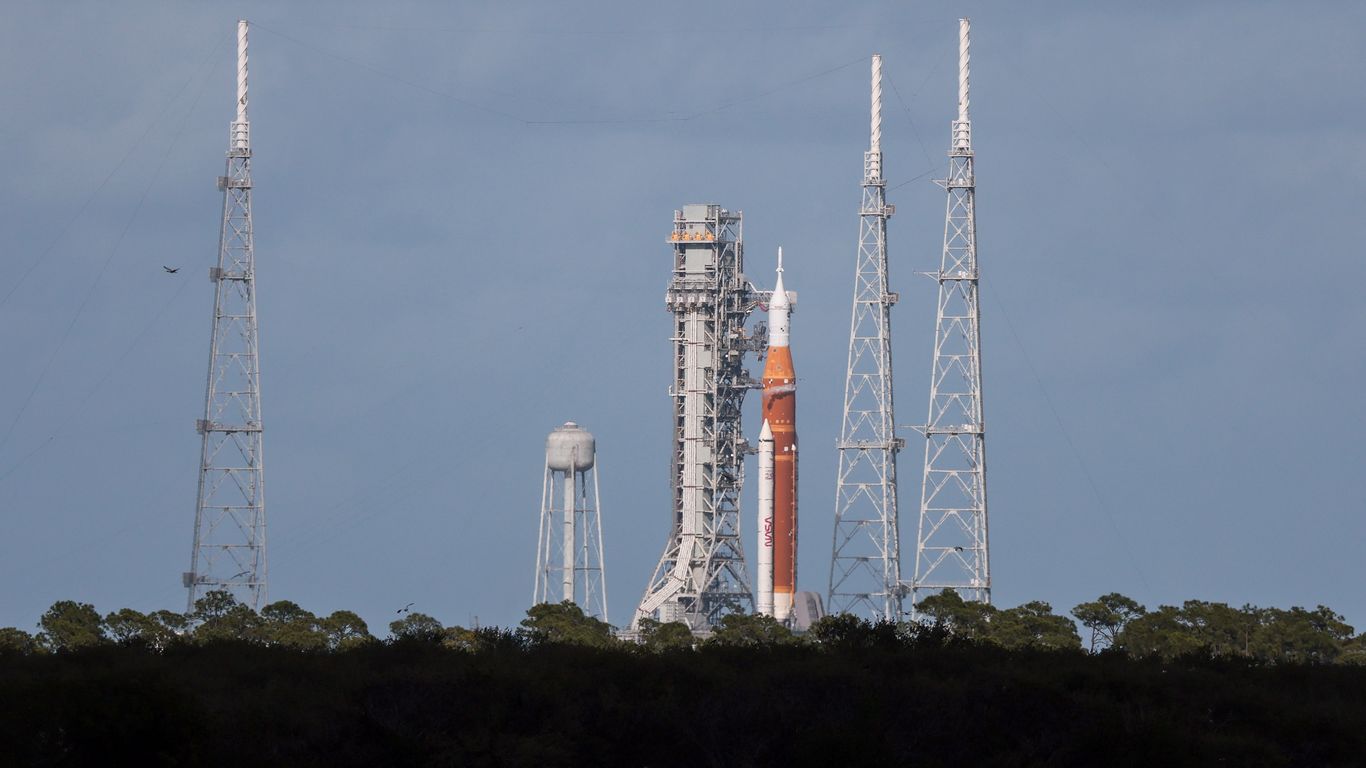
Artemis II launched successfully from Kennedy Space Center at 6:35pm ET, beginning a planned ~10-day crewed lunar flyby and marking the second SLS launch and the first crewed flight of Lockheed Martin/Airbus's Orion. The mission is a dress rehearsal ahead of a lunar landing now rescheduled to Artemis IV in 2028 after a recent schedule change, and features historic milestones (Glover and Koch as first person of color and woman beyond low Earth orbit; Hansen as the first non-American). This is an operational positive for aerospace/defense contractors and NASA's long-term plan for annual Moon visits and a permanent base, but it is unlikely to be immediately market-moving.
Primes that supply long-lead hardware and sustainment services capture the largest, durable upside from a successful crewed lunar program — not the headline rocket launches. Expect incremental contract awards, spares, avionics upgrades and ground-support work to convert into backloaded, high-margin revenue over a 3–7 year window as NASA shifts from single-shot missions to a cadence of annual lunar visits. This favors integrated systems companies with in-house propulsion, avionics and mission integration capability and creates a multi-year FCF tail that is more predictable than one-off commercial launch revenues.
Second-order winners include materials and thermal-protection suppliers, mission-planning/ops software vendors, and Florida launch infra contractors; these firms are exposed to steady, recurring small-to-mid sized orders that can compound into meaningful EBITDA contribution. Conversely, low-cost commercial launchers that rely on high flight rates to scale unit economics face a tougher environment: incumbents’ government commitments can crowd out runway slots, skilled labor, and supply-chain bandwidth, pressuring utilization and margins for smaller providers over the next 12–36 months.
Key catalysts to monitor are: (1) NASA budget hearings and appropriation language over the next 6–18 months that determine follow-on mission funding, (2) competitive HLS procurement milestones and protests that could reallocate program dollars, and (3) any technical anomalies during post-flight assessments that force redesigns and push cost/time slippage. The dominant tail risk is a political pivot to cheaper, commercially procured landers that would shrink the SLS/Orion revenue pool and re-rate winners/losers within 12–36 months.
AI-powered research, real-time alerts, and portfolio analytics for institutional investors.
Request DemoOverall Sentiment
moderately positive
Sentiment Score
0.35
Ticker Sentiment
