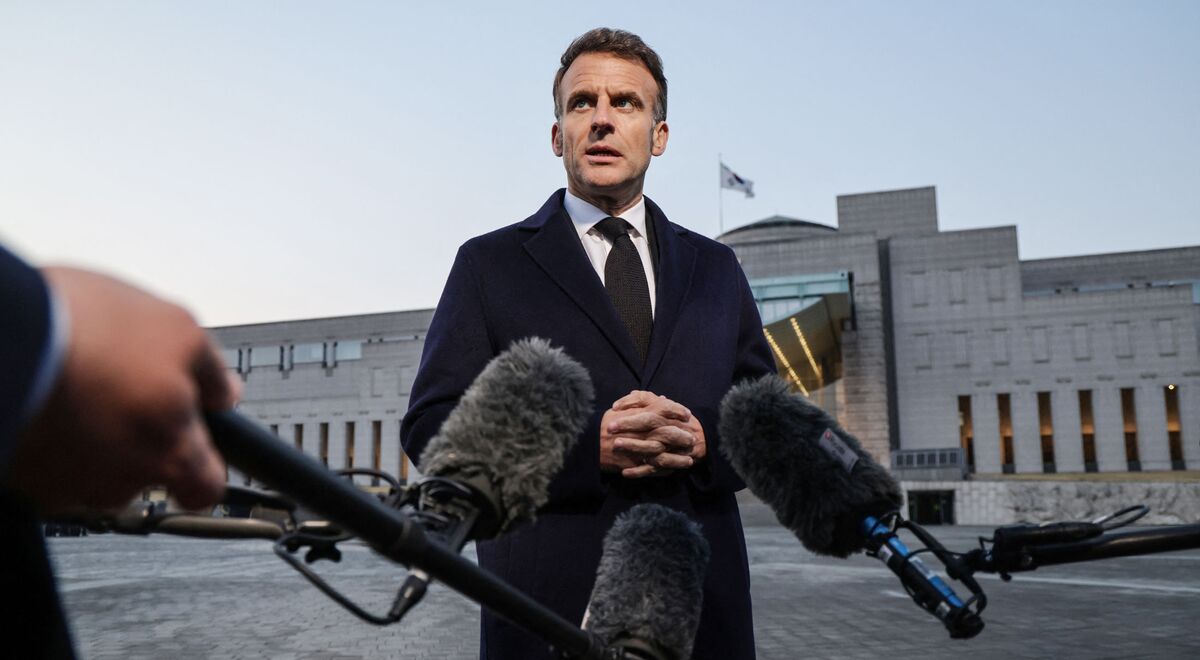
French President Emmanuel Macron warned that Donald Trump risks undermining NATO by casting doubt on US commitment, remarks made in Seoul during a state visit. The comments highlight potential erosion of alliance trust and could increase political friction on defense cooperation and burden-sharing. Political risk is elevated but this is primarily geopolitical commentary with limited immediate market impact.
Perceived fragility of US security guarantees is likely to shorten the timetable for European defence industrialization and stockpiling decisions. That drives a front-loaded procurement cycle (munitions, air defence, C4ISR) over 6–24 months rather than a slow decade-long build — procurement notices, supplier qualification contracts and sovereign capability subsidies should spike and be measurable in quarterly award flows.
Short-term winners are sovereign-capability suppliers and high-intensity consumables: ammunition makers, land systems integrators, and specialised electronics foundries with European footprints. Over 1–3 years this will shift share from non-resident exporters into domestic champions and their local supply chains (machine tools, speciality steel, precision plastics), creating durable orderbook growth even if headline political rhetoric later cools.
Key risks and catalysts: a visible US policy re-commitment (large security guarantee, binding aid package, or explicit treaty language) can re-route orders back to US suppliers within 0–9 months; conversely, near-term military incidents or accelerated EU budget approvals can widen the gap and compress lead times. Macro weakness or fiscal pushback in European electorates is the main path to disappointment; track tender issuance, national budget amendments, and sovereign factory re-shoring subsidies as the earliest high-frequency indicators.
AI-powered research, real-time alerts, and portfolio analytics for institutional investors.
Request DemoOverall Sentiment
mildly negative
Sentiment Score
-0.25
