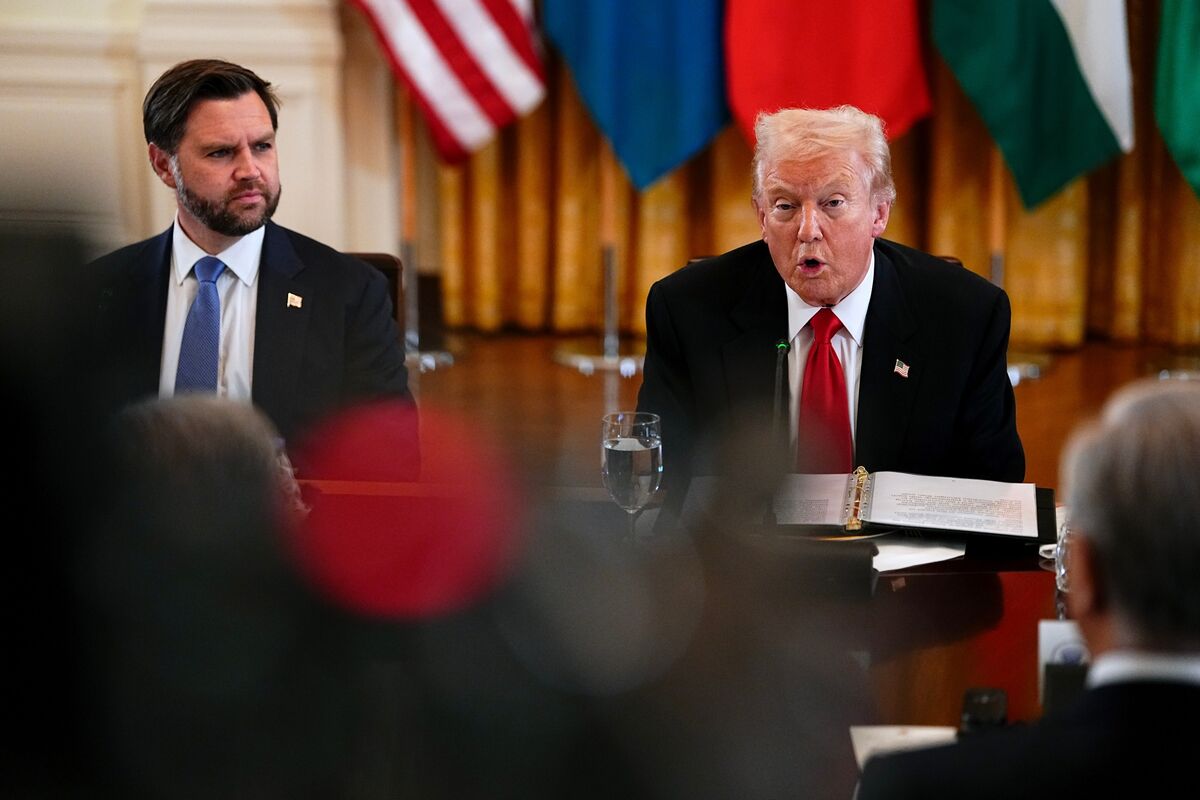
A new US strategy paper has effectively adopted the hardline, anti-European rhetoric voiced by Vice‑President JD Vance at the Munich Security Conference, a shift the Kremlin has publicly welcomed and which leaves European allies politically exposed. The change signals a substantive reorientation of US foreign policy under the MAGA wing, raising geopolitical uncertainty that could affect defense planning, sanctions dynamics and risk sentiment across European assets and transatlantic markets.
Winners are European and US defense contractors and logistics players as NATO members accelerate rearmament to fill a perceived US security gap; expect a 5–15% revenue tailwind to suppliers (Rheinmetall, BAE, Airbus Defence, LMT, RTX) over 12–36 months as procurement cycles re-open. Losers include EU exporters dependent on frictionless US-Europe coordination (large banks, luxury exporters) and countries with fiscal constraints facing higher borrowing costs if defense spending crowds out other budgets.
Competitive dynamics favor regional champions with local production — European primes gain pricing power on domestic contracts but will still compete with US primes for bilateral sales, pressuring margins for mid-tier suppliers and creating M&A incentive; anticipate consolidation in munitions/ammo and shipbuilding within 1–3 years. Supply/demand mismatches will show up first in ammo, FFGs, and tactical systems (6–24 months lead time) causing input-price inflation for steel, specialized electronics, and logistics capacity.
Cross-asset effects: expect safe-haven USD and USTs to outperform European sovereigns in a stress scenario—EUR underperformance vs USD by 2–6% possible in 3 months if rhetoric persists; European peripheral spreads could widen 20–80bps. Commodities: upside risk to oil and European gas (spot spikes >20% possible in winter stress); defense metals and freight rates tighten as military logistics surge.
Tail risks include rapid escalation into kinetic conflict or cyber blowback that spikes volatility and sanctions rounds (low-probability, high-impact) within 0–12 months; policy reversal after US elections is a material longer-term risk (12–36 months) that could unwind forward contracts. Key catalysts: EU budget votes, Munich/ NATO communiqués, and US administration statements — monitor procurement bill pass rates and 10Y bund/btp moves closely.
AI-powered research, real-time alerts, and portfolio analytics for institutional investors.
Request DemoOverall Sentiment
moderately negative
Sentiment Score
-0.35
