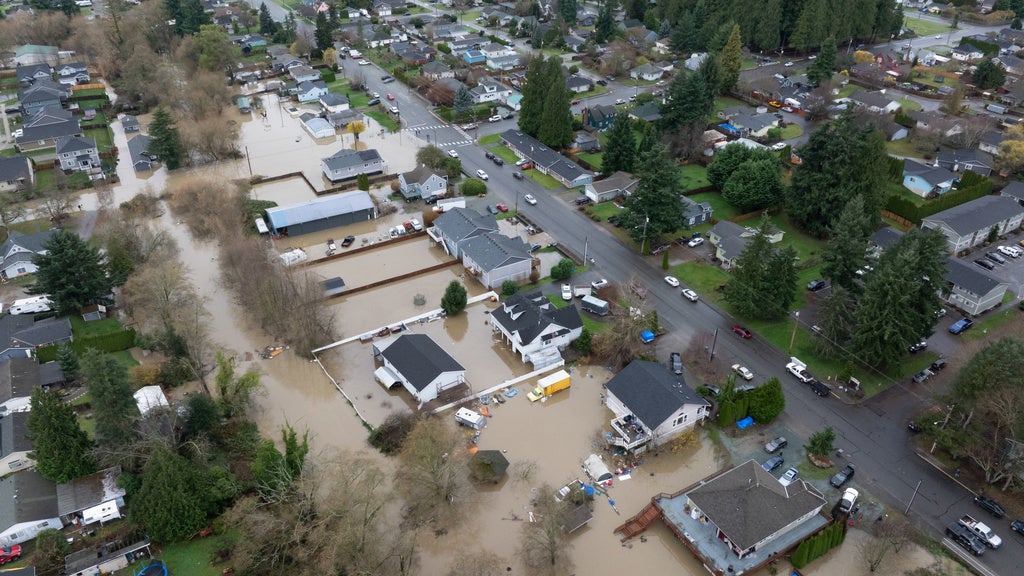
A powerful wind event with gusts up to 100 mph struck parts of Washington, Oregon and Idaho, knocking out power to nearly 600,000 homes and businesses, prompting severe thunderstorm warnings and widespread road closures amid ongoing flood and landslide damage. The storm compounds an already severe crisis — at least one fatality, hundreds of rescues and evacuations, tens of thousands displaced, rivers expected to crest again, and state and county emergency funds being deployed while awaiting federal assistance — creating localized risks to utilities, transportation infrastructure, housing stock and regional economic activity.
Market structure: Immediate winners are electric/utility restoration contractors and local heavy civil contractors (demand concentrated in WA/OR/ID) and short-dated fuel suppliers; losers are regional airlines, short-haul logistics providers and flood-exposed residential owners. With ~600k outages and major road/bridge damage, expect regional restoration spend in the high hundreds of millions to low billions over 3–12 months, boosting revenue and pricing power for specialty contractors while pressuring local small insurers and transportation operators.
Risk assessment: Tail risks include cascading infrastructure failures (major transmission damage), delayed federal disaster declaration ( >2–3 weeks), or acute supply-chain constraints for poles/transformers that could push project timelines beyond 6–12 months and inflate costs +15–30%. Immediate (days) impacts: travel disruption and power outages; short-term (weeks–months): contractor revenue recognition and spot fuel demand spikes; long-term (quarters–years): higher insurance premiums, muni issuance and potential regulatory changes on building in floodplains.
Trade implications: Favor equities of utility-restoration contractors and short-duration fuel exposure; use 1–3 month options to trade travel disruption and 6–12 month equities to capture backlog-driven earnings. Hedge with short positions or puts on regionally exposed airlines/logistics names and maintain liquidity to step into names that rerate after confirmed federal funding.
Contrarian angles: Consensus may underweight micro-cap/local contractors that can capture 60–80% of urgent restorations versus national players; market may overestimate insurer P&L pain if reinsurance and federal aid plug gaps. Historical parallel: Sandy (2012) produced a 20–40% outperformance for restoration contractors over 6–12 months — expect similar asymmetric upside if supply constraints keep bid prices elevated.
AI-powered research, real-time alerts, and portfolio analytics for institutional investors.
Request DemoOverall Sentiment
strongly negative
Sentiment Score
-0.65
