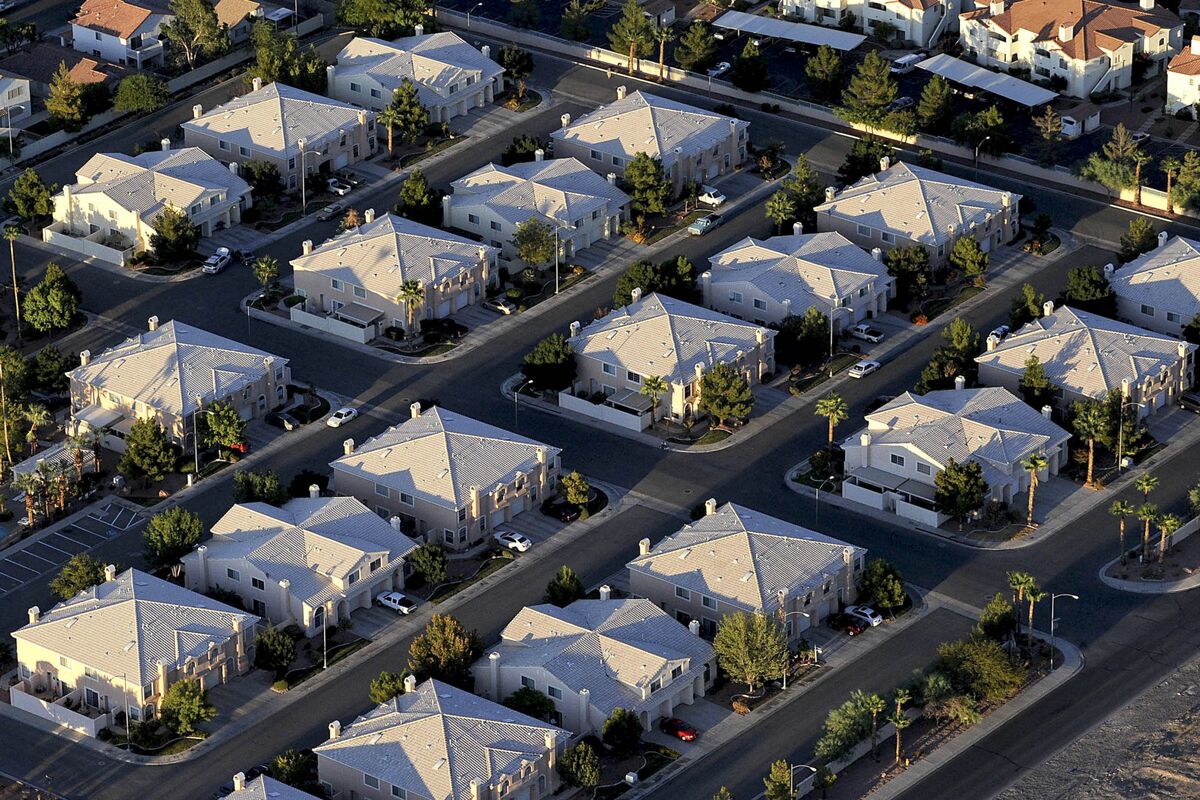
US home-price growth decelerated for the fourth consecutive month in May, with the S&P CoreLogic Case-Shiller national gauge rising 2.3% year-over-year. This marks the smallest annual increase since July 2023, following a 2.7% rise in April, indicating a sustained cooling trend in the housing market.
The US housing market is demonstrating a clear and sustained loss of momentum, with home-price growth decelerating for the fourth consecutive month in May. The S&P CoreLogic Case-Shiller national gauge registered a 2.3% year-over-year increase, the smallest annual gain since July 2023 and a slowdown from the 2.7% rise in April. This persistent deceleration points to a significant cooling in the market, moving beyond a one-off data point to an established trend. For investors, this signals potential headwinds for sectors reliant on housing appreciation and could be a leading indicator of waning inflationary pressures, a key factor for Federal Reserve monetary policy considerations. While prices are still appreciating annually, the rate of change is a critical signal of shifting market dynamics.
AI-powered research, real-time alerts, and portfolio analytics for institutional investors.
Request DemoOverall Sentiment
mildly negative
Sentiment Score
-0.30
