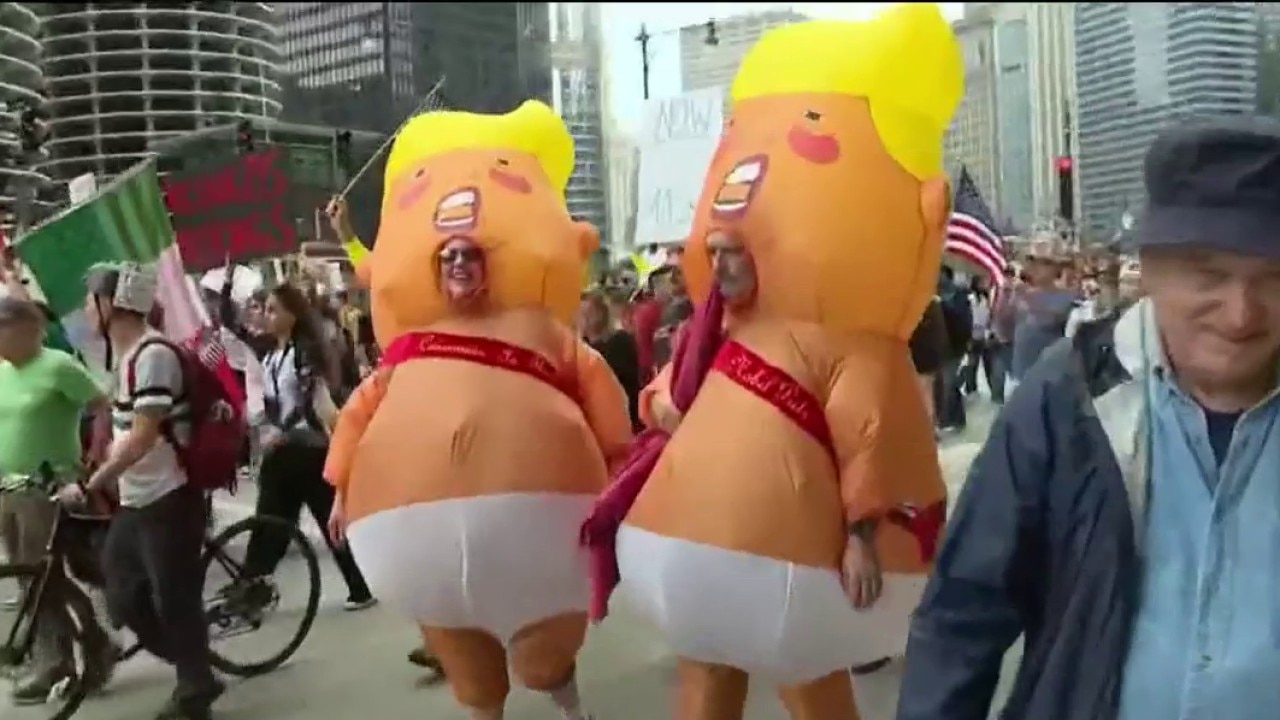
More than 3,100 'No Kings' events are scheduled nationwide with organizers expecting over 9 million participants, including multiple large demonstrations in Chicago and suburbs this Saturday. The protests coincide with rising tensions over the war in Iran, surging gasoline prices and a partial U.S. government shutdown affecting airport security, potentially increasing short-term political and operational risk. Polling shows President Trump's approval near 36-38%, underscoring domestic political headwinds that could influence policy and sentiment in coming weeks.
Large, coordinated domestic protests concentrated in urban hubs create predictable, short-duration demand shocks to travel and leisure: expect a 1–3% drop in weekend leisure bookings and a 3–6% rise in same-weekend cancellation rates in affected metros (Chicago as a bellwether). That transient demand hit disproportionately affects variable-cost carriers and regional service providers (airport concessions, parking, experiential retail) while leaving oil refiners and retail fuel margins insulated or slightly positive as pump prices remain sticky.
Second-order budget and logistics effects are under-appreciated. Municipalities will shift one-time operating dollars to crowd-control and overtime (a $10–30m incremental line-item for a large city over several weeks is realistic), crowding out capital maintenance or pushing near-term muni issuance higher for bridge financing. Separately, elevated airport-security friction amplifies the probability of short-notice rerouting and incremental customer-service refunds, pressuring airline unit revenues before any macro-driven travel slowdown.
The geopolitical overlay (Iran tensions) tilts asymmetric optionality into defense and energy; a sharp escalation inside 30–90 days would rerate defense contractors by 10–25% while sustaining a $5–10/bbl risk premium for crude that fatten refiners' crack spreads. Conversely, a rapid diplomatic de-escalation or gas-price rollback would reverse travel softness quickly — most impacts are front-loaded within 2–6 weeks, not structural unless protests persist into election season and change policy trajectories.
AI-powered research, real-time alerts, and portfolio analytics for institutional investors.
Overall Sentiment
neutral
Sentiment Score
0.00
