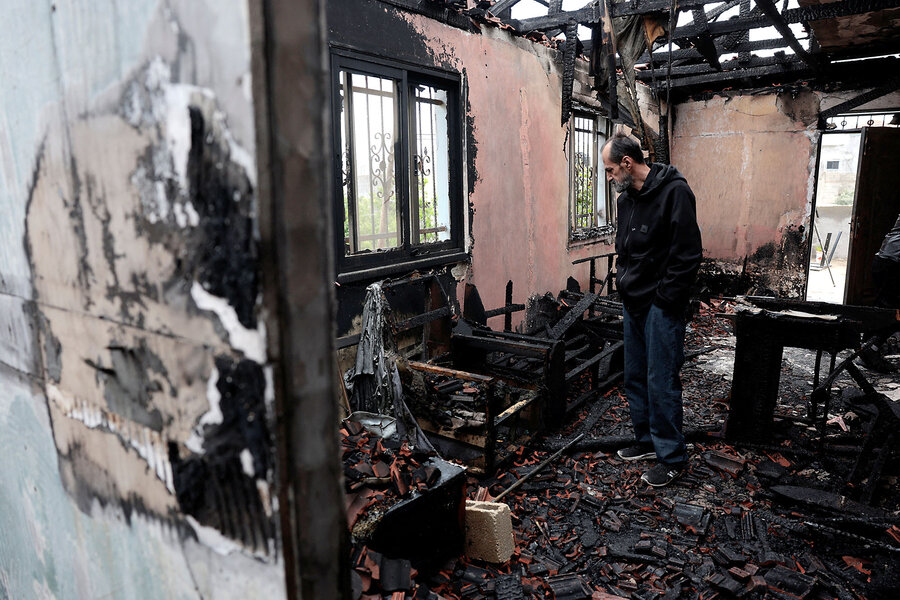
Yesh Din reports 257 incidents of settler violence across 116 Palestinian communities in the first 25 days after Feb. 28, with six Palestinians shot dead and seven suspects arrested in Khirbet Humsa. IDF chief Lt. Gen. Eyal Zamir publicly warned that a 'threatening minority' endangers Israel's security and values, but coalition constraints—notably ministers Itamar Ben-Gvir and Bezalel Smotrich—and election-year politics limit decisive government action. The surge in violence heightens regional instability risk and creates a risk-off backdrop for Israeli assets and security-exposed sectors absent sustained enforcement or external pressure.
The accelerating intra-state violence in the West Bank is a force-multiplier on political risk: it ties down IDF resources, politicizes security services, and raises the probability that Israel’s attention and capacity to manage external fronts will be degraded on a 3–12 month horizon. That degradation is not binary — expect episodic operational frictions (checkpoint rotations, delayed redeployments, intelligence diversion) that materially raise marginal spending on sustainment, logistics, and urgent procurement rather than large new platform buys.
Defense and security vendors with fast-response hardware, ISR, force-protection, and maintenance capabilities should see the earliest measurable revenue impact; expect procurement orders and spare-parts demand within 1–6 months and contract amendments across 6–18 months as ministries prioritize readymade solutions over long-lead acquisitions. Cyber and C2 vendors also gain from reallocations toward internal security and border monitoring, as ministries accelerate software and cloud services to manage asymmetric threats and civil unrest.
Financial channels to watch: Israeli sovereign and banking spreads are exposed to a slow-burn downgrade if violence persists into the election window, creating opportunities to play widening CDS or FX weakness within 3–9 months. The primary destabilizing catalysts that would reverse the trend are a decisive government crackdown on extremists backed by US diplomatic pressure, or a high-profile legal/political settlement that isolates extremist actors — both are low probability before elections but would rapidly compress risk premia if realized.
AI-powered research, real-time alerts, and portfolio analytics for institutional investors.
Request DemoOverall Sentiment
strongly negative
Sentiment Score
-0.70
