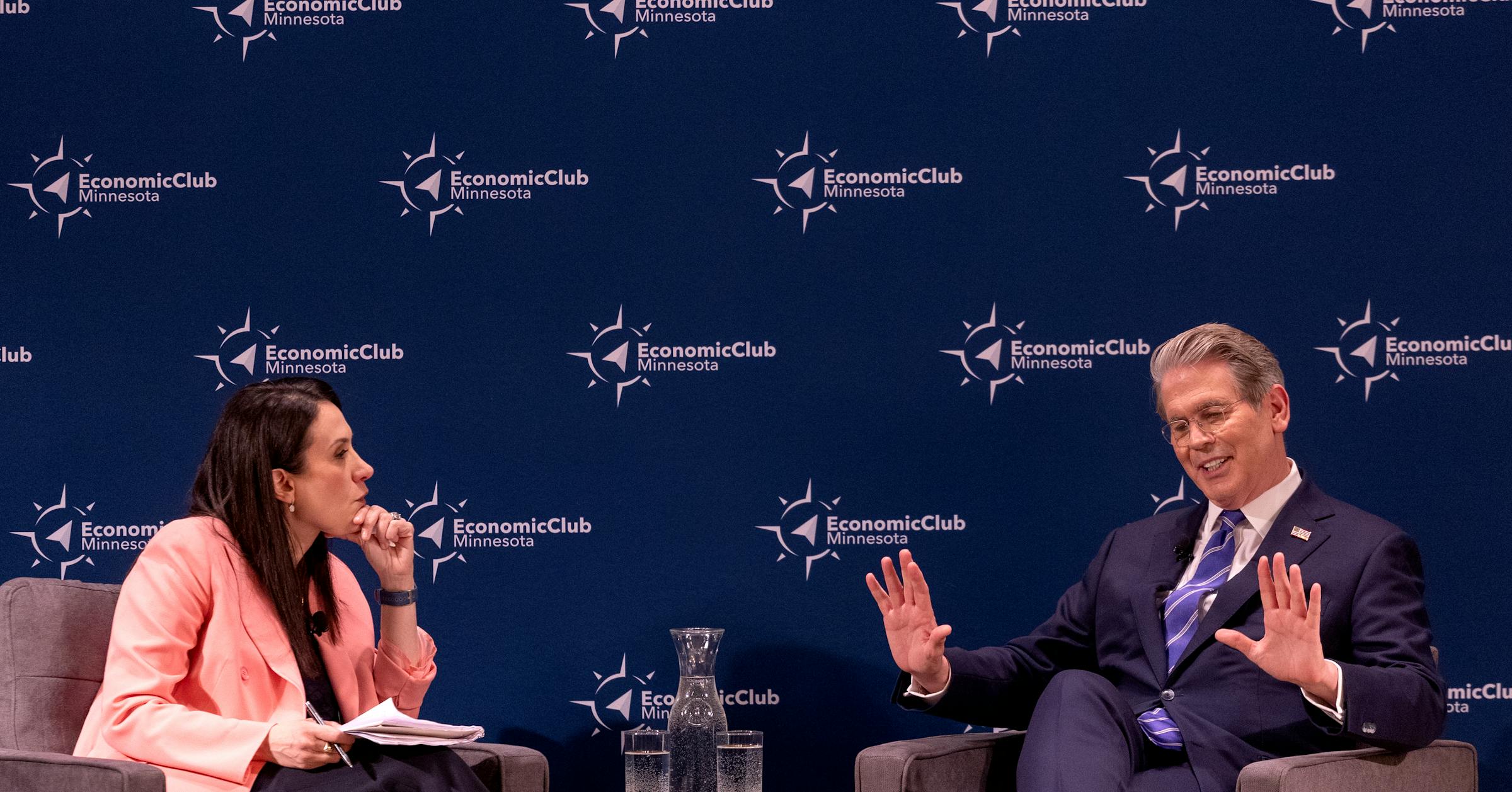
Treasury Secretary Scott Bessent accused Minnesota leaders under Gov. Tim Walz of allowing “billions” in welfare funds to be diverted to fraudsters and pledged the U.S. Treasury would recover stolen funds, prosecute offenders and investigate similar schemes nationwide. Speaking at the Economic Club of Minnesota, he tied the issue to illegal immigration and lack of federal leadership while also touting the Trump administration’s policies and forecasting ‘‘robust, non-inflationary growth in 2026,’’ positioning Minnesota as a political and enforcement focus ahead of broader state-level scrutiny.
Market structure: Political rhetoric and a targeted federal recovery push make Minnesota-specific munis, state-contracted vendors and Medicaid-reliant providers the direct losers, while Treasuries and diversified national muni paper are relative beneficiaries. Expect flows to re-price state-specific risk: MN GO spreads could widen vs. Treasuries by 20–100bps if investigations escalate, pressuring issuers dependent on state-backed revenue and reducing pricing power for local social-service contractors. Increased audit activity also raises supply risk as states may issue bridging paper to cover clawbacks, pushing muni yields higher across lower-rated cohorts.
Risk assessment: Tail risks include a large-scale clawback or DOJ indictments (> $500m) triggering an S&P/Moody’s downgrade of Minnesota within 90–180 days, and contagion to other states under audit; low-probability but high-impact. Immediate noise (days) likely limited, short-term (30–90 days) spreads and volatility should rise, and long-term (through 2026 election) political risk will keep a risk premium on state exposure. Hidden dependencies: Medicaid cashflows, insurer reserving (Centene/Molina), and municipal bond holdings in regional banks could create second-order shocks.
Trade implications: Tactical trades favor risk-off/flight-to-quality: increase 2–5yr Treasury exposure (SHY/IEI) and buy 3–6 month protection on Medicaid-sensitive insurers (CNC, MOH) via put spreads to limit cost; underweight Minnesota-focused munis and overweight national muni ETF MUB or high-quality local utilities. Use pair trades: long TLT vs. short MUB to capture muni/Treasury widening if MN 10y/Treasury spread >30bps. Entry triggers: enter within 10 trading days of formal DOJ/state recovery announcement; trim when spreads revert below 10–15bps.
Contrarian angles: The market may over-penalize MN paper—historical local fraud scandals typically cause a 50–150bps overshoot that mean-reverts over 12–18 months once clawbacks are sized. If you can access state-specific bonds, consider size-constrained buys (1–2% of portfolio) on MN munis that trade >100bps above comparable Treasuries with expected recovery timelines of 12–24 months, but cap exposure given political uncertainty and catalyst risk.
AI-powered research, real-time alerts, and portfolio analytics for institutional investors.
Request DemoOverall Sentiment
moderately negative
Sentiment Score
-0.30
