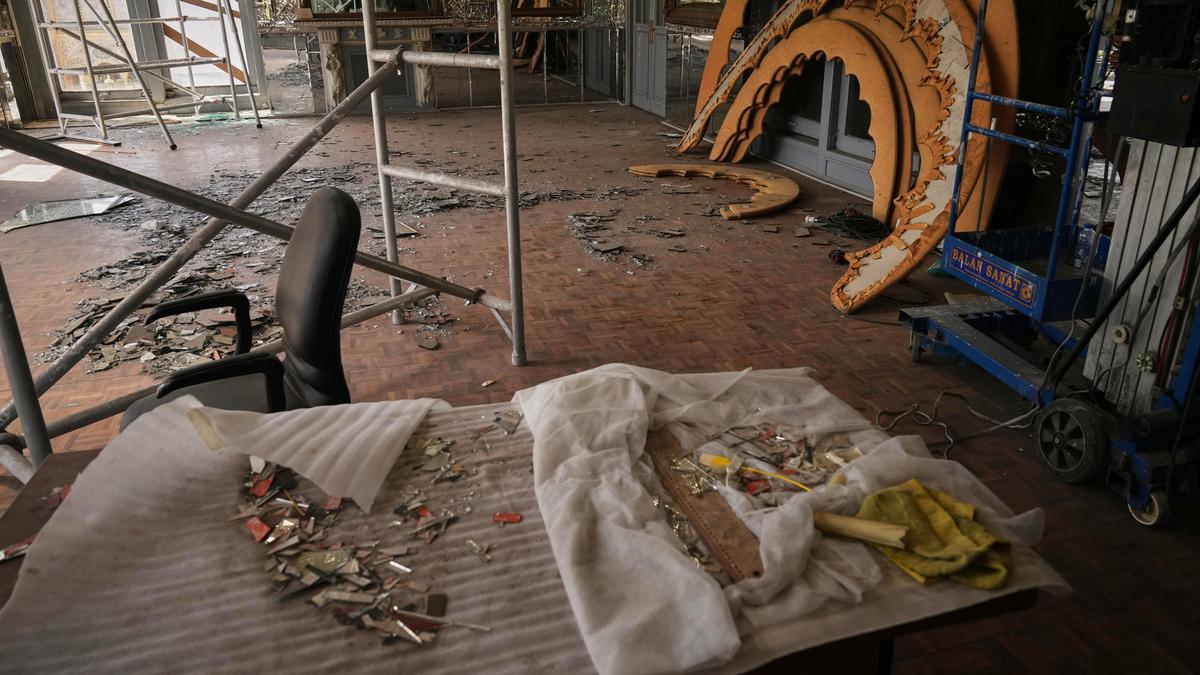
13 people were killed in an airstrike on a residential building southwest of Tehran on April 6, 2026, with additional strikes targeting Sharif University. The attacks followed President Trump’s threats to force Iran to reopen the Strait of Hormuz; Iran responded by striking infrastructure in neighboring Gulf states, downing a U.S. military plane and threatening closure of the Bab el-Mandeb Strait. This escalation materially raises geopolitical risk to Middle East energy exports and global shipping lanes, likely to pressure oil prices and trigger risk-off volatility across markets.
The market is mispricing the persistence and transmission channels from a localized strike environment into a sustained energy and shipping shock. Even partial, repeated disruptions to Hormuz/Bab el‑Mandeb traffic typically add 0.5–$1.50/bbl in incremental freight and insurance into delivered crude prices; if elevated for 4–12 weeks that mechanically lifts inland refiners’ crude feed costs and widens diesel cracks by 10–30% as inventories draw down.
Winners and losers will be defined by duration and route elasticity: defense primes and marine insurers see near-term cashflow upside from surge contracts and higher risk premia, while regional refiners and import-dependent manufacturers in Europe/Asia suffer margin compression and inventory drawdowns in 2–8 weeks. Second‑order effects include rerouting tankers around Africa (adds 7–12 days/roundtrip on VLCCs, reducing effective available tonnage by an estimated 8–15% without immediate newbuilds) and a step change in shipping counterparty risk that favors large diversified brokers and reinsurers.
Tail risk is asymmetric: an escalation into broader strikes or a retaliatory blockade could push Brent/WTI spikes into the 15–30% band within days and force coordinated SPR releases or diplomatic de‑escalation within 30–90 days, which would rapidly reverse energy longs. That makes event‑sized option structures and short‑dated directional trades more attractive than long cash exposure; political/diplomatic moves (back‑channel talks, UNSC mediation) are the highest‑probability path to normalization within 1–3 months.
AI-powered research, real-time alerts, and portfolio analytics for institutional investors.
Overall Sentiment
strongly negative
Sentiment Score
-0.75
