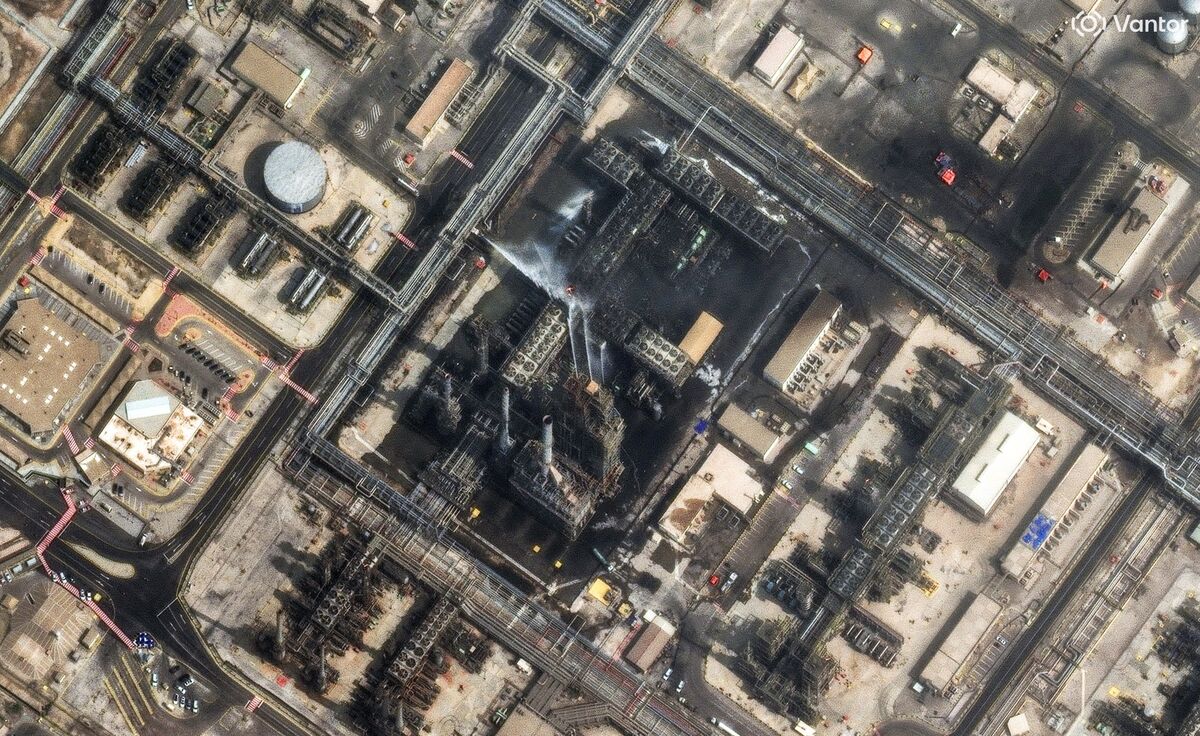
More than three weeks of conflict have effectively closed the Strait of Hormuz and damaged dozens of oil, gas and refining assets across the Persian Gulf, creating a massive supply disruption. Full restoration of production and refining capacity could take years, implying sustained upward pressure on oil and gas prices and significant risk to energy-dependent supply chains and regional infrastructure.
Winners will be entities that monetize longer transit distances and higher insurance premiums: tanker owners, storage/terminal operators and any producer able to shift to Atlantic routes capture a persistent freight/location premium (incremental logistics cost likely $2–6/bbl, equivalent to $4–12/boe). Losers are asset-specific: operators lacking spare parts, specialist subsea crews or FX access face multi-quarter offline risk while refiners reliant on light sweet Persian grades see margin pressure and feedstock volatility.
Time horizons matter: price moves in days are driven by route closure/insurance shocks and inventory swings; months show throughput and contract renegotiations (LNG cargo diversion, term LTCG clauses); years are the repair horizon — large turbomachinery, subsea repairs and re-certification have 12–36 month lead times under stressed global supply chains. Reversal catalysts are clear and binary: credible diplomatic ceasefire or coordinated spare-capacity release (Saudi/US/Brazil) can shave 20–40% off risk premia inside 30–90 days; conversely escalation or targeted strikes on repair vessels extend physical downtime into multi-year outcomes.
Second-order effects are material: fertilizer and petrochemical feedstocks will see concentrated regional outages raising fertilizer spreads and incentivizing feedstock substitution, while elevated war-risk premiums (historically 3–5x baseline) reroute volumes to longer lanes increasing absolute emissions and lowering refinery throughput utilization. Markets may already price a structural multi-year premium; however modular repairs and redirected global maintenance schedules can compress that timeline if capital flows to rebuild rapidly.
The consensus is overweight long-dated physical crude; that may be overdone. Tactical exposures to freight and services with asymmetric payoffs and a modest calendar hedge on Brent capture upside without committing to multi-year upstream ownership if diplomatic resolution materializes.
AI-powered research, real-time alerts, and portfolio analytics for institutional investors.
Request DemoOverall Sentiment
strongly negative
Sentiment Score
-0.75
